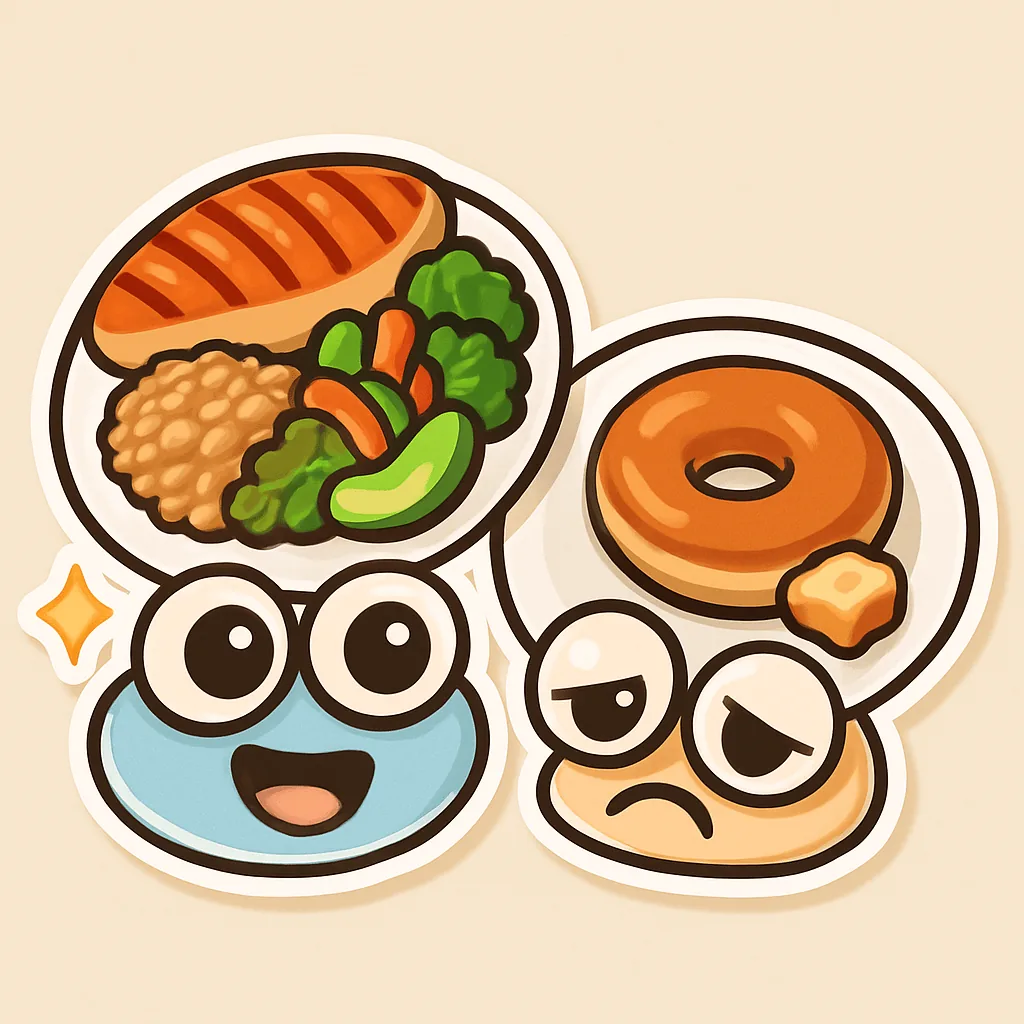
Noon. Two plates, both roughly 400. The first one is a bagel with cream cheese and a small orange juice. The second is two eggs, a slice of sourdough, half an avocado, and a handful of berries. Same number on the app. By three o'clock, one of these people is fine. The other is already opening the snack drawer, wondering what happened.
Here's the thing the number doesn't tell you. 400 is a count, not a shape. It doesn't know how long the food sat in your stomach, or whether the protein pulled its weight, or if the whole plate was mostly air and sugar dressed up in a paper wrapper. Two meals can hit the same total and behave completely differently in the four hours after you put the fork down. That gap, the one between noon and three, is where the number stops being useful and the plate starts telling the truth.
So, let's see what's on the plate. Start with the bagel. It's mostly refined flour, which reads sweet to the body almost immediately. The cream cheese is fat, which is fine, fat is slow. But there's very little protein here, maybe six or seven grams, and almost no fiber. The juice is liquid sugar with the fruit's brakes removed. Blood sugar climbs quickly, then comes down just as quickly, and the body reads that drop as hunger. Not real hunger, exactly. Chemical hunger. The kind that sends you looking for something crunchy at 2:47.
Now the eggs plate. Two eggs is roughly twelve grams of protein, and protein is the loud one for fullness. It triggers the signals that tell the brain the meal happened. The avocado brings fiber and fat, both slow. The sourdough is still bread, still flour, but paired with everything else it lands softer. The berries have sugar, sure, but wrapped in fiber, which is the difference between sugar arriving as a shove and sugar arriving as a knock. Same 400. Completely different curve.
This is the piece the calorie count can't show. Satiety, which is a nerdy word for how full you feel and how long you stay that way, isn't a function of the total. It's mostly a function of three things on the plate. Protein density, which is how much protein per bite. Fiber, which slows digestion and feeds the parts of your gut that talk back to your brain. And what I'd call the shape of the sugar, whether it arrives naked or wrapped in something.
The fruit's doing most of the work in the second plate, honestly, alongside the eggs. Not because berries are magic. Because the fiber in the berries is holding the sugar's hand on the way in. Juice has the same sugar, minus the hand. That's why a whole orange behaves like food and an orange juice behaves like a soft drink with better branding.
Protein does something similar but from the other side. It takes longer to break down, it stretches the meal across more of the afternoon, and it dampens the crash. A meal with twenty grams of protein at lunch is a completely different creature than a meal with six, even at identical calories. This is why the yogurt bowl holds you and the pastry doesn't, even when the app says they're twins.
So when two meals read the same on the count and one leaves you hunting for a granola bar at three, it isn't willpower and it isn't your body being difficult. It's the plate. The number was accurate and also, somehow, wrong. It counted the fuel but not the timing.
Here's what I'd change first, if you're staring at a lunch that keeps sending you back to the kitchen. Look at the protein number, not the total. Under fifteen grams, and most plates won't hold you four hours, no matter what the calories say. Then look at whether there's any fiber at all, or if the whole thing is refined and smooth. One small swap and this shifts. Berries instead of juice. Eggs on the side of the bagel. A spoon of beans in the soup. You don't have to redesign the meal. You just have to give the plate something to hold onto.
The number on the app is a starting place, not the verdict. Two 400s can be twins on paper and strangers by mid-afternoon. Read the shape, not just the total. The three o'clock craving is data, actually. It's the plate telling you what it forgot to bring.