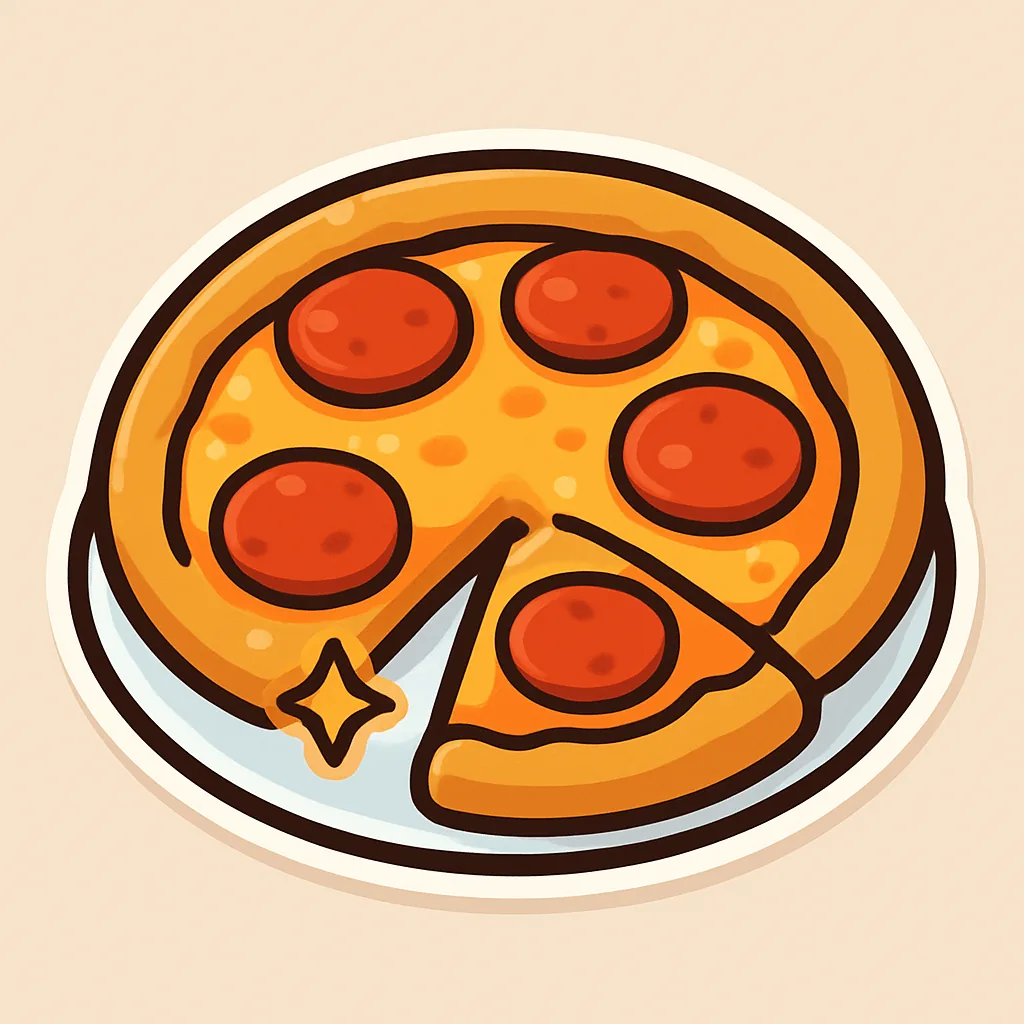
It's Tuesday, a little after seven, and the oven's beeping. The box is already flat on the counter, the cardboard circle underneath already stained a little orange. The cheese on top has that just-blistered look, one pepperoni curled into a cup with a tiny pool of oil in it. You slide two slices onto a plate. The crust makes that dry papery sound against the ceramic. This is the plate. This is what's actually on the fork tonight, not the salad you thought about at four.
So, let's see what's on the plate. Frozen pizza has a reputation, and most of that reputation is louder than the pizza itself. People talk about it like it's a moral event. It isn't. It's flour, tomato, cheese, a cured meat if you went that way, and a fair bit of salt holding hands with a fair bit of fat. The number on a two-slice serving of a standard pepperoni lands somewhere around 600, give or take, depending on the brand and how generous you were with the slicing. That's a dinner-shaped number. Not a crisis. The interesting question isn't whether you should have eaten it. You did. The interesting question is what inside those two slices is actually pulling its weight, and what's just riding along being loud.
Here's what I notice, slice by slice. The crust is the biggest single number on the plate. On a thin-crust it's quieter, on a rising-crust or a stuffed edge it's doing a lot of the heavy lifting before any topping even shows up. Fine, honestly. Bread is bread, and the crust is the thing that makes it feel like dinner instead of a snack. The sauce is barely a factor, numerically. A couple of tablespoons of tomato, some sugar, some salt. It reads louder than it counts. The cheese is where the richness lives, and it's doing real work. It's why the slice feels like a meal instead of a cracker. I wouldn't touch it.
The pepperoni is the loud one. Not loud in flavor exactly, loud in what it adds to the plate without adding much back. Those little cups of oil pooling in the middle of each round, that's most of the extra fat and a chunk of the extra sodium on the whole slice. If you took the pepperoni off and ate the pizza plain, you'd shave a meaningful amount off the number and lose about ten percent of the enjoyment. That's a bad trade for a Tuesday. Nobody wants a naked pizza on a Tuesday.
So here's what I'd change first. Keep the pizza, keep the cheese, keep the crust, keep even the sauce. Swap the pepperoni for mushrooms and a handful of arugula tossed on after it comes out of the oven. Not instead of dinner. On top of dinner. The mushrooms roast down into something savory and a little chewy, which is the texture your mouth was looking for from the pepperoni anyway. The arugula wilts a bit from the heat and gives you something green and peppery to cut through the richness. One small swap and this shifts, noticeably. The number drops. The plate stops reading like it's mostly salt and cured fat. And you still get pizza, which was the point.
A quick word on the second-slice question, because it always comes up. Two slices is a dinner. Three slices is a dinner plus a snack you didn't quite want. The pizza doesn't get better on slice three, it just gets more of itself. If you're eyeing a third, that's usually the sodium making you thirsty, not hunger making you hungrier. A glass of water and five minutes, and the question usually answers itself.
Solid plate, no notes on the choice. A few on the toppings.
The frozen pizza is not the villain of your week. It's a Tuesday, the oven was on, and something warm arrived on a plate in about fifteen minutes. That's a real thing worth having. The score isn't dragged down by the fact of pizza, it's dragged down by the specific little oil-cupped rounds sitting on top. Take those off next round, put mushrooms and a green thing on instead, and the same Tuesday reads a lot different on the plate. Not bad, actually. Close to balanced, one swap away.