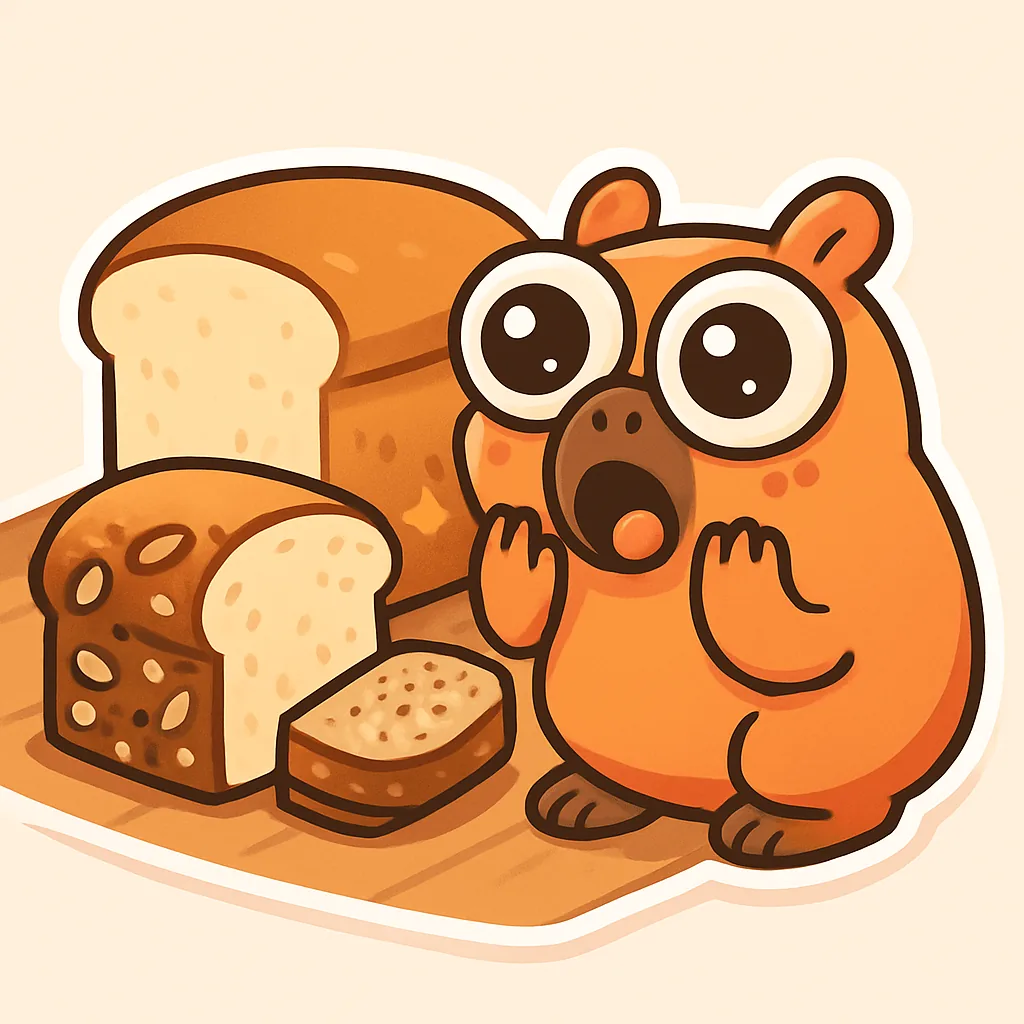
The loaf is sitting where it always sits. Plastic sleeve, twist tie, that soft give when you press the top of the bag. You bought it on autopilot, the way most of us buy bread, because it goes with everything and nothing goes wrong. Two slices this morning under the eggs. Two more at lunch around the turkey. Maybe a piece torn off standing at the counter, because bread is like that. It doesn't announce itself. It just keeps showing up on the plate.
So let's see what's on the plate. Or in this case, next to it, under it, holding it together. Bread is the quiet number in most of your days. Not loud like the dressing, not obvious like the fries. It reads like a background player. But four slices of the soft sandwich stuff is roughly 280, before anything goes on it, and most of that is fast, fluffy, gone-in-an-hour carbohydrate that leaves you looking for a snack by three. That's not a moral problem. It's just information the loaf isn't volunteering.
Here's the thing I keep noticing at the store. Two shelves over from the loaf you grab, usually eye level or one below, there's a denser version of the same idea. Seeded, sometimes labeled as sprouted, sometimes just called a hearty whole grain. Same price, roughly. Same shelf life. Same slot in the sandwich. But when you actually read it, side by side with what you've been buying, the number shifts. More fiber per slice, ballpark three to five grams instead of one. More protein, small but real. And the score I'd put on it jumps about ten points, which in plate-reading terms is the difference between fine and quietly good.
Why the jump. A few reasons stacked. The fiber slows the whole thing down, so the bread stops behaving like a sugar and starts behaving like a food. The seeds, whatever mix, pumpkin, sunflower, flax, sesame, are pulling their weight. You get some fat, some minerals, a little chew. And the chew matters more than it sounds. Denser bread makes you eat one slice open-faced where you would've eaten two of the soft stuff closed. That's not a trick, that's just what happens when the bread has something to say.
Now, taste honesty. I'm not going to tell you the seeded loaf tastes exactly like the pillow-soft one, because it doesn't. It's nuttier. It has a crust that pushes back. Peanut butter on it is better, actually, because the bread finally matches the intensity. Toast is better, because it crisps instead of collapsing. The place it's a little weird is a very soft sandwich, tuna salad, egg salad, the kind of thing where you wanted the bread to disappear. For that specific plate, keep the old loaf if you want. Nobody's grading you.
But for the everyday sandwich, the morning toast, the thing you tear off standing at the counter, the swap holds. And here's what I'd change first, if you're the kind of person who wants one small move instead of a whole rework of the kitchen. Next time you're at the store, don't buy two loaves. Buy the seeded one and finish what's on the counter. See how a week of it reads. Notice whether three o'clock feels different. Notice whether one slice does the job two used to do.
One small swap and this shifts. Not the whole plate. Not your week. Just the quiet background number that's been running under everything else. The bread stops being the biggest thing on the ticket and becomes something closer to a supporting player, which is what bread wanted to be all along.
A couple of small things while we're here. The label word that matters most is the first ingredient, whole grain or sprouted grain, not enriched flour dressed up in a brown bag. Color isn't the tell. Some of the softest loaves on the shelf are dyed to look hearty and read almost identical to the white version underneath. Weight is a better tell. Pick up two loaves. The one that feels heavier for its size is usually the one doing more work.
And that's the whole swap. Same aisle, same errand, same five dollars. A denser loaf on the counter for a week. If it lands, keep it. If it doesn't, you're out one loaf of bread and you know something about your own fork that you didn't know before. Not bad, actually.
The loaf is just a loaf. But it's on the plate more than almost anything else you eat. Worth a look, worth the small move. Next round at the store, one shelf over.