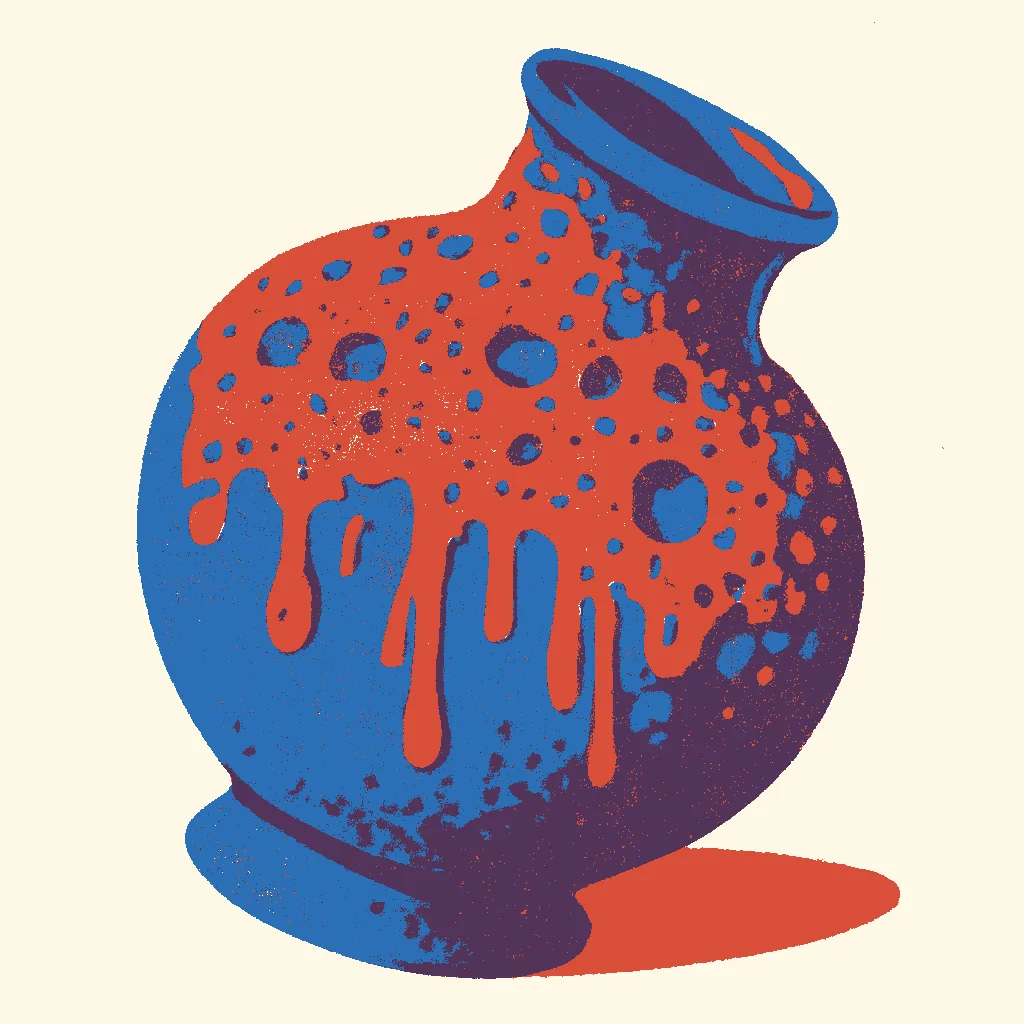
That crusty orange vase on the bottom shelf — the one that looks like it lost a fight with a volcano — hold on before you walk past it. West German potteries turned out these thick, blistered glazes through the sixties and seventies, collectors call the look Fat Lava now. The uglier the eruption, the harder they hunt it.
Flip it over — the story's usually on the bottom. Most of these carry no maker's name, but the base wears a molded number like 414-16: the form first, then the height in centimeters. A "W. Germany" stamp brackets the era for you, that mark only makes sense between the war and reunification. No paper label needed when the clay talks like that.
Four names to keep in your pocket. Scheurich made the most — honest, everywhere, cheap to start. Ruscha ran artier, their 313 is a curvy fifties silhouette collectors know across a crowded hall. Otto Keramik poured red glazes so thick they crater like a lunar map, and Carstens sits in between — solid mid-shelf work with the occasional stunner. Which name's staring up at you right now?
Here's the honest part: form is common — glaze is king. A Scheurich 414 jug vase in a tame brown drip turns up at every flea on earth — worth pocketing for two bucks, easy, and not much more. The same 414 wearing a wild cratered red or a thick pumice crust is a different animal — the glaze run decided its fate the day it left the kiln. Rare glaze on a common form beats common glaze on a rare form, most days it isn't close.
Could be nothing, could be a payday. With lava, the difference is usually three inches of height and one lucky bucket of glaze.
Size does the quiet work on price. Floor vases — the knee-high ones — fetch multiples of their little cousins, and the big cratered reds climb higher still. Condition plays rougher here than you'd expect for something built like a meteor: run a thumb around the rim and the base edge, a chip through that glaze shows pale clay underneath and cuts the price hard. Hairline at the neck? Talk the price down or set it down.
So the next time a shelf offers you something crusted, burnt, and frankly a little rude to look at — pick it up. Check the number, weigh the glaze, mind the rim. Somebody fired that thing in a West German kiln fifty-odd years back and let the surface boil on purpose. The only question worth asking is the loud one: how wild is that glaze?