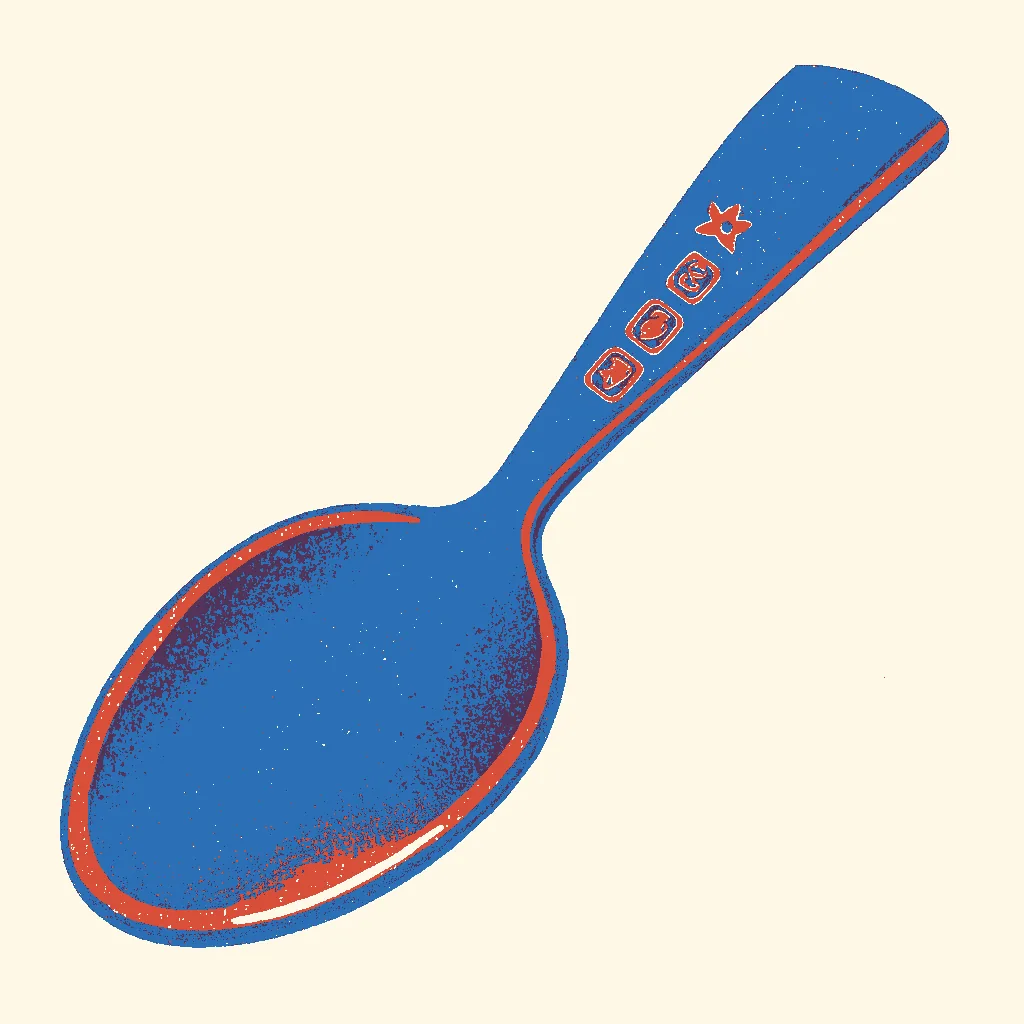
A black-tarnished spoon at the bottom of the bin — don't set it down yet. Tarnish costs nothing to fix, silver costs plenty to find, and the difference between sterling and plate lives in a stamp smaller than a grain of rice.
Solid first. "Sterling," "STER," or "925" pressed into the metal means 92.5 percent silver — the standard American convention since the late 1800s. British pieces talk in pictures instead: a small walking lion, the lion passant, is England's sterling mark, usually strolling alongside an assay-office symbol and a date letter. Find the lion and the metal question is settled; the mark's half rubbed sometimes, but that lion earns a second wipe. What else is stamped beside him?
"EPNS" is the heartbreaker — electroplated nickel silver, a skin of silver over base metal. Same family: "EP," "silver on copper," "quadruple plate," "A1." Handsome stuff, honest stuff, sometimes collectible in its own right — but not solid, and the melt value rounds to zero. Somebody loved this once, it can still set a fine table. Just don't pay sterling money for it.
One trap hides inside the good news: "weighted" or "reinforced" next to a sterling stamp means a thin silver shell filled with pitch or cement for heft — candlesticks pull this constantly. The stamp is honest, the weight is lying. Feels substantial in the hand, carries only a whisper of actual silver — see why that one word matters?
No stamp at all — read the wear instead. Check the high points: spoon backs, rims, handle edges, anywhere hands and polishing cloths visit most. Plate wears through there first, and a warm brassy or coppery glow bleeding up through the shine is base metal showing itself. Solid silver wears too, but it only ever wears to more silver. What color's peeking through on yours?
The magnet trick, friend, proves less than the flea-market lore claims. Silver isn't magnetic — but neither are brass, copper, or nickel silver. A magnet that grabs rules sterling out; a magnet that slides off proves nothing at all.
So the order of operations: hunt the stamp, look for the lion, check the high points, and treat the magnet as a bouncer, not a judge. That black spoon with the dollar sticker — sterling, or just shiny?