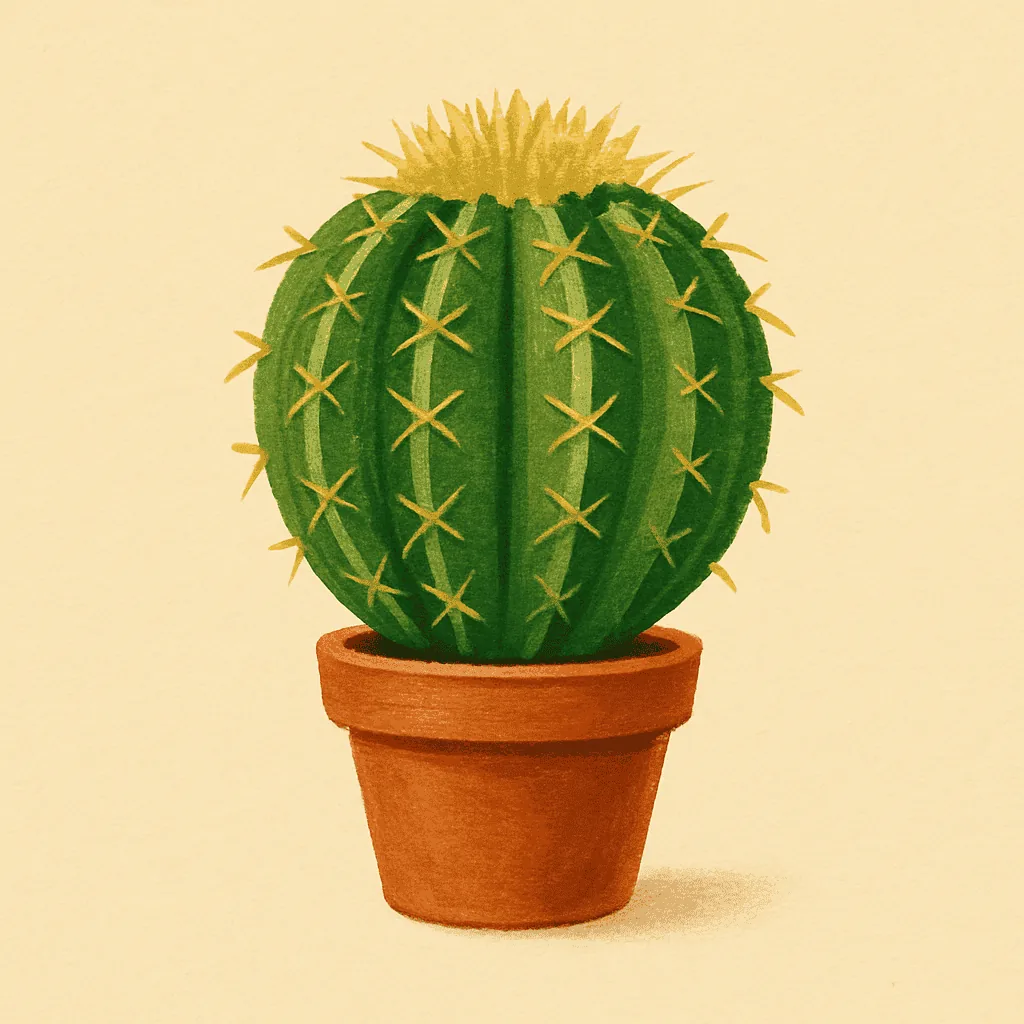
There's a small barrel on the south sill, ribbed and round, spines fanning out like a quiet warning. It hasn't moved in weeks. The soil is bone dry. The body is firm to the touch, almost stone. I pass it most mornings and notice nothing has changed, and that is the point. A barrel cactus on a bright sill is one of the few plants on the shelf that asks you to do less, not more.
Most of what goes wrong with these comes from kindness. A keeper sees the spines, the desert shape, the slow stillness, and assumes the plant must be hungry for something. So a small drink becomes a weekly drink. The gritty soil starts holding moisture it was never meant to hold. The body, underneath all that armor, begins to soften in a way the eye almost misses. By the time the rot shows on the outside, the inside has been going for a while. Patience reads like neglect, until it doesn't.
The mini barrels are the most forgiving cacti I keep, and I say that as someone who has lost the less forgiving ones. They want bright direct sun — not bright indirect, not a shade pocket, the real thing, the window where the light comes through hot in the afternoon. They want fast-draining gritty soil, the kind that water rushes through and leaves behind. And they want water only when the body itself tells you. Not the calendar. Not the app. The body.
The top inch will tell you, the way it does with other plants, but the barrel has a second tell that I trust more. When it's ready for a drink, the body softens, almost imperceptibly. A faint give where there was none. A subtle pucker along the ribs. If you're not sure, you're not there yet. Wait one more day. A barrel that's truly thirsty and a barrel that's perfectly fine look almost the same to a new keeper, and the rule of thumb is simple. When in doubt, the dry side. Always the dry side.
Some plants are watered. The barrel is permitted a drink.
Then there is the winter, which is the part most keepers don't know about and the part that matters most. In winter, the mini barrel goes dormant. It wants to be cool. It wants to be left almost completely alone. Pull the water back to nearly nothing — a sip every several weeks at most, and only if the body has gone truly slack. Keep it away from the radiator. A cool windowsill is better than a warm one. This dormancy isn't the plant suffering. It's the plant doing its real work. The species that bloom indoors only bloom because they were allowed a proper winter. A barrel that gets watered through the cold months will never flower, and worse, it will grow in a slack, stretched, soft way that you can see in the ribs once you know the look. Cold and dry is the winter rule. That's all of it.
Repotting is rare. These plants don't mind being snug. Only lift it when the body is genuinely cramped against the pot, when the roots have nowhere left to go. When that day comes, the spines will surprise you. They look ornamental from the sill. They are not. Thick gloves, or fold an old towel around the body and lift from there. Lower it into fresh gritty soil, leave it dry for a week or so before the first drink, and step back. New growth, no rush.
What I love about keeping a mini barrel is how little it asks of me, and how much it teaches anyway. It teaches me to notice before I act. It teaches me that a still plant is not a sad plant. It teaches me that the seasons are real, even on a windowsill in a heated apartment, and that a plant allowed its winter will give you a spring you couldn't have bought. The barrel keeps its own clock more visibly than almost anything else on the shelf. It is doing fine. It would like the light. It would like to be left alone.
So if the small one on your sill hasn't changed in weeks, that's the report. The body is firm. The soil is dry. The light is good. There is nothing to do today. Let it be cool this winter. Let it be thirsty before you reach for the watering can. Slow water, steady light. We'll watch for it.