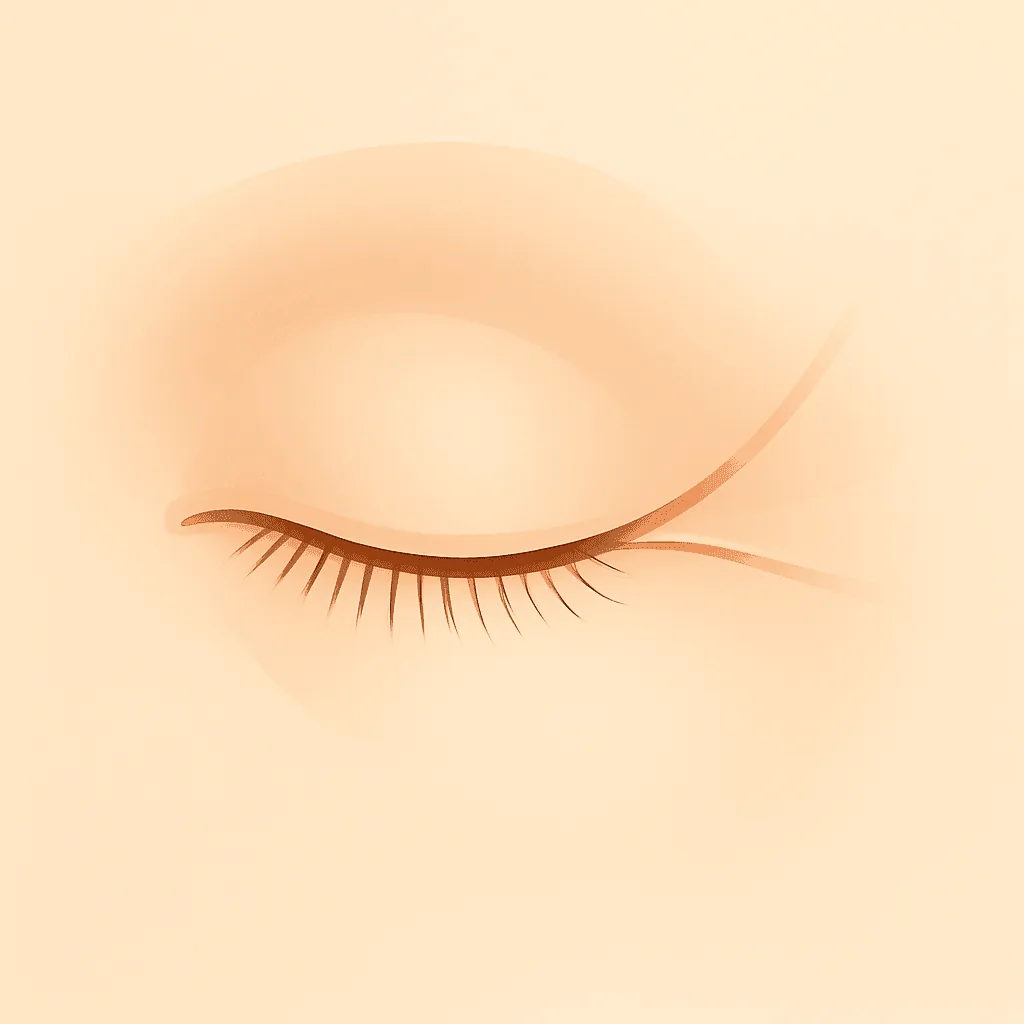
It's late, and the bathroom light is doing that thing it does. You leaned in to take off the last of the day, and there it was, the fine line by your eye, sitting a little deeper than it did over coffee. Not new. Not a verdict. Just visible, in a way it wasn't at breakfast. You touched it, maybe. Tilted your chin. Looked again. And the line stayed, quiet and specific, right where it always is.
Here is the part nobody tells you gently enough. The face you meet in the morning and the face you meet at night are the same face. Same skin, same lines, same crease near the outer corner. What changes between them isn't the skin itself. It's the hour, the water, the muscles, the light. And when all four shift at once, a line that read as soft at eight in the morning can read as etched at eleven at night. That's not aging faster in a day. That's the day, showing on the surface.
Start with water. Skin holds it and lets it go in slow tides across the hours. By evening, especially if the day was long, or salty, or spent talking, or spent forgetting the glass by the sink, the top layers are a little less plump than they were at breakfast. Plump skin fills a line from underneath, the way a soft pillow fills a crease. Less water, less fill. The line doesn't get deeper. It just gets less held. Give the same skin a slow week of drinking it in, and the fine line by your eye softens right where it was reading sharp.
Then the muscles. Your face has been working since you opened your eyes. Smiling, squinting at the screen, holding an expression through a hard meeting, laughing at dinner. The small muscles around the eyes and mouth fatigue the way any muscle fatigues. When they're rested, they hold the skin evenly, and lines sit shallow. When they're tired, they settle, and the skin folds along the paths it already knows. That's why the crease by your smile looks deeper after a long day than after a slow Sunday morning. It's not the crease changing. It's the muscle underneath, resting into it.
And then, the light. This one matters more than we give it credit for. Morning light comes in wide and soft, usually from a window, usually at an angle that flatters. Bathroom light at night is small, close, and often directly overhead, which is the least kind angle a face can meet. Overhead light drops shadows straight down into every small dip in the skin. A fine line becomes a fine shadow. A pore becomes a pinpoint of dark. Nothing about the skin changed between rooms. The shadows changed. That's not new, that's just tonight's light.
Put the three together, a little less water, a little more muscle fatigue, a lot more shadow, and you get the face in the mirror right now. A face that looks, to you, older than the one you saw at breakfast. It isn't. It's the same face, reporting a full day. Tomorrow, after water and rest and morning light through the window, the same line will read softer. Not gone. Softer. Because your skin has its own pace, and that pace includes tides across a single day, not just across a year.
The thing I want you to know, standing there under the overhead bulb, is that the line by your eye isn't a problem you missed. It isn't proof of anything you did wrong today. It's a fine line, and it lives on your face, and it moves a little with the hours the way everything on a face moves with the hours. We've been keeping notes. The line was there Sunday too, and Tuesday, and it looked different every time, depending on the light and the water and how you slept the night before.
So tonight, no verdict, just what I'm seeing. A face at the end of a day. A little dry near the temple, a little tired around the mouth, the fine line by your eye reading a shade deeper than morning. All of it ordinary. All of it the same skin you woke up in.
Leave it alone another night. We'll look again in the morning light, when the shadows sit differently and the water has come back in. And if the line still reads deep then, we'll notice that too, gently, in the notebook, one week at a time.
Soft again by breakfast.