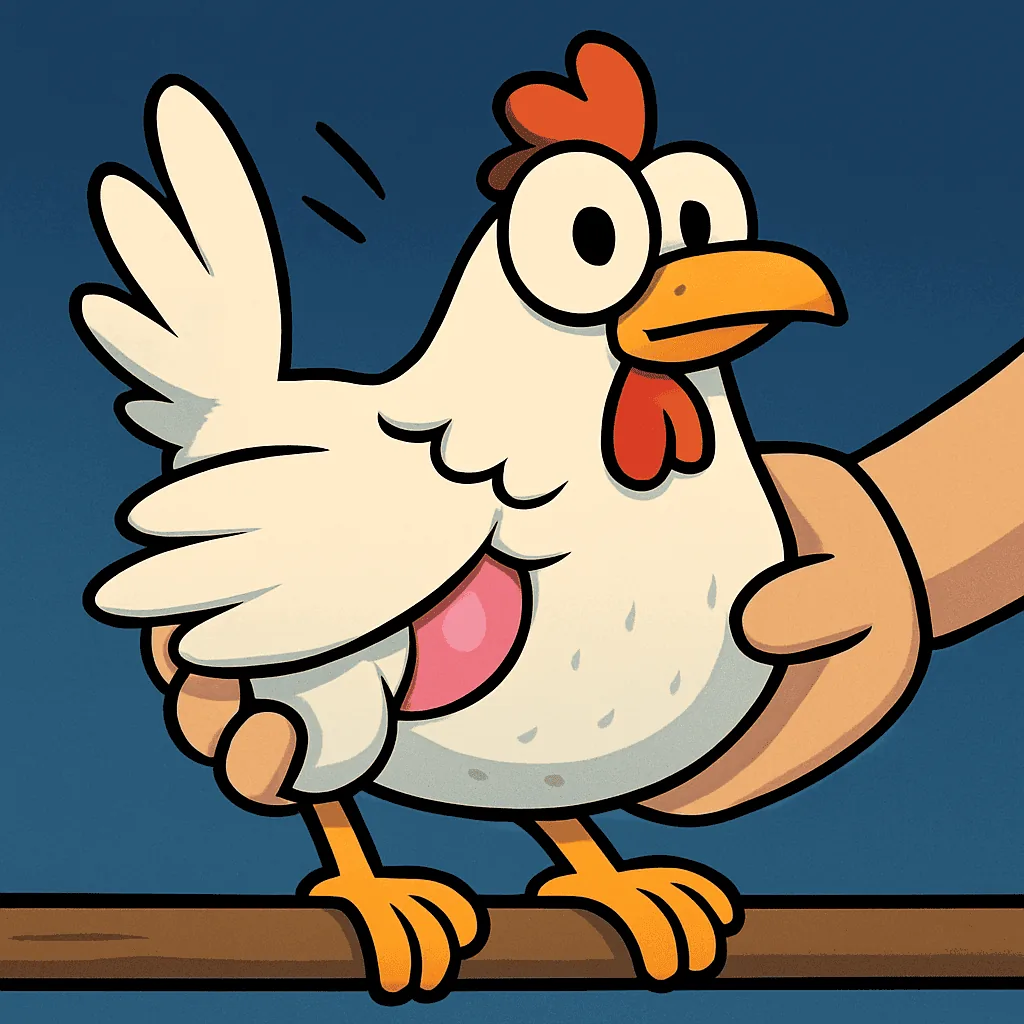
It's near dusk and one of your hens won't settle. She's up on the perch, then down, then shuffling along to the far end. She dips her head to her belly, gives a quick peck at herself, straightens up again. The others are already puffed and quiet, eyes half-closed. She isn't. Something under her feathers is bothering her, and she can't tell you in words. She's telling you the way she always tells you — by moving when she ought to be still.
Most of the time, a restless hen at dusk isn't ill in any dramatic way. Her comb's a good colour. Her wattles look right. She ate her tea, drank her water, dust-bathed in the afternoon like normal. If you were only watching from the kitchen window, you'd say she's fine. But the perch is where a hen lets go of the day, and she isn't letting go. That's the bit worth paying attention to. Not a panic, love. Just a proper look.
So we'll sit with her this morning — or rather, this evening, while she's still on the perch and a touch sleepy. Hens are easier to handle at dusk. Steady hands, quiet voice. Lift her gently, tuck her against your side the way you'd hold a loaf of warm bread, and turn her so her belly's toward the light. A head torch helps. She won't love it, but she'll allow it if you're calm.
The first place to part the feathers is around her vent. That's the patch of bare-ish skin just under her tail, where the down thins out. Blow softly against the feathers so they lift, or use two fingers to part them at the base. What you're looking for is movement. Red mite are tiny — pinhead specks, reddish-brown if they've fed, greyer if they haven't — and they scurry when the light hits them. Lice are paler, straw-coloured, longer than they are wide, and they run along the shaft of a feather rather than on the skin itself. Look at the feather bases too, right where the quill meets the skin. Lice lay their eggs there in pale clumps stuck to the shaft — little grains of rice, glued on.
Healthy skin, for comparison, is a soft pinkish-cream. Sometimes a bit yellow on a laying hen, sometimes paler on a moulter. It should look calm. No red patches, no crusting, no little dark specks that turn out to be walking. The down against the skin is clean and dry. If she's been dust-bathing well, her skin will actually be in beautiful condition — that's what the dust bath is for. It's her medicine, and she knows it before we do.
Check under her wings too, at the soft warm spot where the wing meets the body. Mites love the warmth. Part the feathers there the same way, slowly. And have a look at her legs while you're at it — scaly leg mite is a different creature altogether, but if you're already holding her, you might as well. The scales on a healthy leg lie flat and smooth. If they're lifting or crusty, note it for another day.
If you find something — and sometimes you will — don't rush. One hen at a time, love. A dusting of poultry-safe mite powder around the vent and under the wings, worked in gently against the direction of the feathers. Then a proper clean of the coop, especially the ends of the perches where red mite hide in the daytime. Red mite live in the coop, not on the hen — she's only their supper. Lice live on her. The treatment's similar but the cleaning matters differently, so it's worth knowing which you've found.
If her skin looks angry, or she's losing condition, or you're just not sure what you're seeing — see a vet on this one. Then come back and tell me. There's no shame in a second pair of eyes, and some things want a proper diagnosis rather than a guess at the run gate.
Pop her back on the perch when you're done. She'll shake herself, grumble a bit, resettle. Watch her a minute. If she tucks her head under her wing and softens, you've done right by her. If she's still shuffling, note it, and have another look tomorrow at the same hour. Her comb tells you plenty, but sometimes the story is under the feathers, and you have to know where to part them. Good girl. Back on the roost.