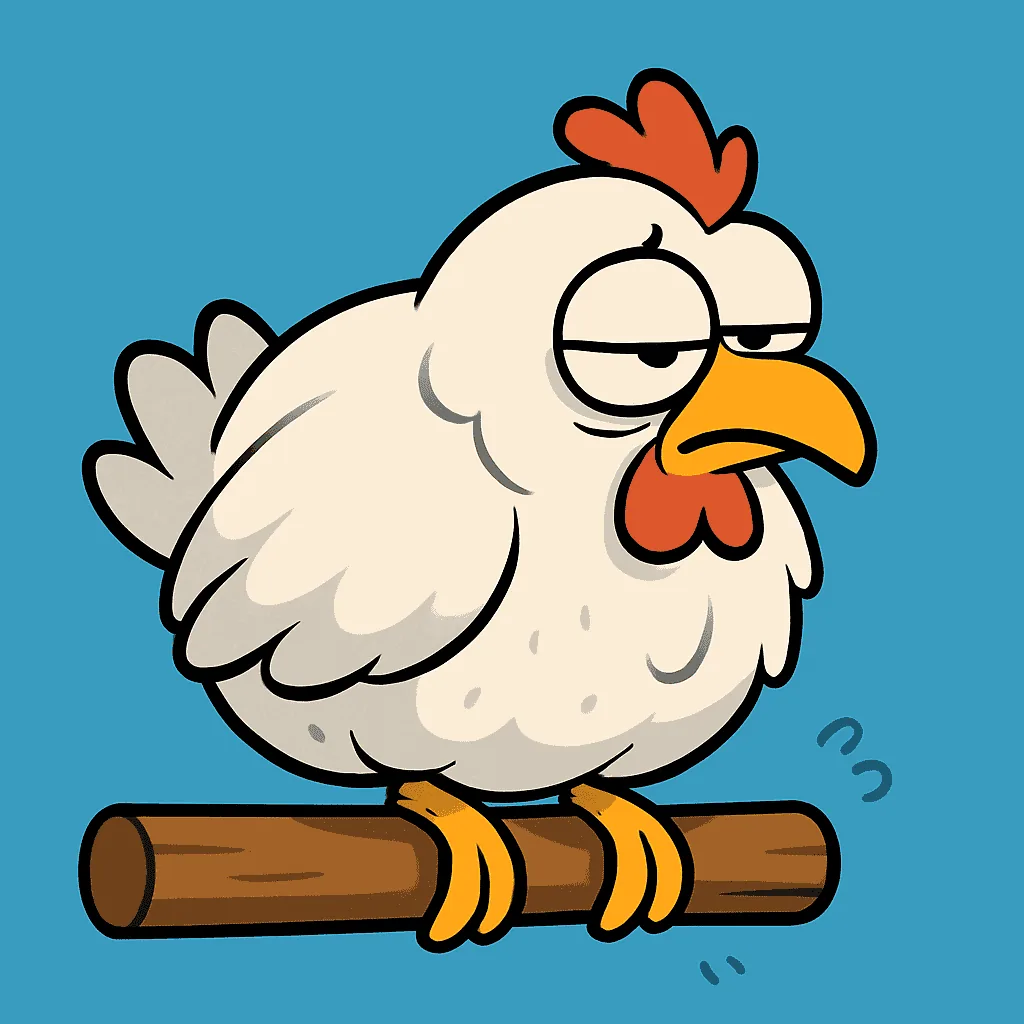
It's the middle of the morning and the run's busy. The others are scratching under the elder, having a proper go at whatever's under the leaves. And there she is, up on the perch, when nobody roosts at this hour. Tail a fraction lower than yesterday. Eyes not shut, not open — somewhere in between. Nothing you could put in a sentence yet. Just wrong.
That's the moment most keepers miss, and I don't blame them. A hen who's genuinely poorly by the afternoon will look poorly, and you'll act. But the hen on the perch at ten in the morning, the one who's stepped out of the flock's rhythm by a quiet inch — she's the one worth learning to see. Chickens hide illness. It's an old instinct, prey-bird sensible, and it means by the time a hen looks ill to a stranger she's often been unwell for days. The keepers who catch things early aren't cleverer. They've just learned to notice the hen who's stopped being herself.
So let's have a proper look at her. Not a fuss, not a scoop-up straight away — just a minute at the gate with your mug. Where is she standing. How is she carrying herself today. A well hen has a certain lift to her — tail up, chest forward, head turning at every small thing. A hen who's off will let her tail drop. She'll fluff up a bit, not the round broody puff but a softer, tireder version. Her eyes will half-close between blinks. She won't come for the corn, or she'll come slow and stand at the edge.
Her comb tells you plenty. A good comb is bright, firm, upright on the breeds that stand upright. When a hen's unwell it can go pale, or a touch waxy, or floppier than you remember. Her wattles the same — check the colour against her sisters if you're not sure. Then, gently, pop her up and have a feel of her crop. Morning crop should be near empty; evening crop should be full and softish, like a small beanbag. Hard as a stone, or squishy and sour-smelling, and you've learned something useful. Have a look under her tail while she's in your hands. Clean vent, clean feathers. Any pasting, any mess, note it.
Stand her down and watch her walk a few steps. Is she off her legs a bit. Is one wing held lower. Is she breathing through an open beak when it isn't hot. None of these is a diagnosis on its own. Together they're a picture, and the picture is what you're building.
Now — and this matters — most of the time the picture is small. She's had a rough night on the pecking order. She's coming into a moult. She's thinking about going broody and hasn't committed yet. That's a broody sit, not a poorly sit, and you'll learn the difference by feeling it more than reading it. Fluffed up isn't always trouble — but note it. Write her name down. The day, what you saw. Tomorrow morning you'll be glad of it.
What helps, on a day like this, is quiet and warmth and the ordinary things done well. Give her the quiet end of the run if the others are hassling her. Keep her water close and shallow — a hen who feels rough won't walk far for a drink. Warm mash tonight, I think. Nothing fancy — her usual pellets softened with warm water, maybe a scratch of corn on top. It gets fluid into her without her having to work for it.
If her comb goes properly pale or blueish, if she's gasping, if there's blood, if she's stopped drinking, if she's stood in the same spot for hours with her eyes shut — see a vet on this one, then come back and tell me. Don't wait it out to be polite about it. Poultry vets are thinner on the ground than they should be, so it's worth knowing yours before you need them. Ring in the morning; most will talk you through it on the phone first.
Otherwise, no rush — she's holding steady. Note her tonight when they go up to roost. Note her first thing tomorrow, before the others are down. Two mornings of the same quiet hen and you act. One morning and you watch, because hens have off-days the same as we do, and the kindest thing is often a shallow bowl of water and a corner nobody's pecking at.
We'll sit with her this morning. Tail down doesn't mean lost — it means listen. Good girl. Back on the perch a minute. Worth another look tomorrow.