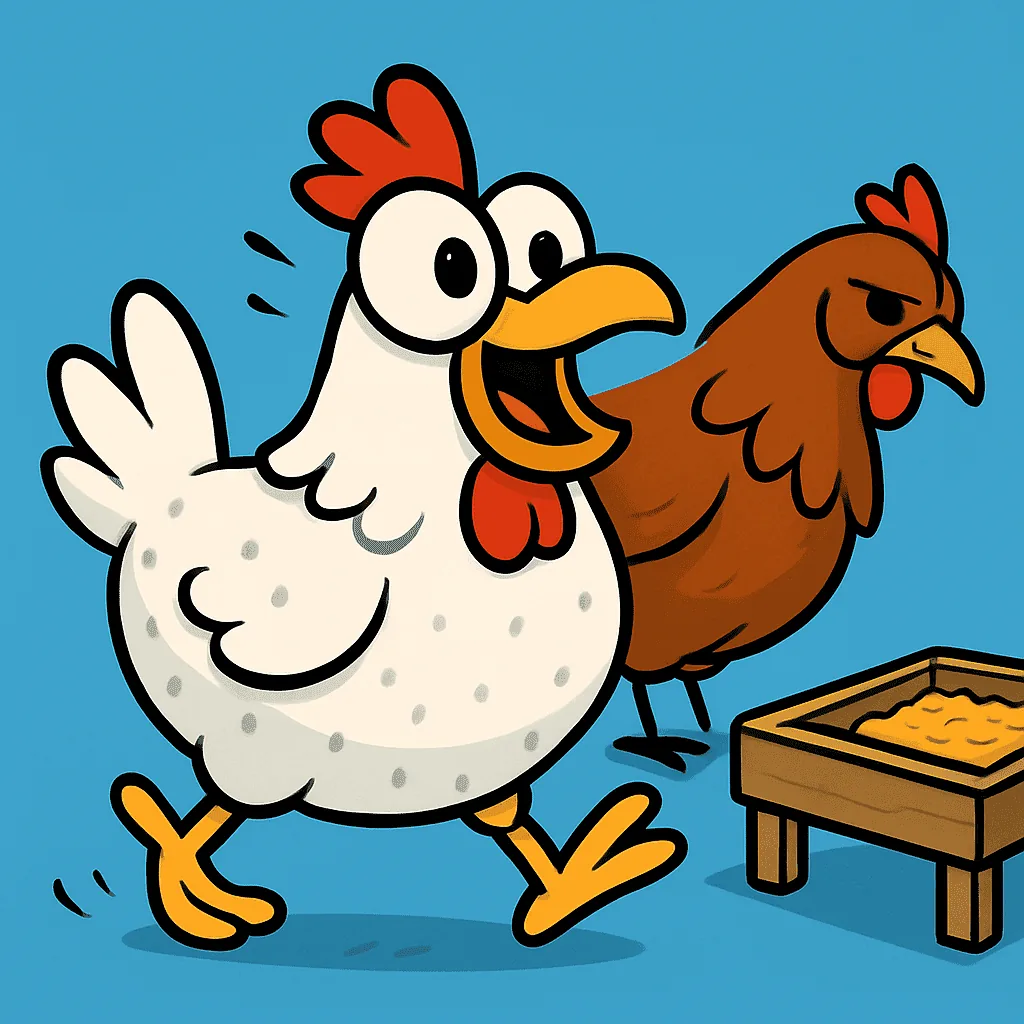
Clementine is at the feeder first this morning. Clementine, who spent most of last summer hanging back by the water dish, waiting her turn, taking what was left. She's there before the others have shaken the sleep off. And Beatrice — old Beatrice, who's run this flock since the year before last — is standing off to the side, watching. Not sulking. Just watching. The run is quiet in a way that isn't quite the usual quiet. Something has moved overnight.
Most keepers, the first time they see this, reach for the worry. They think Beatrice must be poorly. They think Clementine's turned mean. They start looking for a fight, or a wound, or a reason to step in. And sometimes there is a reason — we'll come to that. But more often, what you're watching isn't trouble. It's the flock doing what flocks have always done. The order has shifted, and the girls are sorting themselves out in the only way they know how.
A pecking order isn't a chart pinned to the coop wall. It's a living thing, and it reshuffles whenever the flock changes shape. If you've lost a hen — even one who wasn't at the top — the girls feel the gap. If someone's been off her legs a week with a bit of illness, her place isn't quite hers anymore when she comes back. If you've brought in a new arrival, even a shy one, every hen in the run has to work out where she now sits. And sometimes, no drama at all — a hen just quietly ages, and another quietly steps up. Beatrice hanging back doesn't mean Beatrice is unwell. It might mean Beatrice is tired of being in charge, and Clementine has noticed.
Here's what a healthy reshuffle looks like. There's a bit of chest-bumping at the feeder. A quick peck on the back of the neck, and the pecked hen moves along without much fuss. Some staring. A hen holding herself tall, another making herself small. It's over in seconds and no one is bleeding. Feathers might come loose — a hen going through a reshuffle sometimes looks a touch scruffy for a week. By evening, everyone's back on the roost, and the new order is settling in. A day or two of this is normal. A fortnight of it, on and off, is still normal if no one's hurt.
What you're watching for is different. A hen who can't get to the feeder at all — not once, not even after the others have finished. A hen who's being cornered, not just pecked. Blood, especially on the comb or the vent. A hen who won't come off the perch, or won't go on it. That's not a reshuffle. That's bullying, or that's illness dressed up as a low rank, and it wants a proper look. Separate the picked-on one to the quiet end of the run for a day. Keep her water close and shallow. If there's a wound, or she's fluffed up and dull-eyed, see a vet on this one — then come back and tell me.
But assuming no one's being hurt, the hardest thing — and I mean this gently — is not stepping in. Keepers want to help. We want to hand Beatrice her feeder back and tell Clementine to wait her turn. The flock doesn't work like that. If you break up every small squabble, the girls never finish the conversation they're having, and the reshuffle drags on for weeks instead of days. Sit on the upturned bucket. Watch a minute. Notice who eats, who drinks, who ends up on the roost tonight and where. Her comb tells you plenty. Beatrice's comb is a good colour, isn't it. She's not poorly. She's just not top anymore.
There's something worth saying about the old top hen especially. Losing rank can look sad from the outside. She stands a bit apart. She lays down for a dust bath by herself. But watch her for a week and you'll usually see she's fine — eating, drinking, doing her rounds. Some old girls seem almost relieved. The job of running a flock is a job, and she's done it a long time.
So — Clementine at the feeder, Beatrice at the fence. Note it in your head. Have a look again tomorrow, and the day after. If everyone's roosting together at dusk and no one's hurt, the flock is doing its work. No rush — she's holding steady. We'll sit with them this morning, and we'll trust the girls to sort the rest.
Roost first, questions later.