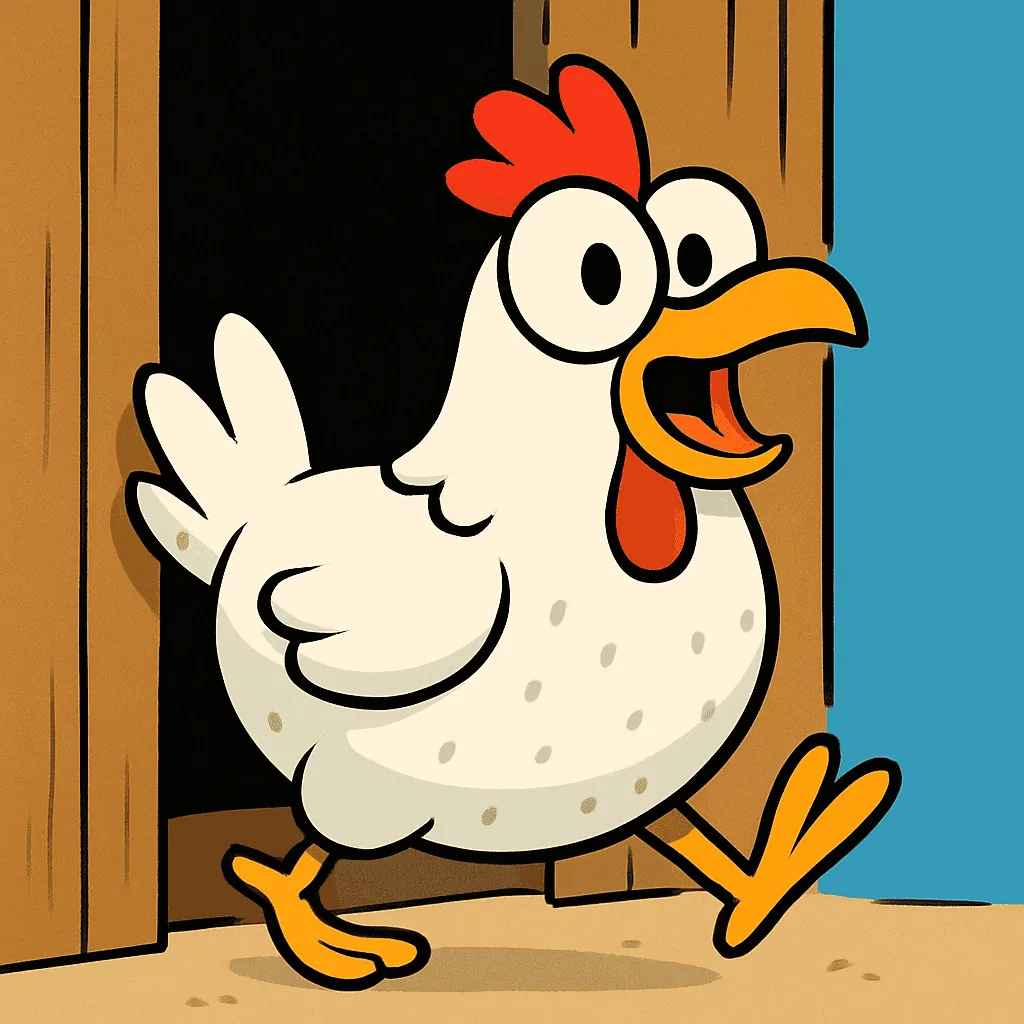
She's at the pop-hole again. Head low, one eye on the run, the other on the space where the others used to come round the corner. She's not calling. She's just waiting, the way she's waited every morning of her life, only now the waiting doesn't end. You watch her from the kitchen window and something in your chest goes soft and sore at the same time. She looks back over her shoulder — checking. Then forward. Then back. A hen on her own is a strange, quiet thing to see.
Most of what's written about keeping hens assumes you have a flock. Three, four, six girls, a pecking order, an egg song passing from one to the next. Nobody quite tells you what to do when it's down to one. And the temptation is to treat her like she's fine — she's eating, she's drinking, her comb is a good colour, so surely she's alright. But a hen isn't really a hen on her own. She's a flock member without a flock, and that's a different creature standing at your pop-hole. Not broken. Not poorly. Just adrift.
Hens are company animals, right down to the bone. The pecking order isn't cruelty — it's the shape that tells each one who she is. She knows who to follow to the dust bath, who to stand near at the feeder, who to tuck in beside at dusk. Take the others away and the shape goes with them. She'll still roost, still lay if she's a layer, still scratch about in the afternoon sun. But you'll notice she's quieter. She stands where she used to stand beside someone. She goes to bed early. Her days get smaller. Fluffed up isn't always trouble — but note it. In a lone hen, note it twice.
So let's have a proper look at her, and then let's talk about what's kind.
The first honest thing to say is that there isn't one right answer. There are a few, and they all have love in them.
Bring her company. Two new hens, ideally — not one, because a pair of newcomers will settle each other while she watches from a distance. Point of lay pullets from a keeper you trust, or ex-commercial girls who need a soft landing. Introduce them slowly. A run divider for a week, so they can see each other without sorting anything out with beaks. Then a supervised afternoon together in neutral ground. She may not welcome them at first — she's forgotten how to share the feeder. Give her time. Give them the quiet end of the run. Her comb tells you plenty about how she's coping; watch it as much as you watch theirs.
Rehome her to a settled flock. Sometimes the kindest thing isn't to build around her but to send her on. A keeper down the lane with four steady hens and room for a fifth may be exactly the doorway she needs. She'll go through a week of being bottom of the order, and then she'll be a hen again. Ask around. Local keeping groups are gentler than you'd think about this.
Let her be your last one, with intention. If she's old, if she's been through a lot this year, if you're not sure you want to keep going — that's a real choice too. She can live out her days as a single hen if you're honest about what she needs from you. More of your time in the garden. A perch where she can see you through the window. A companion of a different sort — some keepers pair a lone hen with a calm bantam or, in the right setup, spend more of the day with her themselves. It's not a full flock. But it's not nothing.
What isn't kind is pretending she's fine and leaving her to fold quietly inward through a long autumn. If her comb pales, if she stops dust-bathing, if she goes off her feed for more than a day — see a vet on this one, then come back and tell me. Loneliness in a hen can tip into something you'll want a proper eye on.
Whichever path you pick, pick it soon. Not today, not in a panic — but this week, next. She's telling you at the pop-hole that the shape she lived inside has gone. You're the one who can give her a new shape.
No rush — she's holding steady this morning. Pour the tea. Sit on the step. Watch her a while and let the choice come. She'll tell us what she needs.
Roost first, questions later.