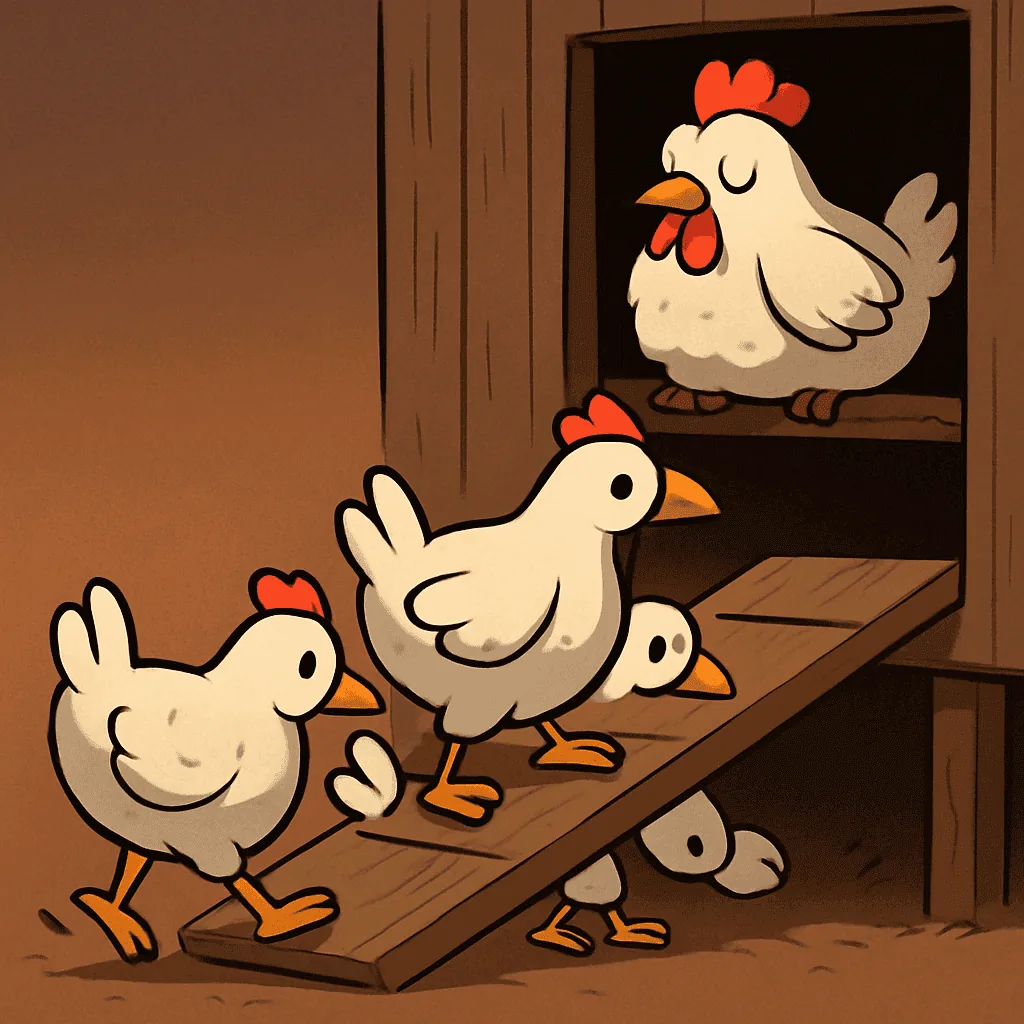
The light goes soft over the run around half past, and Marigold is already thinking about it. You can see her working it out — a look at the pop-hole, a look at the coop, one more scratch at the same patch of dirt she's scratched all afternoon. Then she goes. Henrietta follows, because Henrietta always follows Marigold, and the little grey one at the back waits until the others are inside before she'll commit. Nobody has called them. Nobody has herded them. The light told them, and they listened.
It takes a while to trust this. When you're new to hens, dusk feels like something you have to manage — a job on the list, a door to shut, a headcount to do while they're still milling about looking uncertain. So you go out early. You wave your arms a bit. You try to steer the stragglers, and the stragglers scatter, because a running keeper at dusk is exactly the wrong shape for a settling hen. The truth is quieter than that. Left alone, they file in on their own. Your job at lock-up is smaller than you think, and it starts later than you think.
Watch them one evening without doing anything, and the shape of it comes clear. There's an order, and the order isn't random. The top hen goes up first, or sometimes last — she has the pick of the perch either way, and she takes the middle spot, the warmest one, the one with a hen on each side. The others sort themselves out around her. There's a bit of grumbling, a bit of shuffling, someone stands on someone's foot. Nobody makes a fuss. Within a few minutes the murmuring settles and you get that low, contented churring sound, which is the sound of a flock deciding the day is done.
Before they go up, most of them will take a last drink. It's worth noticing who does and who doesn't — a hen who skips her evening water two nights running is worth another look tomorrow. Keep the water shallow and close to the pop-hole so the slower ones can top up without a trek. Some will have a last dust bath in the corner if the weather's dry, and that's a good sign — a hen who dust bathes at dusk is a hen who feels safe. The egg song from the nest box has usually finished by now. If someone's still in the box at proper dusk, have a quiet look — she may be settling to lay late, or she may be starting a broody sit. Her comb tells you plenty about which.
Then comes the bit that surprises new keepers: the coop goes quiet very quickly. Five minutes after the last hen is up, you could stand at the pop-hole and hear nothing but breathing. That's the window you're waiting for. Not the milling-about window, not the sorting-out window — the quiet one. Lock-up is a two-minute job done at the right moment, and the right moment is after they've settled themselves.
So what does the evening actually need from you. A headcount at the pop-hole once they've gone in — a proper one, by name, not a glance. A check that nobody's roosting in the nest box, because a hen who sleeps in the box makes a mess of tomorrow's eggs and it's a habit worth breaking early. A look at the perch itself — everyone facing the same way, feet tucked, nobody hunched at the end on her own. A hen who chooses the floor over the perch is telling you something, and it's worth noting for the morning. Then the pop-hole closes, the run gate closes, and that's the lock-up done. No fuss, no torch waving, no chasing.
One hen at a time, love — that's the way to walk the perch line. Count them off by name. Marigold in the middle, Henrietta next to her, the grey one on the end where she likes it. If someone's out of her usual spot, note it. If someone's fluffed up more than the others, note it. Fluffed up isn't always trouble, but a fluffed hen sleeping apart from the flock is worth another look tomorrow. Most nights, everyone's where they should be, and you can shut the door on a coop full of contented churring and go back to your tea.
They know how to go to bed. Your part is smaller than the books make it sound — arrive at the quiet moment, count them home, close the door. Roost first, questions later.