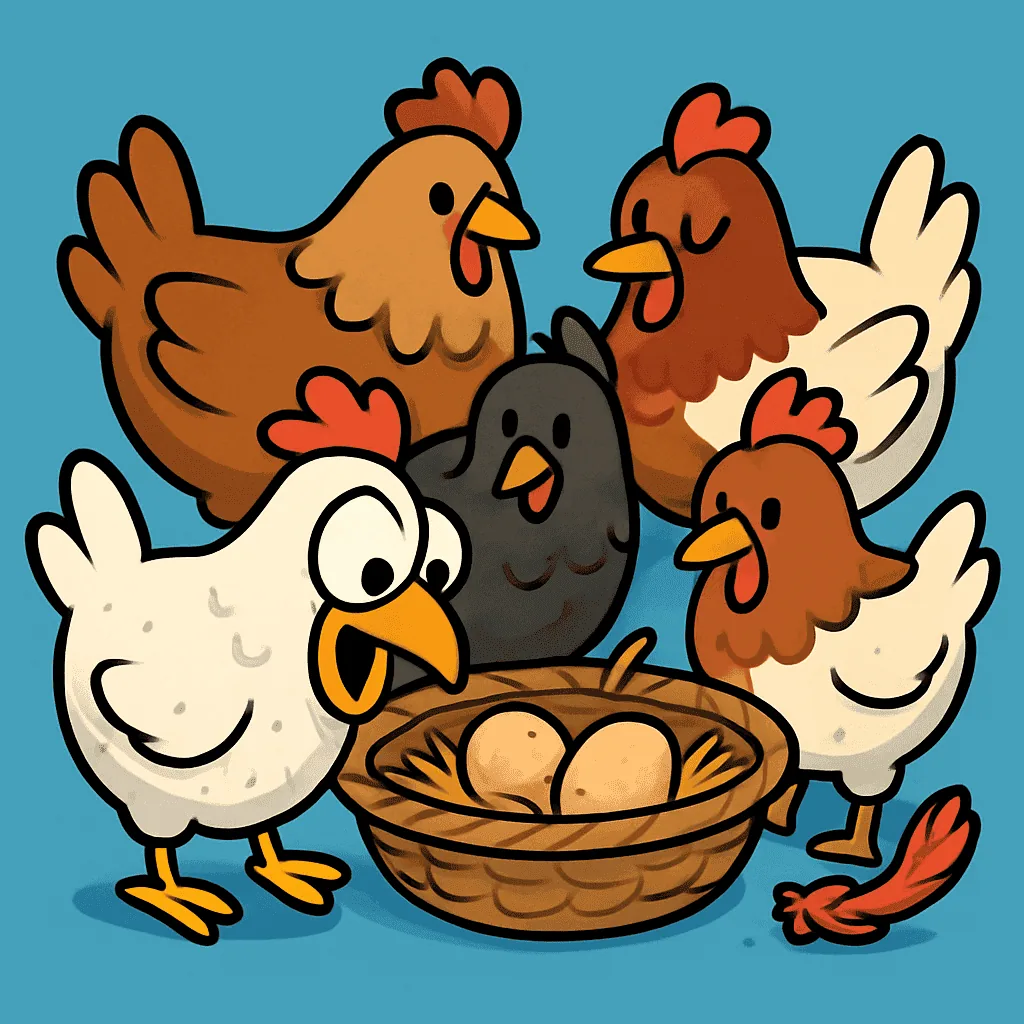
Six hens in the run, two eggs in the basket. You've checked the nest boxes twice. You've lifted the straw, looked under the perch, walked the whole coop in case someone's laying sly behind the feeder. Nothing. The girls are pottering about like it's an ordinary Tuesday, and you're standing there with a basket that isn't full, wondering what you've done.
Most likely — nothing. That's the honest first answer. A hen isn't a machine that owes you an egg a day, and the six of them aren't a factory. They're six small bodies with six different laying rhythms, and the rhythms shift with the light, the weather, the season, and the years each hen has behind her. When the basket goes light, the first thing to do is set it down and have a proper look at who's in the run.
Start with the light. Hens lay on daylight — real daylight, the kind that pours in when the mornings stretch and the evenings hang on. When the days shorten, laying quiets. It isn't a fault in the flock; it's the flock listening to the sky the way flocks have always listened. A hen who was giving you five a week in June may give you two in November, and she's not sulking. She's resting the part of her that makes eggs, because the season is telling her to.
Then there's the molt. If you're finding feathers about the run — small ones drifting, or great handfuls near the dust bath — someone's rebuilding her coat. Growing feathers takes a lot from a hen. Her body puts eggs down and picks feathers up, and for a few weeks she'll look a bit ragged and the box will stay empty under her. Molting hens don't lay much, and they aren't meant to. Warm mash tonight, I think. A scratch of corn wouldn't hurt. She'll come back to the box when her feathers are in.
Age is the quieter one, and the one keepers find hardest to sit with. A pullet at point of lay gives you eggs like she's showing off — small, frequent, sometimes two in a day when she's finding her rhythm. A three-year-old hen lays steadily, but not daily. A five-year-old lays when she feels like it, and a hen older than that may give you a handful a month, or a clutch in spring and nothing much after. Her comb tells you plenty here. If it's a good colour and she's carrying herself well, she's not failing — she's shifting. Her body is doing something different with the years, and the eggs are only one part of what she offers the run.
Stress is the last of the four, and the one worth watching for. A new hen in the pecking order, a fox in the lane last week, a run of hot days, a move to a new coop — any of it can quiet a laying hen for days. She's not broken. She's cautious. Give her the quiet end of the run, keep her water close and shallow, and let the flock settle. Laying usually returns when the world does.
Six hens, two eggs isn't a problem to solve. It's a basket to read.
So when the count drops, go slow. Name each hen in the run and ask, gently, where she is in her year. Is Marigold in her molt. Is Henrietta three going on four. Has the light gone from sixteen hours down to nine without anyone marking it. Is there a new girl at the bottom of the pecking order who's still finding her feet. One hen at a time, love. The basket will make more sense once you know who's in it and what each of them is doing this week.
If a hen has stopped laying and she's off her legs, hunched, pale in the comb, or sitting apart — that's different. That's not the season. See a vet on this one, then come back and tell me. But a bright hen with a good comb and a light week in the box is a hen doing hen things.
We'll sit with them this morning. Count who's here, not what's missing. The season will turn, the feathers will come in, and the older girls will keep earning their place in the run whether the basket knows it or not. Roost first, questions later.