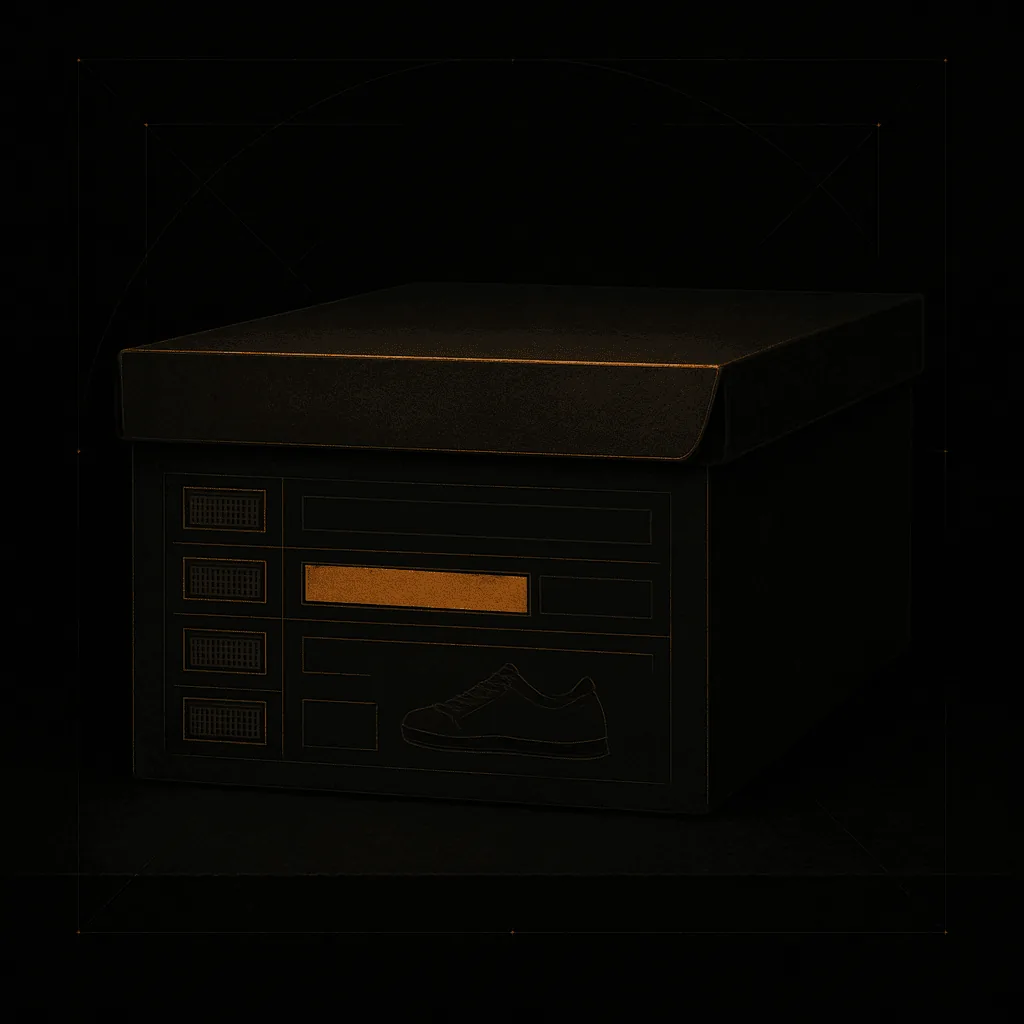
The box is on the desk under the lamp. One corner is soft from being stacked. The label is off-white, a little yellowed at the edge, and the print is small enough that you tilt it toward the light without thinking. This is the part most people skip. They lift the lid, pull the pair, close the box, slide it back on the shelf. The label sat there the whole time with the answer on it.
A label is a shipping document. It was printed for a warehouse worker, not for you. That is why it reads the way it reads, and that is also why it is honest. The shoe can be re-laced, re-boxed, re-sold, re-told. The label was printed once, at one factory, on one day, for one pair. If the pair and the label still match, you have provenance. If they don't, the label still tells you what it was printed for, and that is its own kind of truth.
Start with the SKU. It is the long code, usually a string of digits, sometimes with a dash and a color suffix. The digits before the dash name the silhouette and the release. The digits after the dash name the colorway. Two pairs of the same model in different colors will share the front, differ at the back. That is why a SKU without its suffix tells you half the story. Read the whole line. If the suffix on the label matches the suffix printed on the tongue tag inside the shoe, that is a small quiet moment worth noticing. If they don't match, something has been swapped, and the box is not the box.
Next row down, usually, is the size stamp. US, UK, EUR, CM, printed in a small grid or a short line. The size on the label should match the size on the tongue tag exactly, including the half sizes and the region. A US 9 label on a pair with a UK 8 tongue tag is not a mystery, it is a mismatch. Region-specific runs used region-specific boxes. A European box for a pair meant for the European market will lead with EUR. The stamp is not decoration. It tells you which market this pair was shipped to, and sometimes that is the whole story of why the colorway is what it is.
Then the factory code. This is the one people miss. It is usually a short cluster, two or three characters, sometimes tucked near the barcode, sometimes on its own line. It names the factory that made the pair. Factories have signatures. One factory ran cleaner stitching in a certain year. Another was known for a slightly softer midsole compound. If you have held enough pairs from the same run, you start to feel the factory before you read the code, and then the code confirms it. That is a good feeling. That is the archive working.
The date is often hiding in plain sight. Sometimes it is printed as a manufacture date, month and year, in a corner. Sometimes it is encoded in a longer string and you have to know the format for that brand and that decade to read it. Formats changed. The label from 2003 does not look like the label from 2013 does not look like the label from last spring. The paper changed, the font changed, the barcode style changed. A label that looks wrong for its claimed year usually is wrong for its claimed year. The paper aged the right way, or it didn't.
One thing about box labels. They fade. Sun on a shelf, humidity in a closet, a finger dragged across the ink one too many times, and the print softens. A soft label is not a fake label. It is a label that lived. What you are checking is whether the fade is even, whether the paper feels like paper of that era, whether the corners match the wear on the box lid. Everything on the box should have aged together. If the label looks fresh on a box that looks tired, read it twice.
So pull the box out. Set it under the lamp. Read the SKU, then the size stamp, then the factory code, and let the date find you. Write the four lines down in the archive entry before you put the box back. Years from now, that is the entry you will be glad you wrote. The pair is the pair. The label is the receipt. Keep both.
Worth pulling the box for.