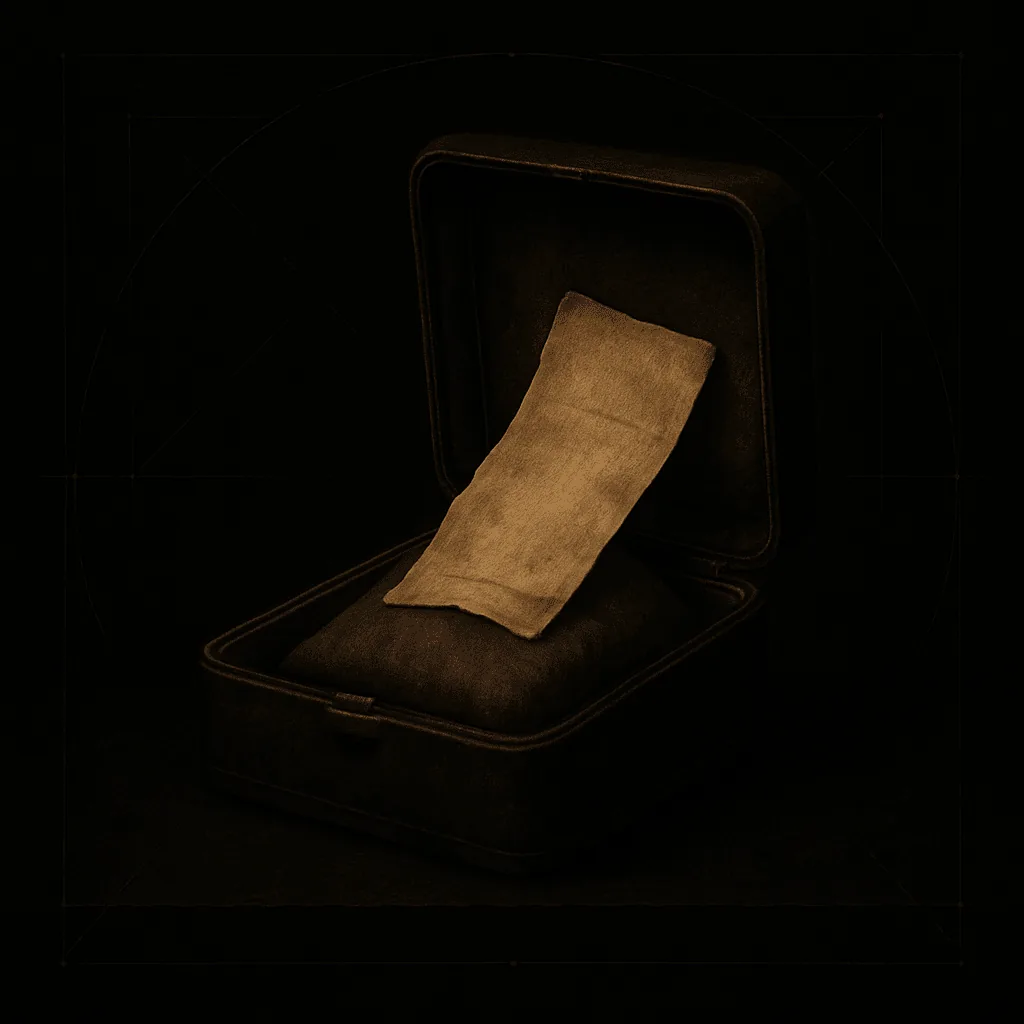
The lid comes off and there it is, folded once, tucked against the tissue. A receipt. The paper has gone the color of weak tea. The ink at the top is faded to a ghost, but the date holds, and the store name holds enough. Someone bought this pair on a Saturday in a mall that probably isn't a mall anymore. They wore them, then they didn't, then they put the receipt back in the box the way you put a bookmark in a book you meant to finish. That folded slip is doing more work than the shoe itself right now.
Most pairs come to me with the story sanded off. New laces, wrong box, tissue from a different decade, sometimes a sticker peeled and reapplied crooked. You learn to read around the missing pieces. The toe box tells you one thing, the stitch tells you another, the sole unit tells the truth when the rest is lying. But even a clean read from the shoe itself gives you a range, not a receipt. You can say early run, late run, second version, factory. You can't usually say the fourteenth of March.
That's what the paper does. It closes the range.
One thing about provenance, it's not about proving the pair is real. The shoe proves itself. The stitch, the tongue tag, the shape of that toe box, I know it. Provenance is about proving the pair is this pair, the one that came out of that store, in that week, before the second version dropped and the tooling changed and the suede got sourced from somewhere else. Two pairs can be identical on the shelf and separated by six months on paper, and those six months are sometimes the whole game. A receipt dated before the running change is worth pulling the box for. A receipt dated after is still worth keeping, it just tells a different story.
Paper ages honestly. Leather you can condition, midsoles you can clean, boxes you can find a replacement for at a swap meet if you're patient and a little shameless. A receipt you can't fake without trying, and the tries show. Thermal paper from the late nineties fades a specific way, the top line first, the middle holding longest. Carbon copies from a mom-and-pop shop have a bleed you can feel with a thumbnail. Register tape from a chain store in 2003 has a font that a printer today won't quite hit. When the paper matches the pair, the pair gets older in a way that isn't about the leather.
And it isn't just receipts. It's the hangtag someone rubber-banded to the laces and forgot. It's the price sticker on the box end, half peeled, with a SKU that only ran that season. It's a folded flyer for a release event, a punch card from a store that closed, a Polaroid the original owner slipped inside the tissue because they wanted a picture of the pair on their feet before the crease set in. None of that is the shoe. All of it is the shoe.
Collectors talk about grails like the value lives in the object. Sometimes it does. More often it lives in the paperwork around the object, the little archive that a first owner accidentally built by being a slightly sentimental person who didn't throw things away. That archive is fragile. Paper gets wet, ink lifts, tape yellows and lets go. A box gets stepped on in a move. Someone's kid finds the receipt and folds it into an airplane. Once the paper is gone, you're back to reading the shoe alone, and the shoe alone can only tell you so much.
So when a pair comes through with the receipt still in the box, you don't unfold it more than you have to. You photograph it flat, in even light, both sides. You write down the store, the date, the price if it's legible, the SKU if there's one printed. You put it back where it was, in the same fold, because that fold is part of the object now. And you note, in whatever archive you keep, that this pair has paper. That matters later, to you, and to whoever holds the pair after you.
One thing about the receipt in the box. It wasn't left there for you. Someone just didn't throw it out. That's the whole story right there. The leather aged the right way, the paper aged the honest way, and the two of them together date a pair better than either one alone. Keep the box. Keep the paper. Sit with it.