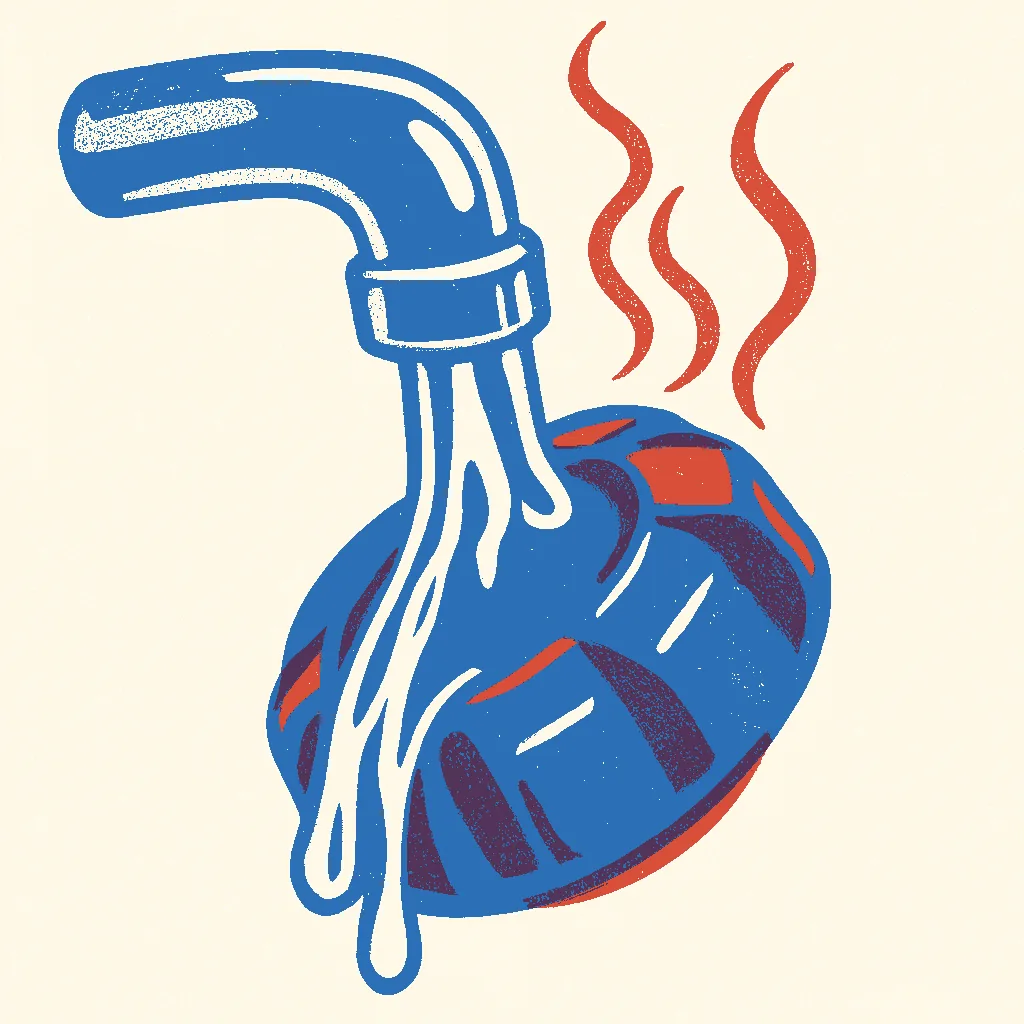
A bin of chunky bangles, two bucks apiece, and the seller says the magic word — Bakelite. Maybe. The real stuff is an early phenolic plastic, dense and carvable, turned into bangles and brooches mostly through the twenties, thirties, and forties — which is exactly why every marmalade-colored bracelet on earth now claims the name. Good news: it can't keep a secret. Hot tap anywhere nearby?
The sniff test costs nothing. Hold the piece under hot tap water for twenty or thirty seconds, then bring it straight to your nose — heat wakes up Bakelite's sharp phenolic smell, formaldehyde with a whiff of old electronics. Some say it smells like a science classroom, either way it's unmistakable once you've met it. Lucite comes up with no smell at all. Celluloid smells sweeter, closer to camphor — a different find, with its own charm.
No hot water at the flea — swab it instead. A dab of Simichrome polish on a soft cloth, or a cotton swab with a touch of 409 cleaner, rubbed on the back of the piece: if the cloth turns yellow, you're likely holding the real thing. Rinse the spot after, the cleaner isn't kind to old surfaces. One honest caveat — black Bakelite and lacquered pieces can fail the swab and still be genuine, so a clean cloth doesn't hang the verdict alone.
Then there's the hand test, the one old dealers do without thinking. Bakelite runs heavy for its size, warm and waxy to the touch, and two bangles knocked together give a deep, dull clunk — modern plastic clacks high and cheap. It takes handling a few known pieces to calibrate, then the fakes start feeling like toys. Which is what most of them are.
Flip it over — the story's usually on the bottom. Bakelite jewelry was cast in rods and sheets, then carved and polished by hand, so a genuine carved piece shows no mold seams anywhere, the carving has crisp tool marks and softly polished valleys. A molded copy carries a faint seam line and carving that looks poured rather than cut. Run a thumbnail along the edge. Feel a ridge?
And a word on the listings: 'French Bakelite' is, more often than not, a polite name for lucite or some other later plastic. The phrase sells because it sounds like provenance. The tests don't care what the tag says — no phenol smell, no yellow swab, no clunk, no deal at Bakelite prices. Pretty bracelet, sure — just pay lucite money for it.
Skip the hot-pin trick you'll hear about — jabbing a heated needle into a find scars the real ones and melts the fakes, and either way the piece deserves better.
Thirty seconds of nose, swab, and clunk — that's the whole exam, and it turns a two-dollar gamble into a considered bet. Rare enough to grin about, common enough to grab, that's carved Bakelite in a dollar bin. So — what color is the cloth telling you?