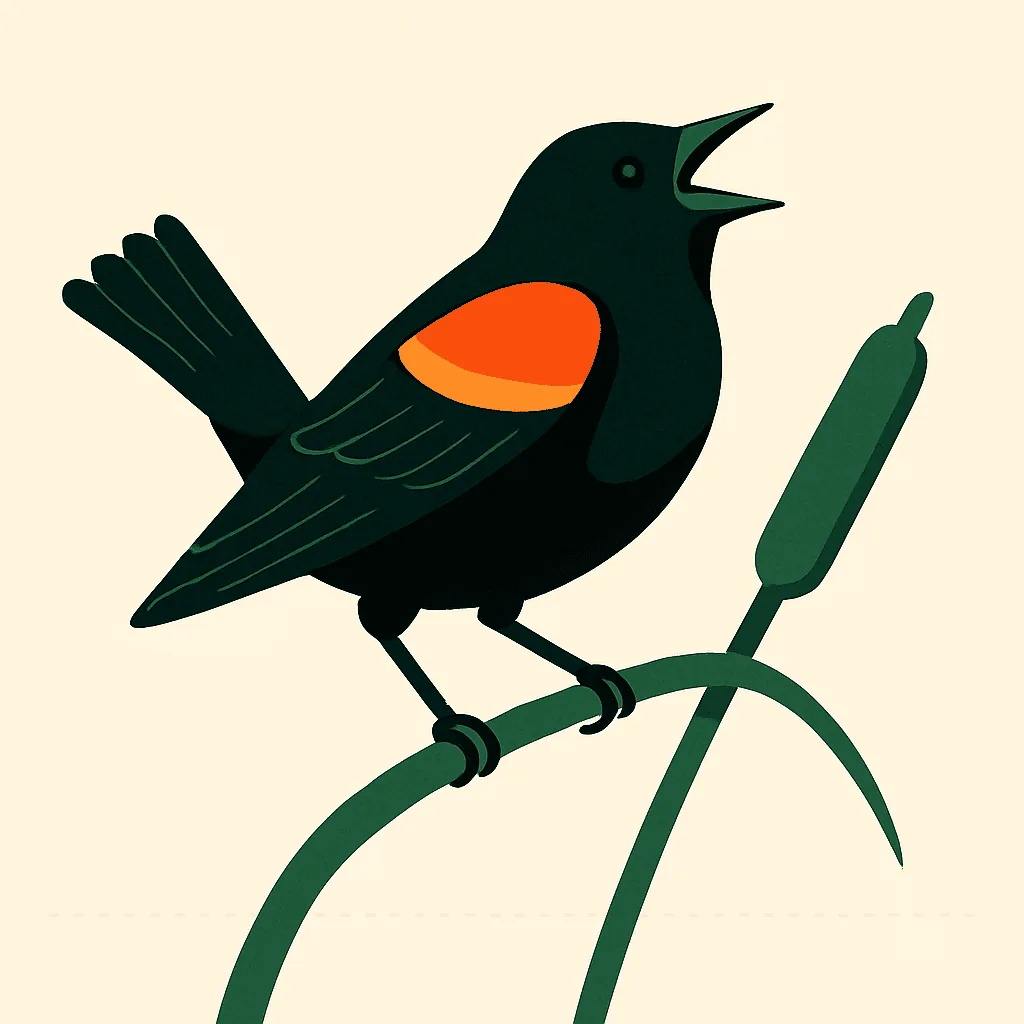
Conk-a-ree. From the cattails at the back of the marsh, that rusty-hinge call, and the yard tilts on its axis. A red-winged blackbird is home. He came in overnight, or at first light, and now he is perched on last year's phragmites with his epaulets showing like he owns the place. He does, for the moment. The rest of the returns are counting on him to go first.
Most of March still looks like February from the kitchen window. The feeder is the same feeder. The juncos are still here, the chickadees are still here, the downy is still working the suet with that patient little hammer. And yet something has shifted in the light, and you can feel the yard leaning toward the marsh, listening. The birds that spent the winter with you are about to have company, and the company is loud, and it does not send a message ahead. It just arrives.
So, who comes, and when do you catch them.
The red-winged blackbird is the herald. He is nearly always the first. Listen at dawn for that conk-a-ree from any wet edge, a ditch, a retention pond, the reedy corner of the yard that never quite drained. The males come days or weeks ahead of the females, which is why you'll see a flock of glossy black birds with red-and-yellow shoulder patches and think, oh, look who came to the feeder, all boys. Give it two weeks. The streaky brown ones show up looking like a different species entirely, and half the questions I get in April are people convinced they have a giant sparrow. Same bird. Female red-wing. The belly gives it away, once you know.
Then the phoebes. Eastern phoebe, mostly, if you're anywhere east of the plains. Small, gray-brown, no wing bars to speak of, and a tail that will not sit still, pumping down and up on whatever perch it picks. A porch rail, a shepherd's hook, the top of a garden stake. The song is its own name, phoe-be, phoe-be, a little scratchy on the second note, like the bird is not quite awake yet. They nest on ledges under eaves and over doorways, so if you had one last year, watch the same spot. Phoebes remember. They come back to the shelf they know.
And then, on some sudden warm afternoon that feels like a mistake, the tree swallows. You'll be at the window, and there will be one, then four, then a dozen, wheeling low over the yard on iridescent blue-green backs, white bellies flashing when they bank. They are hunting the first hatch of insects, which is why the day they arrive tells you something the calendar can't. If you have a nest box on a post, clean it out this week. They'll check it within days of showing up, sometimes within hours, and they are not shy about claiming it.
A quiet note on the feeder itself. None of these three are really feeder birds, not the way a chickadee is. The blackbird might stop for cracked corn or millet on the ground, the phoebe is after insects and won't touch seed, and the swallow is aerial and gone. So March is the month the yard gets bigger than the feeder. Keep the feeder full for who's still here, sure, but start looking up. Look at the wet edge. Look at the porch light where last year's phoebe nest is still stuck to the beam. Look at the nest box you meant to clean in October.
And bring your book to the window. The March returns are the ones people forget to log, because they don't line up nicely at the feeder for a portrait. The red-wing is on a cattail two hundred feet out. The phoebe is on a stake for six seconds. The swallow is a streak. But they count, and they are the ones you will remember arguing about with yourself, on the day, whether it was really them yet. Write down the date. Write down the weather. Next year you'll open to March and know almost to the week when to start listening.
One more thing. If you hear the conk-a-ree and can't find the bird, tell me where you saw it, and I'll tell you what to look for on the cattail. He's usually higher than you think. Worth another look.