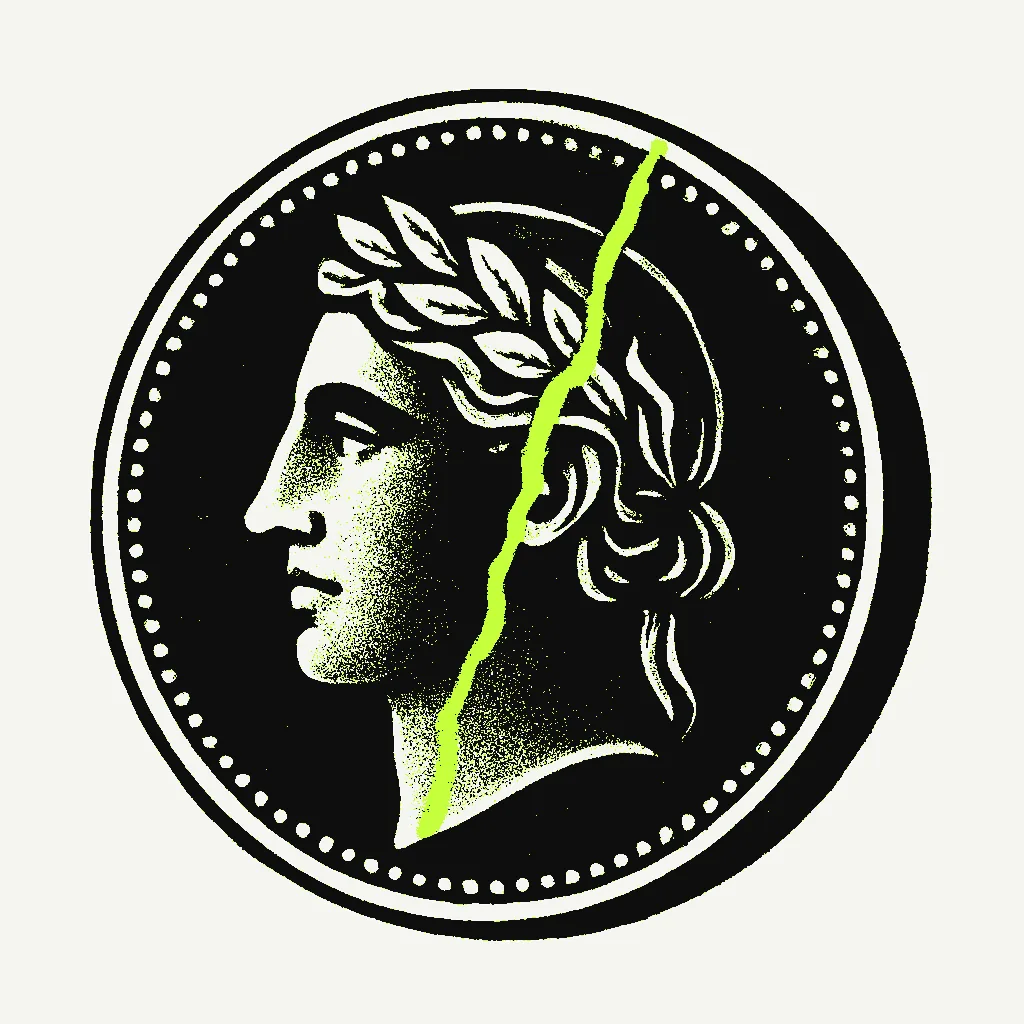
Somebody sets a Lincoln cent on the felt, cheek-side up, and points at a hairline running from the rim through the portrait's face. They ask if it's a scratch. It isn't. A scratch cuts down into the metal, this line stands up off the surface, thin and raised, catching the light like a wire laid across the cheek. Run a fingernail across it and you feel nothing, or almost nothing. The coin is fine. The die that struck it was not.
Most people who bring in a coin with a line across the face expect me to shake my head. They think the coin got dragged across concrete, or run through a coin sorter with a burr in it. Fair assumption. Ninety percent of the marks on a circulated cent are honest wear or honest damage. But this one raised line, running clean from the rim inward, following no logical path a scratch would take, is a different story. It came off the die that way. It was born with it.
A die is a hardened steel cylinder with the coin's design cut into its face in reverse. It gets pressed against a blank planchet under a great deal of tonnage, and the design transfers. Now do that a few hundred thousand times. The steel is hard, but it isn't immortal. Eventually the die starts to give. First it shows fine hairline cracks, usually running from the rim, because that's where the stress concentrates. Metal from the planchet flows up into those cracks during the strike, and what you get on the coin is a raised line, a mirror of the crack in the die. The coin isn't damaged. The tool that made it was.
Let it run longer and the cracks widen. You start to see thicker raised lines, sometimes branching, sometimes forming a little network across the field. Push the die further still and it can chip, a small piece of the face breaks off, and now the planchet metal flows into a small void. That shows up on the coin as a raised blob with no design detail inside it, a smooth little island where a letter or a piece of the portrait ought to be. Collectors call that a cud when it hits the rim, a die break when it sits inland. Same phenomenon, different address.
The reason to know this is that a coin from a late die state carries a story a fresh coin doesn't. The strike tells the story, and here the story is the last chapter of a working tool. Somewhere in Philadelphia or Denver or San Francisco, in a given year, a die was near the end of its service life. The mint kept using it because dies cost money and the coin was still coming out legible. The cent in front of you is one of the last few thousand it made before it got pulled and replaced. That's a narrower window than the mintage number on the chart suggests.
Whether that's worth anything on the market depends. Most die cracks add nothing, they're common, especially on wheat cents and Jefferson nickels from the war years when the mints were running hard. A hairline off the rim on a 1944 cent is a shrug. But a dramatic crack, a full cud, a retained die break where the chipped piece is still hanging on, those get their own listings and their own small following. There are collectors who chase nothing but die states, mapping the progression of a single die from fresh to failed across the coins it produced. It's a quiet corner of the hobby, and the people in it are patient.
What I want you to take from this is a habit. When you find a raised line on a coin and it doesn't match the design, don't reach for the polish and don't set it in the reject pile. Get it under angled light. If the line stands up off the surface, if it runs from the rim without a purpose, if it has that slightly irregular character that a struck feature has and a scratched one doesn't, you're looking at a die crack. The coin isn't hurt. It's marked.
Set it in a flip. Note the date, the mint mark, and where the crack runs. You may never do anything else with it, and that's fine, most die-cracked coins are worth their face and the quiet interest of knowing what they are. But you'll have one, and you'll know how to spot the next one. That's most of what this work is. Looking at a thing long enough to see what actually happened to it. The tool got tired. The coin came out anyway. Hold onto that one.