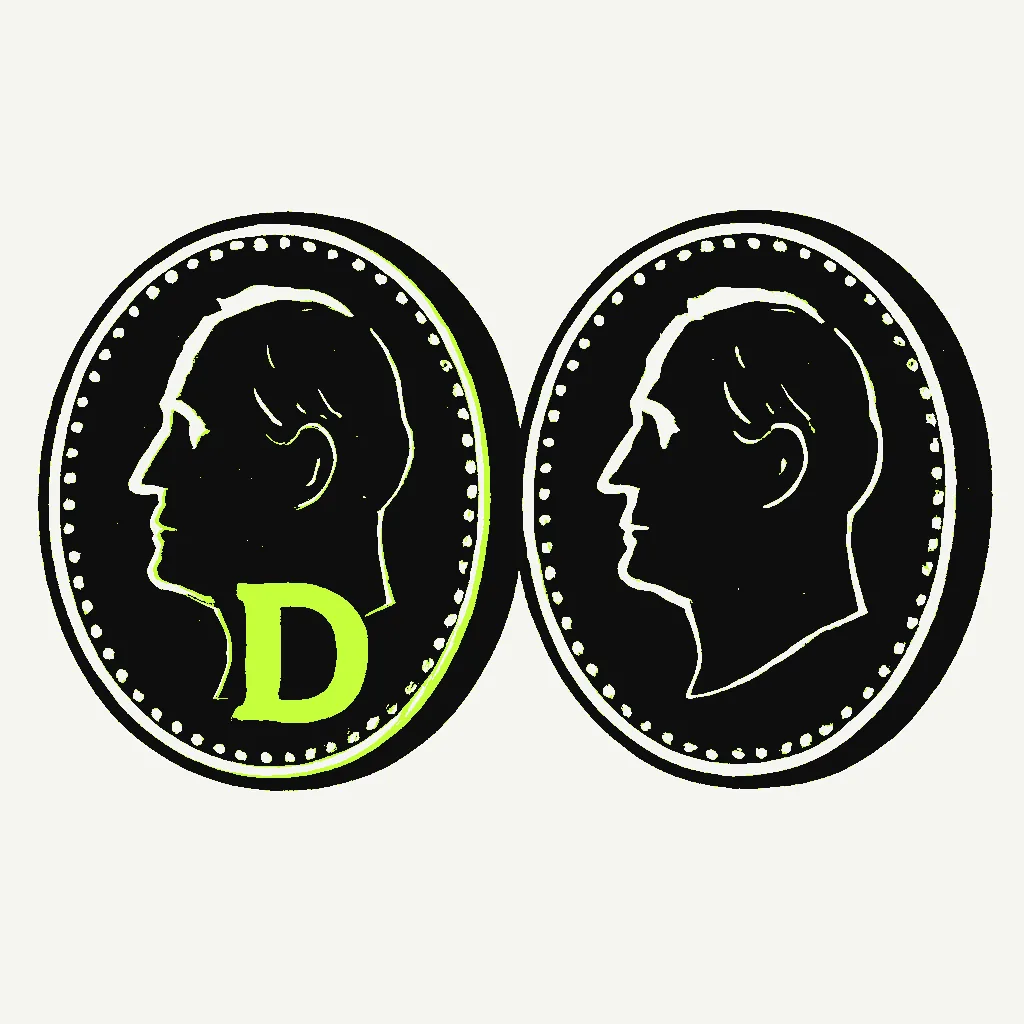
Two 1916 Mercury dimes are sitting on the felt in front of me. Same year, same Winged Liberty, same soft wear along the high points of the hair. One of them is worth about three dollars in silver. The other is worth more than most people expect to see come out of a jar in their lifetime. The difference is a single letter, tucked so far down on the reverse that most folks look right past it. Not the date. Not the design. One letter, the size of a grain of rice.
This is the part of the hobby that trips people up, and I understand why. You learn the dates first, because dates are big and dates are easy. Then you learn the designs, because designs are pretty. And then somebody hands you two coins that look identical, and tells you one of them is scarce, and you turn them over and over in your palm and you cannot see what they are seeing. The mint mark's the tell. But only if you know where the mint hid it.
Each mint in this country signs its work with a letter. Philadelphia mostly signs nothing, or a P on the newer issues. Denver signs a D. San Francisco signs an S. Carson City, when it was open, signed CC, and Charlotte signed a C, and Dahlonega signed a D that came before Denver ever existed. New Orleans signed an O. West Point signs a W. Those letters do not shout. They sit in whatever quiet corner the engraver decided they belonged, and for a hundred and fifty years the engraver was not thinking about you finding them at a kitchen table under a lamp.
So let me walk you through the corners. On a Mercury dime, flip it to the reverse. Look at the fasces, the bundle of rods in the center. Then look to the left of the E in ONE, down near the base. That is where the D or the S lives, if it lives at all. On a Buffalo nickel, flip to the reverse again, and look under the words FIVE CENTS, right on the little mound the buffalo is standing on. The letter sits beneath the denomination like it is holding it up. On a wheat cent, stay on the obverse. Turn the coin so Lincoln faces you. The mint mark is directly under the date, small and often soft, and on a worn coin you may need to angle the light before you can be sure.
Standing Liberty quarters, look above and to the left of the date, on the pedestal. Walking Liberty halves before 1917, obverse under the date. After 1917, they moved it to the reverse, down near the tail feathers of the eagle. Morgan dollars, reverse, below the wreath, above the O in DOLLAR. Peace dollars, reverse, below the ONE, near the eagle's wingtip. The engravers were not being coy. They were fitting a mark into a composition without spoiling it. That is why the marks are small, and that is why they hide.
The eye-training is this. Do not read the coin front to back like a book. Look at the rim first, then let your eye settle on the reverse. Then hunt for the letter in the spot the design wants to tuck it. Angled light helps. A worn coin under flat overhead light will show you nothing. Tip the coin ten degrees, move the lamp, and the letter will lift out of the field like a shadow finding its shape.
Sometimes the letter is not there. That is information too. A 1909 wheat cent with no mint mark came out of Philadelphia, and there are a lot of them. A 1909-S came out of San Francisco, and there are far fewer. Same date, same wheat ears, same Lincoln. The story is entirely in that S. And when the S is there, and the initials V.D.B. sit at the bottom of the reverse between the wheat stalks, the story gets longer still. But we are not talking about price today. We are talking about seeing.
Most of what makes a coin scarce is not exotic. It is not a doubled die or an off-metal error or something a specialist has to authenticate. It is a mint mark, sitting in plain sight, in a spot most eyes skim past. Train yourself to find it, on every coin, every time, before you look at anything else. Circulated or uncirculated, silver or copper, jar coin or keeper. The mint mark's the tell.
Bring your loupe. Bring the lamp. Turn the coin over. The letter is there, or it is not, and either way you know something you did not know a minute ago.