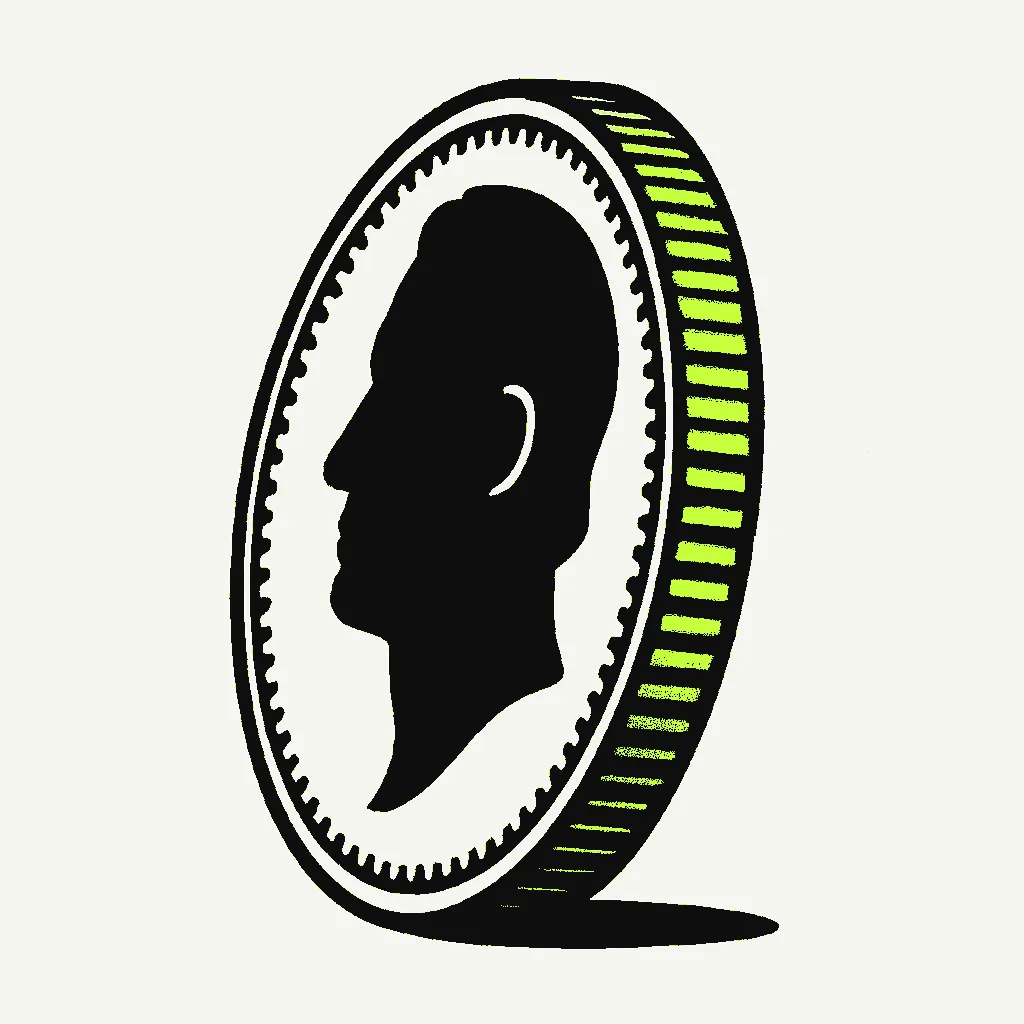
Set the coin down and look at it from the side. Not the head, not the tail. The narrow strip between them. Most people never do this. They spend twenty minutes on the portrait, another ten on the reverse, and the edge sits there the whole time, saying something plain, and nobody listens.
That strip is where a coin tells you what it is, before the date does, before the mint mark does. A quarter has one hundred and nineteen little grooves cut into it. A cent is smooth. A half dollar carries lettering, on the older ones anyway. These are not decoration. They were put there for a reason, and the reason is still there, on the coin in your hand, if you turn it.
Most people skip the edge because the front is where the face lives, and the face is what we were taught to look at. Fair enough. But the front is also where a good forgery works hardest. The portrait can be copied. The date can be tooled. The luster can be faked with the right chemistry and a patient afternoon. The edge is harder. The edge is where a counterfeiter runs out of patience, or runs out of tools, and where the coin, if it's honest, quietly proves itself.
Start with the three families. Reeded, plain, lettered. Reeded means those vertical grooves, the ones you feel with a thumbnail. They were cut originally so nobody could shave silver off the edge without you noticing. A dime has them. A quarter has them. A half has them. A cent does not, and never did, and if someone hands you a cent with reeding, you are holding something wrong, or something altered, or something that started life as a different coin.
Plain edge means smooth, nothing there, and that itself is information. The current cent is plain. The nickel is plain. A gold piece from certain years is plain. If a coin that should be reeded comes to you plain, the story is already interesting, and probably not in a good way.
Lettered edge is the old work. Big early dollars carried words around the rim, incused or raised, and the presidential dollars from the modern era brought that back. The lettering can run one direction on one coin and the other direction on its neighbor, and both are correct, because that is how they came out of the press. If the lettering is crisp on one, mushy on the other, and both claim the same year and mint, the mushy one wants a second look.
Now the fakes. A cast counterfeit, the kind poured into a mold rather than struck, almost always leaves a seam. Run your fingernail along the edge, slowly, and feel for a ridge that runs the whole way around. A real coin does not have that. A real coin was struck between two dies with a collar holding the edge in place, and the collar left either grooves or smoothness or letters, but never a seam. The seam is the tell.
A plated coin, a common cent with a coat of something shinier laid over the top, will often show its true color at the edge, because that is the last place the plating grips. Look for a thin line of copper peeking out under silver. The reverse is where a coin lives, but the edge is where a coin confesses.
Weight matters here too, and the edge is part of why. The reeding, the thickness, the diameter, all of it was specified when the coin was made, and a fake made in the wrong metal will get one of those wrong, usually the weight, and often the edge along with it. A silver quarter and a clad quarter feel different in the hand, and they sound different when they drop, and the edge is where the metal shows itself in cross-section.
One more thing before you put it back down. If the edge is dented, dinged, filed, that is not always damage in the bad sense. Somebody carried this a long way. Coins were pocket tools, once. A little edge wear, honest edge wear, is the coin telling you it did its job. A coin with a perfect edge and a beat-up face is often the more suspicious one, because real circulation touches everything.
So turn the next one on its side first. Before the portrait, before the date, before the mint mark's the tell. The edge has been talking the whole time. All you had to do was look at it sideways.