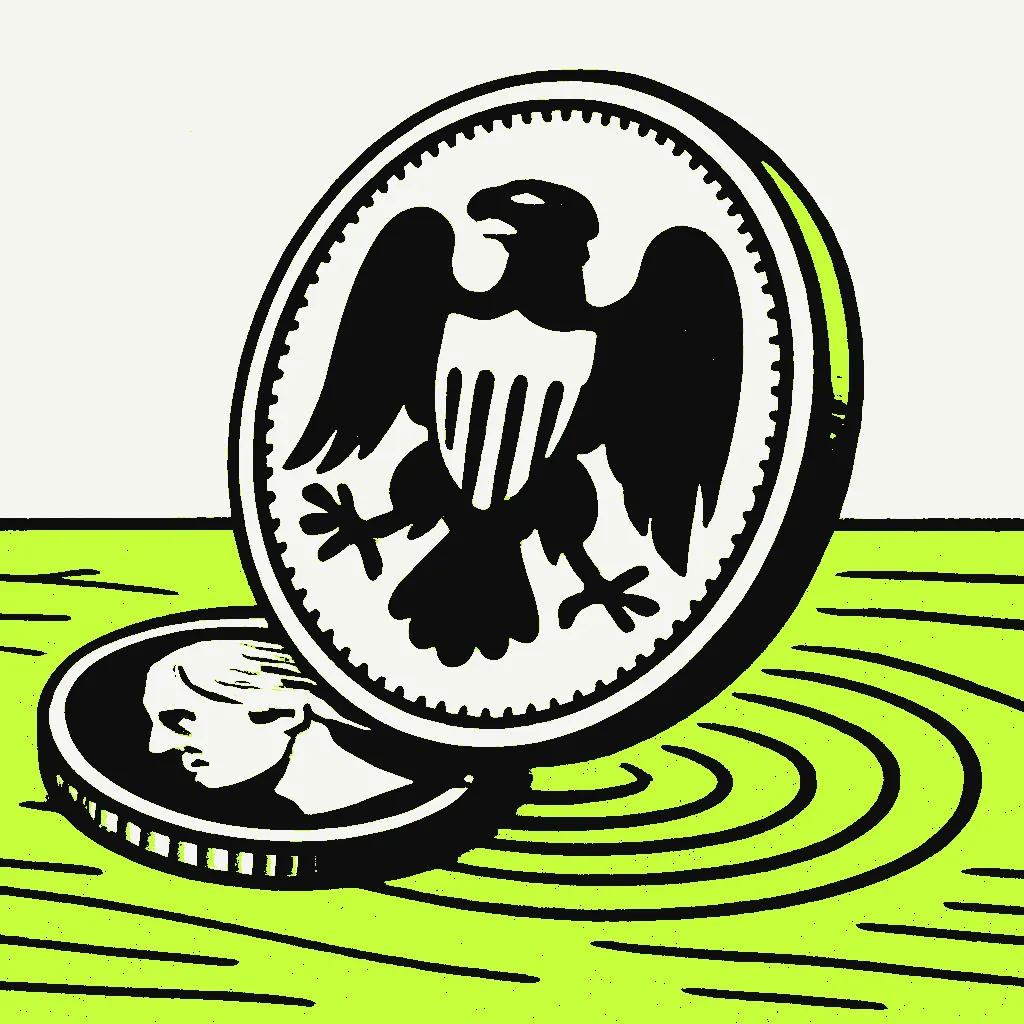
Drop a 1963 quarter on the counter. It sings. There's a thin, bright note that hangs in the air for a second longer than you expect, like a small bell somebody struck in another room. Now drop a 1966. It thuds. Same size, same portrait, same eagle on the reverse. Different coin entirely. The ear catches it before the eye does, and once you've heard the difference a few times, you can't unhear it. Silver has a voice. Clad has a cough.
Most folks bring in a jar and ask which ones are silver. Fair question. The answer is simpler than the coin books make it, and older than most of the people asking. 1964 is the line. Dimes, quarters, and halves struck in 1964 or earlier are 90% silver. Everything after is copper-nickel over a copper core, what the trade calls clad. The half dollar hung on a little longer, 40% silver through 1970, but for the everyday jar coin, 1964 is the year to remember. Before it, silver. After it, not.
The reason the country stopped is its own long story, and the short version is that silver got worth more than the coin it was stamped into. When the metal in a quarter starts costing more than a quarter, the mint has a problem. So they changed the recipe, kept the size, kept the portrait, and hoped nobody would notice. People noticed. The 1964s went into coffee cans and dresser drawers almost as fast as they came out of the bank. Most of the silver you'll ever find in circulation came out of jars like those, decades later, when somebody's grandfather passed and the family finally opened the closet.
So you've got a jar. Here's how the counter does it, and you can do it the same way at your kitchen table. Look at the date first. Anything 1964 or earlier on a dime, quarter, or half is a candidate. Then look at the edge. Stand the coin up on its rim and look at the side. A silver coin shows a solid pale edge, the color of the face. A clad coin shows a copper stripe, a thin brown line running around the middle where the sandwich is exposed. The copper stripe is the tell. One glance and you know.
If the edge is worn or dirty and you can't quite read it, the ring test settles it. Hold the coin loosely between two fingers, or balance it on a fingertip, and tap it with another coin. Silver rings. It's a clear, sustained note, almost musical. Clad clunks. It's a shorter, duller sound, the way a stack of magazines lands on a table. Do it once with a known 1964 and once with a 1970, back to back, and your ear will be trained for life. It's a two-second test and it doesn't lie.
Weight is the third witness, and it agrees with the other two. A silver quarter runs a hair over six grams. A clad quarter comes in around five and two thirds. A kitchen scale that reads to a tenth of a gram will separate them without argument. A silver dime is about two and a half grams, the clad about two and a quarter. Small differences, but consistent, and a scale doesn't get tired the way an ear does after the fortieth coin.
One warning, because it comes up every week at the counter. A 1964 date is not a guarantee by itself. Somebody, somewhere, has always been willing to shave a nine into a four, or press a worn coin against a real one and hope. It's rare, but it happens. That's why the edge and the ring and the weight are three tests, not one. Any two of them agreeing is enough. All three agreeing is the coin telling you plainly what it is.
What these coins are worth depends on the day's silver price, and I won't quote a number here because it will be wrong by next Tuesday. What I'll say is this. A pre-1965 dime, quarter, or half is worth more than the face suggests, and considerably more than a modern one of the same denomination, and it will be for as long as silver is silver. That's not a promise, that's just what the metal does.
So pull the jar down. Sort by date first, edge second, ring third. The 1964s and earlier go in a flip, not back in the pocket. The rest can go to the coinstar or the coffee fund. And if you find a 1964 half that sings a little longer than the rest, hold onto that one. The strike tells the story, and 1964 was the last year the story was silver all the way through.