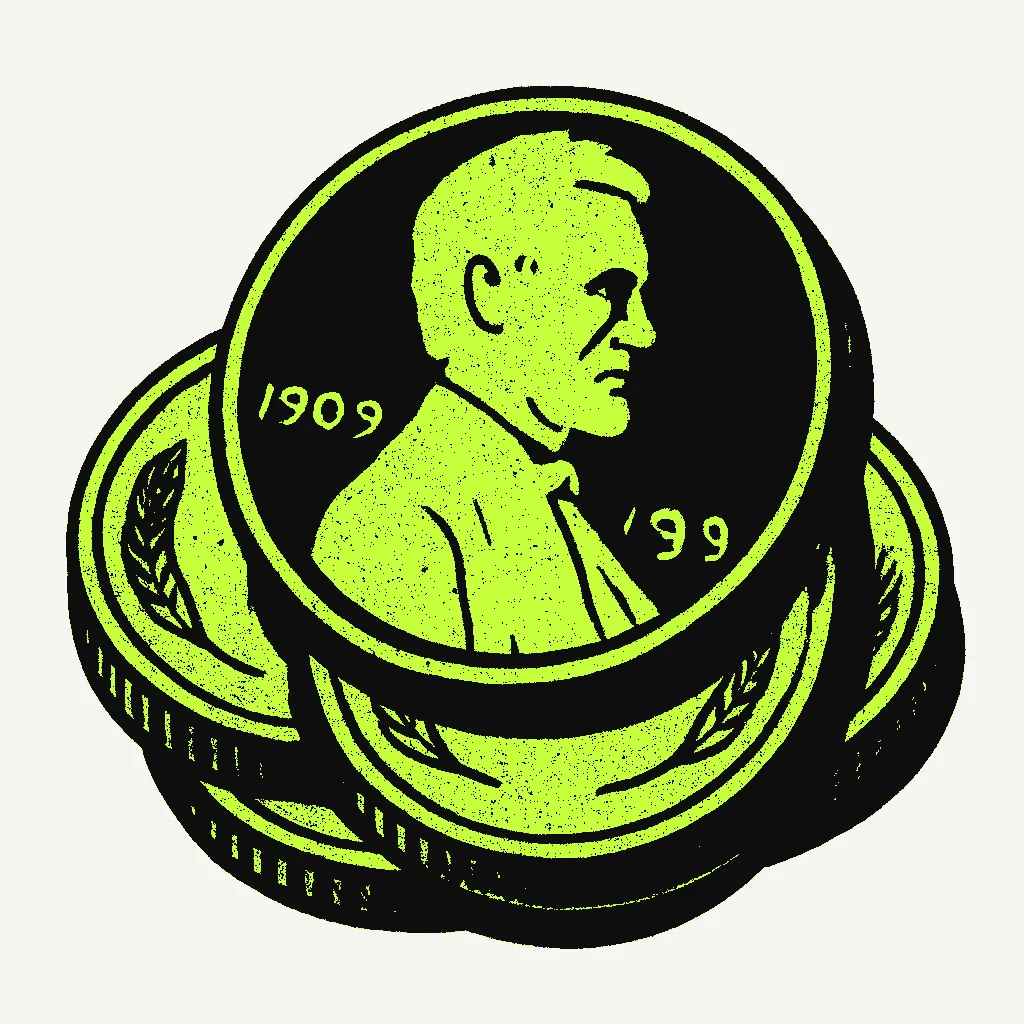
The jar comes in on a Tuesday. Coffee can, sometimes a mason jar, once in a while an old ammo box that a grandson can barely lift onto the counter. Inside, mostly wheat cents, the copper gone the color of tea, a few of them stuck together where something spilled decades ago. The person across the counter is polite about it. They know most of what's in there is nothing. They also know they don't quite know that for sure, and that's why they drove over.
So we tip the jar out onto the felt, a handful at a time, and we start looking.
Here is the honest part. Nine jars in ten, the whole pile is common. Billions of wheat cents were struck between 1909 and 1958, and most of what came home in a pocket and got dropped in a jar is exactly what it looks like, pocket change from sixty years ago. That's not a disappointment, that's just the math. The trick isn't hoping the jar is full of good ones. The trick is knowing the four or five dates that hide in jars like this, and looking twice when one turns up.
Start with 1909. Almost every jar has a 1909 wheat cent in it somewhere, because that's the first year of the design and people saved them the way people save first-of-anything. Most 1909s are ordinary. But turn the coin over. If the reverse says V.D.B. in small letters at the bottom, between the wheat stalks, look back at the front. Under the date, is there a small S. That's the San Francisco mint mark, and that's the coin. 1909-S V.D.B. Half a million struck, and the designer's initials pulled off the die within weeks of release. Most jars will never have one. Some jars do. The mint mark's the tell.
1914-D is the next one. D for Denver, small letter under the date. The date wears fast on these, so the four often looks softer than the one and the nine, and the D can be faint. Hold it under angled light before you decide. A worn 1914-D is still a 1914-D, and it is worth more than the face suggests, considerably more. People walk past them because the coin looks tired. Tired is fine. Tired means somebody carried it a long way, and it survived.
1922 is the strange one. In 1922 only Denver struck cents, so every 1922 wheat cent should have a D under the date. But a batch of dies at Denver got worn or over-polished, and some coins came off with no mint mark visible at all. A 1922 plain, as collectors call it, is a coin that should say D and doesn't. Now, before anyone gets excited, most of the time a 1922 with no visible mint mark is a 1922-D with a weak strike or a filled die, and that is a different, cheaper coin. The genuine 1922 plain has a strong reverse and a specific look to the date. If a 1922 turns up in the jar and you can't find the D, that's the point where we get the loupe on it, and probably where we send a photograph to somebody who does nothing but authenticate these.
1931-S. Denver and Philadelphia struck plenty of cents that year, San Francisco struck about a million two, which by wheat cent standards is almost nothing. The date reads clearly, the S sits under it. The coin doesn't look like much. It rarely does. That's the whole point of this exercise, the good ones don't announce themselves, they just sit there in the pile looking like every other brown cent, and you have to know the date to know to stop.
A few ground rules while you're sorting. Don't clean any of them. A cleaned wheat cent looks pink and wrong and loses most of what a collector will pay for it. Don't polish, don't dip, don't rub with a cloth. If the toning has gone chocolate brown and even, the toning did you a favor. Leave it alone. Pull anything interesting into a small paper envelope or a cardboard flip, one coin per flip, date written on the outside. Everything else goes back in the jar and stays a jar of wheat cents, which is a nice thing to have and worth roughly what it weighs in copper.
Most of the jar will be common. That's fine. You are not looking for the whole jar to be treasure, you are looking for the four coins that hide in jars exactly like this one. Take your time with the 1909s, the 1914s, the 1922s, the 1931s. Look at the mint mark before the field. If one of them makes you stop, hold onto that one.