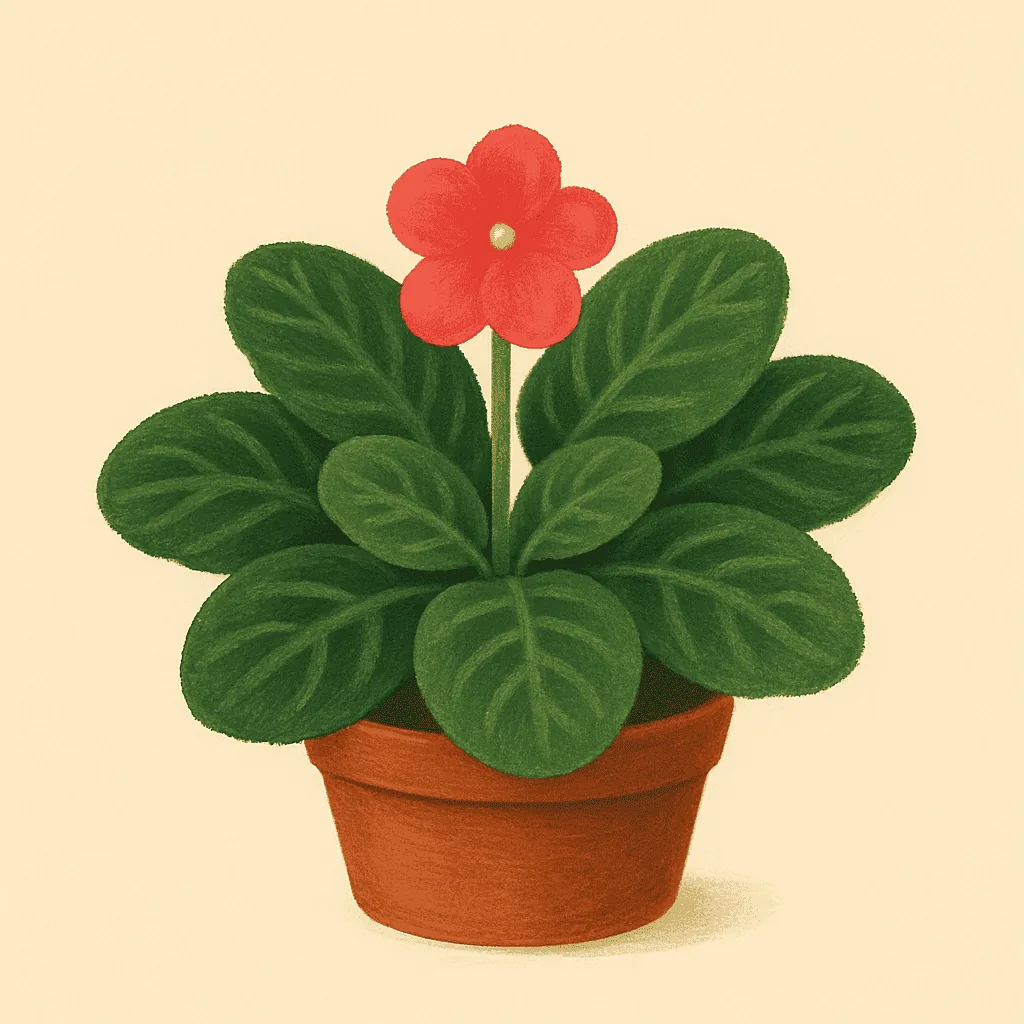
There is a small plant on the north windowsill, no taller than a teacup. Its leaves are velvet and almost grey-green in the soft light. Three pale purple flowers sit at the center, low and quiet, the way they have sat for most of the month. Nothing about it is dramatic. The African violet doesn't lean for attention. It just keeps blooming, in its own steady way, as long as a few small things stay true around it.
Most of what gets written about these plants makes them sound delicate. Fussy. A little neurotic. And there is a reason for that reputation. They spot easily. They sulk in the wrong window. They rot from a single splash of cold water on the crown. But the violet itself is not difficult. It is consistent. It wants the same three things every week, every month, every season. The trouble usually isn't the plant. It is that we keep changing our minds about how to care for it.
So here is what the violet asks for, in the order it matters.
Light comes first. A north-facing windowsill is almost perfect. A sheer-curtained east window is the other good answer. The leaves like brightness, not sun. Direct sun will scorch the velvet within a week, leaving pale bleached patches that do not heal. Deep shade does the opposite, quietly. The plant stays alive, the leaves stay green, and the blooms simply stop. No drama. Just absence. If your violet has not flowered in months, the window is usually the first place to look. Closer to the window, not the glass.
Then warmth, steady. Violets are happiest in the same temperature you are happiest in. They do not like cold drafts from a winter window, and they do not like the dry heat of a radiator directly below them. A shelf that stays roughly the same temperature day and night, with no sharp swings, is the kind of place they bloom from. Nothing urgent here. Just steadiness.
Then water, from below. This is the part most people get told late, after a leaf has already spotted. Set the pot in a shallow dish of room-temperature water. Fifteen minutes, no longer. Then lift it out and let it drain. The soil will have drunk what it needs through the drainage holes, and the crown — that fuzzy center where new leaves unfurl — will have stayed completely dry. Watering from above, onto the crown, spots the leaves and invites rot at the very heart of the plant. The dish method looks fussy the first time. By the third time it is just what you do.
The top inch will tell you when.
Let the soil dry a little between drinks. Not bone-dry. Just enough that the surface feels cool and slightly powdery to the touch. Then back into the dish.
Food is the small final piece. During the active months, when the plant is putting out new leaves and buds, a violet-formulated fertilizer at quarter-strength, every other watering, is plenty. Quarter-strength. Not half, not full. These are small plants with small appetites, and more feed does not mean more flowers. It usually means burnt root tips and a sulk that lasts a season.
The leaves themselves prefer to be left alone. A soft brush, the kind you might use for pastry or for dusting a camera lens, lifts dust off the velvet more gently than any cloth. Wiping presses water and oil into the tiny hairs and dulls the leaf. A few quiet passes with a brush, now and then, is enough.
Over time, a mature violet will begin to crowd itself. Small offshoots, called pups, will appear at the base of the main rosette. They can be left, but the plant blooms more strongly when it is kept to a single rosette. Every couple of years, trim the pups back, or lift them away to start in their own small pots. The mother plant will reward the simplicity with more flowers. Roots first, then leaves.
If yours is not blooming right now, do not move everything at once. Try the window first. Give it two weeks. Notice before you act. Violets keep their own clock, and that clock is slower than ours, and gentler. A quiet month on the shelf is not a failure. It is the plant settling into the conditions you have offered. The flowers, when they come back, will come back low and steady, three or four at a time, for weeks.
Slow water, steady light. One day at a time.