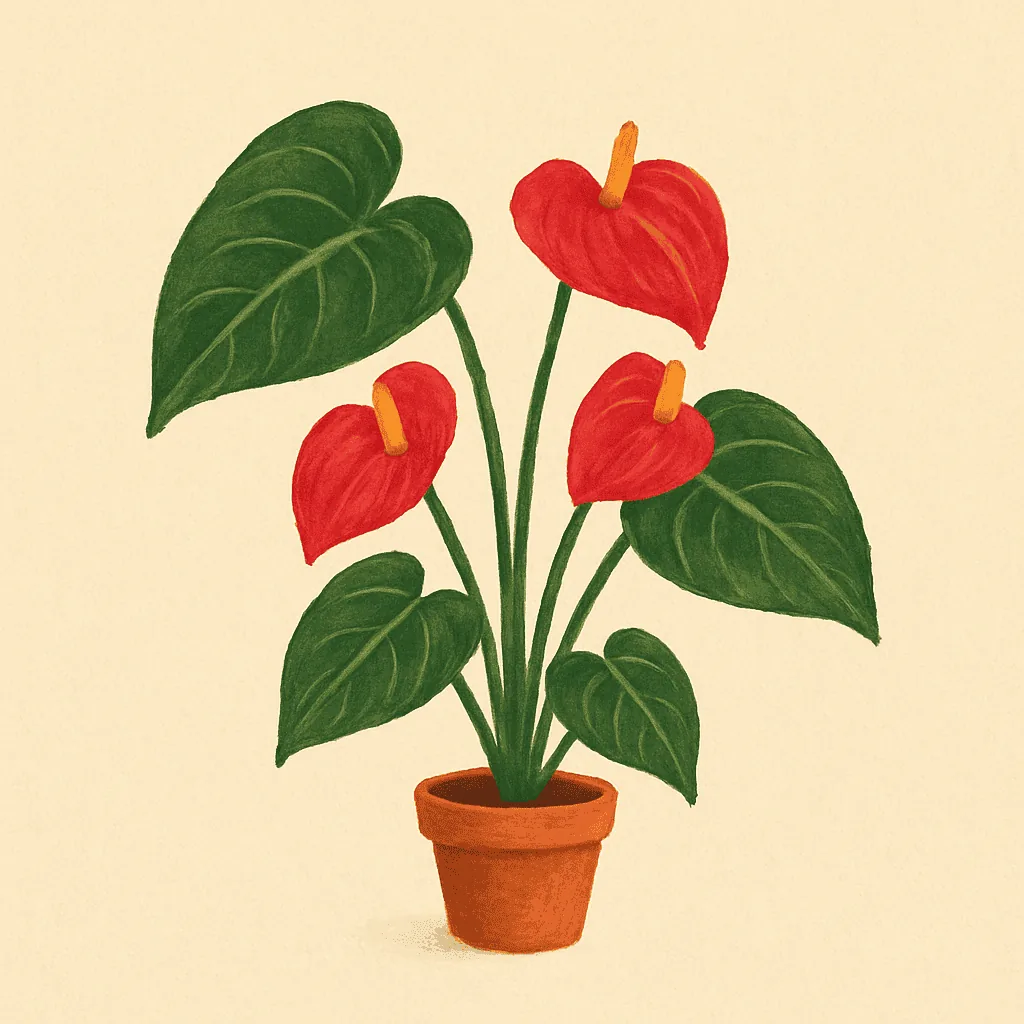
There's a red shape on the shelf by the kitchen window that has not moved in three weeks. It looks waxy, almost painted. New keepers sometimes touch it to be sure it's real. The anthurium does this on purpose. It holds that heart-shaped color steady for so long that the calendar forgets it. A leaf opens behind it. Another spathe pushes up from the base. The plant keeps a slow, quiet parade going, one bloom handing off to the next.
Most articles will tell you the anthurium is a beginner plant. Easy bloomer. Set it down and walk away. That's almost true, and the almost is where people lose them. The spathe holds for weeks no matter what you do — that's just how the plant is built. So a struggling anthurium can look fine for a long time. By the time the color fades and no new bud follows, the corner has been wrong for months. The plant was patient about it. You can be patient back.
The first thing to notice is that the colored heart isn't really a flower. It's a modified leaf, called a spathe, wrapped around the small spike in the middle. That's why it lasts. A real petal would have given up by week two. The spathe is doing leaf work, slowly, in costume. Knowing this changes how you read the plant. When the color holds, the plant is comfortable. When new spathes keep arriving across the year — one fading as another opens — the corner is right. A healthy anthurium reads as constantly in bloom, but it's really a relay.
So the question isn't how do I make it flower. The question is where on the shelf does it want to stand. Three things matter, and they matter together. Warmth. Humidity. Bright indirect light. A bathroom with a window suits an anthurium better than most living rooms. A kitchen counter that catches morning light works too. The chilly corner by the front door, where a draft slips under in winter, is the place spathes go quiet. Cool air shortens each bloom. Dry winter air slows the next one from forming. The plant won't complain loudly. It just stops making new color.
The water question is smaller than people think. Anthuriums grow in a chunky aroid mix — bark, perlite, a little soil — and the thick roots want air almost as much as they want moisture. The top inch will tell you. When it's dry to the first knuckle, a small drink. When it's still cool and damp, wait one more day. A pot that breathes helps more than any schedule. Terracotta works well here. Dense soil in a sealed plastic pot is where the slow rot starts, and an anthurium can hide rot for a long time behind its steady red face.
Notice before you act.
If a spathe begins to green at the edges and then brown, that's its natural end. Some leaves are meant to go, and so are some spathes. Trim it at the base with clean scissors and watch the center of the plant. New growth comes from there — a tight, pale spear that unfurls into either a leaf or another bud. You don't always get to choose which. The plant decides based on what the corner has been giving it for the last month or two. Light is the long answer. Warmth is the long answer. A small drink, when the top inch is dry, is the short one.
The hardest part of keeping an anthurium is trusting how slow the feedback is. You move it closer to the window, not the glass, and you won't see the result for weeks. You add a pebble tray for humidity, or set it near the kettle's steam, and the next spathe might be the proof — but the next spathe is six weeks out. Patience reads like neglect, until it doesn't. The plant is teaching you the schedule. It's a longer one than most.
If yours is holding a single red heart right now and nothing else seems to be happening, that's fine. The relay is just between runners. Check the top inch. Notice the draft, if there is one. Move it a hand's width toward the morning light. Then leave it be. One day at a time. Roots first, then leaves. The next spathe is already deciding whether to come.