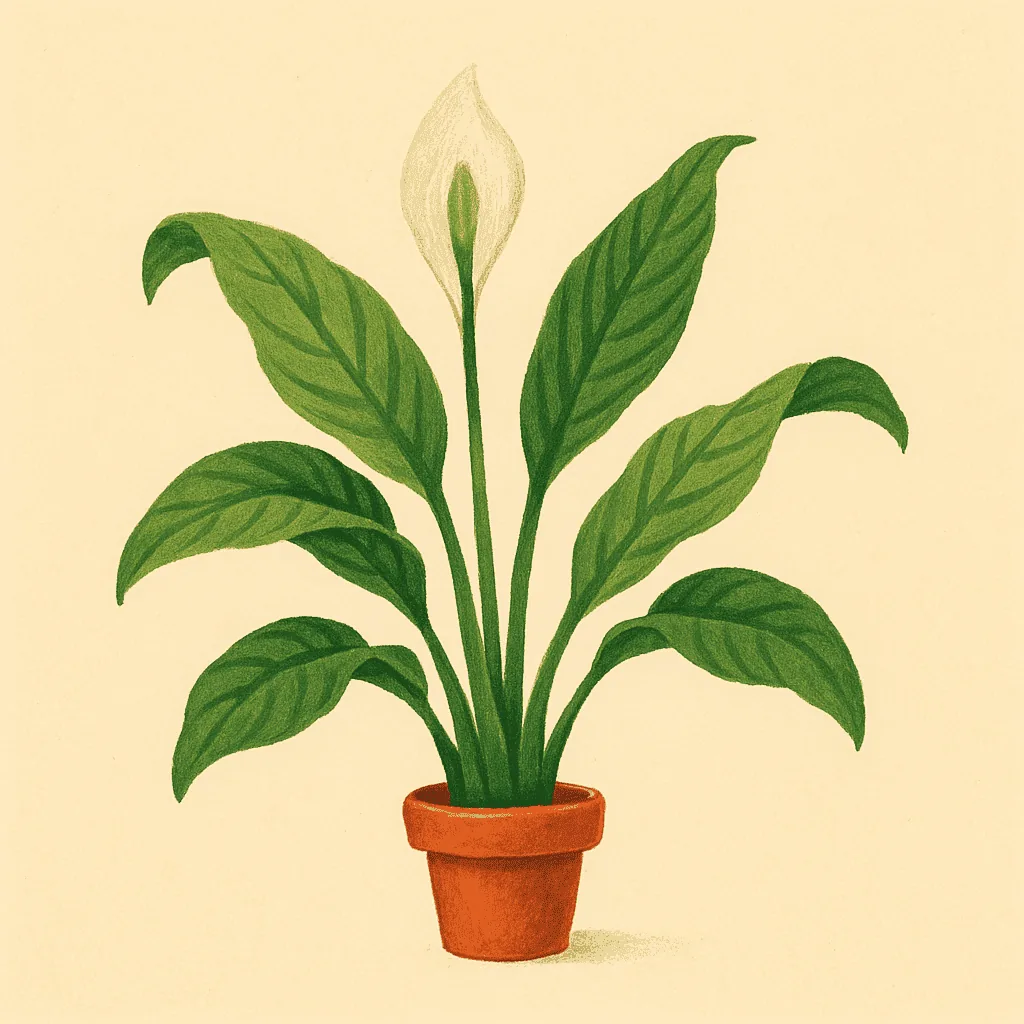
The leaves are flat against the pot, fanned outward and low, like a small collapse in the corner of the room. An hour ago they stood. Now they don't. The soil, when you press a finger into it, is dry past the top inch. The plant has not been quiet about this. It has been waving, in its own slow way, for most of the afternoon. You just walked past it on the way to something else.
Most houseplants make you guess. You poke the soil, you check the weight of the pot, you try to remember when you last watered. The peace lily is not like that. It speaks in a language anyone can read on the first try. And yet a lot of keepers still find themselves anxious about it, treating each droop as a small emergency, second-guessing the rhythm. That worry is the part worth setting down.
Here is what I've come to trust. The peace lily droops when the soil goes dry, and it does so visibly, within a few hours. You water it thoroughly, and within the hour the leaves lift again. This is not the plant suffering. This is the plant communicating. It is, in its way, the easiest feedback loop on the shelf. Treat the droop as a sentence, not an alarm.
Over a few cycles, you start to predict it. The pothos asks you to remember. The peace lily teaches you the schedule itself. You'll find yourself glancing at it on a Tuesday and thinking, tomorrow, probably. And tomorrow it droops, and you water, and it lifts, and the week continues. The plant is teaching you the schedule.
Keep the soil consistently moist, not wet. The difference matters. Wet is standing water in the saucer, soil that stays dark for days, roots that never get to breathe. Moist is the top inch drying between drinks, the rest still cool to the touch. When in doubt, the dry side is more forgiving than the soggy side. A peace lily can recover from a thirsty afternoon. It struggles to recover from a waterlogged month.
The white blooms — those tall, hooded spathes that rise above the leaves — are not flowers the way a rose is a flower. They're a modified leaf, wrapped around the actual tiny flower spike at the center. The botanical detail matters less than this: they show up two or three times a year on a happy plant, and when they don't, the plant is usually telling you something simple. It wants a little more light.
Closer to the window, not the glass.
A peace lily in a dim corner will live for years and never bloom. Move it a few feet toward the window — bright indirect, never direct sun — and you'll often see a spathe within a season. Not always. Plants keep their own clock. But light is the long answer to most blooming questions, and it is almost always the first thing to adjust.
If the leaf tips brown, the plant is usually telling you about your water. Tap water carries minerals, and over months they accumulate in the soil and show up at the edges of the leaves as dry, papery brown. Nothing urgent. Every few months, take the plant to the sink and run water through it slowly for a minute or two, letting it drain freely. This flushes the buildup. The new leaves that follow will come in clean.
Some of the older leaves will yellow and go, especially the lowest ones. This is not failure. Some leaves are meant to go. Snip them at the base when they're more yellow than green, and let the plant put its energy into the new growth above.
Peace lilies are forgiving in ways that surprise people. They tolerate lower light than almost any other flowering houseplant. They recover from a missed watering with theatrical grace. They tell you, plainly, what they need. The work is mostly noticing — and noticing is a skill that grows on its own, the longer you keep the notebook open.
So if the leaves are low this afternoon, give it a thorough drink and walk away. Come back in an hour. The plant will have lifted, and you'll have learned a little more about its particular rhythm in your particular room. The blooms, if they come, will come on their own time. One day at a time.