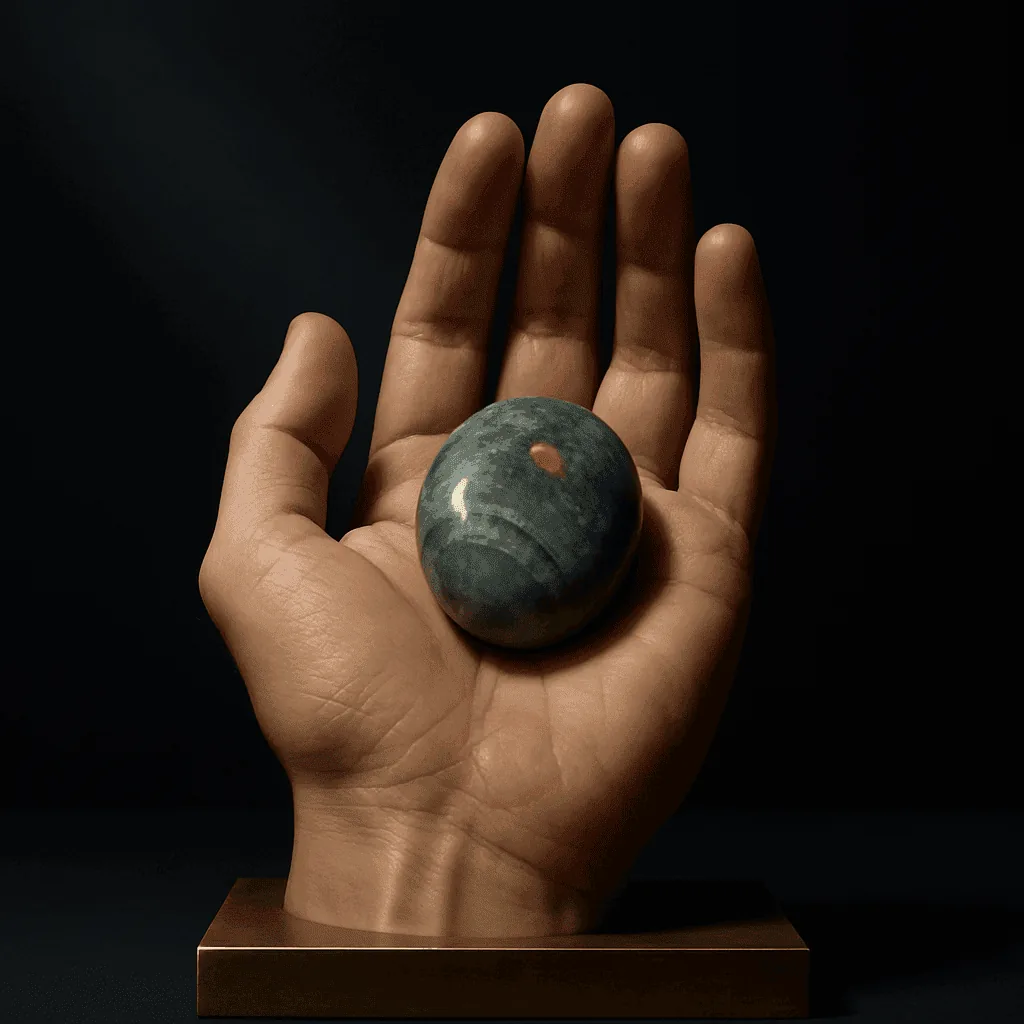
The stone lands in your palm and for half a second you are confused. The label said one thing. The hand is telling you another. The weight is wrong, or the weight is right and the colour was the lie. Either way, something has already passed between the two of you, and the eye has not caught up yet. This one has been waiting. The palm reads faster than the loupe. It always has.
Most identification guides begin at the surface. Colour first. Then lustre. Then the way light moves through a clean window of stone. These are honest clues. They are not the first clue. The first clue is heft. The hand knows quartz from hematite before the mind finishes naming either one. That knowledge is not mystical. It is mineral. Density is a fact the body learns by holding enough stones, and once learned, it does not unlearn.
Quartz is light. Lighter than people expect for something that looks so substantial. A fist-sized piece sits in the hand the way a smooth river pebble sits. Present, unassuming, quiet. When a stone sold as quartz lands heavy, hold it to the light first. Then weigh it again against a piece you already trust. The hand will tell you the label was generous.
Hematite startles. There is no other word for it. A piece the size of a walnut comes down into the palm with the authority of something three times its size. New collectors almost always flinch on the first meeting. That flinch is data. The iron inside is doing the work, and the body registers iron before the mind names the mineral. If a stone surprises you with its weight, the answer is often in the iron.
Fluorite sits between. Not light like quartz, not dense like hematite, but heavier than its softness suggests. This is the useful middle. Once the palm knows fluorite, it has an anchor. Most other stones can then be placed by whether they feel lighter or heavier than that anchor. Learn fluorite by weight before you learn it by colour. The colour will mislead you. The weight will not.
There are reasons for all of this, and the reasons are worth knowing one at a time.
Iron is what makes hematite startle the palm.
Silica is what makes quartz sit so quiet in the hand.
Calcium fluoride is what gives fluorite its in-between heft. Denser than it looks. Softer than it weighs.
Three minerals, three weights, three lessons the palm can hold at once without confusion. Add a fourth only when the first three are steady.
This is the part most beginners skip, and it is the part that will save you from a hundred mislabelled tables at a hundred gem shows. A seller can polish a stone into looking like anything. A seller cannot change what it weighs. The cleave tells the truth, and so does the heft. When the two of them agree, you have your answer. When they disagree, you have a question worth asking.
There is a rhythm to learning this, and the moon keeps it better than a calendar. New stones tend to arrive on a waxing moon, when the shows are busy and the shelves are restocking. Weigh them then, in the hand, one at a time, before the colour and the story have a chance to settle. Set the new arrivals on the sill through the full moon and weigh them again in that fuller light. The palm reads differently at different hours. The moon will tell us when a stone is ready to be filed away as known.
A few practical things, said quietly. Always weigh dry. Water adds nothing useful to the reading and confuses the surface. Use the cool side of the hand, the underside of the fingers, not the warm pad of the palm. Heat throws the sense off. Hold the stone still for three full breaths before deciding. The first impression is loud. The third breath is honest.
And then there is the stone that does not match anything. The weight is wrong for what it looks like, and right for nothing you have held before. This is the good kind of confusion. Set that one aside. Label it with a question mark, not a name. Bring it back out on the next full moon and try again. Some stones identify themselves on the second meeting, not the first.
The palm is not magic. The palm is thirty years of holding stones, or three months, or one careful afternoon. The skill builds at whatever pace you give it. What matters is that you trust the heft before you trust the label. The stone knows what it is. It is telling you in the only language it has, which is its weight against your skin. The eye will catch up. The loupe will confirm. The palm is only listening.