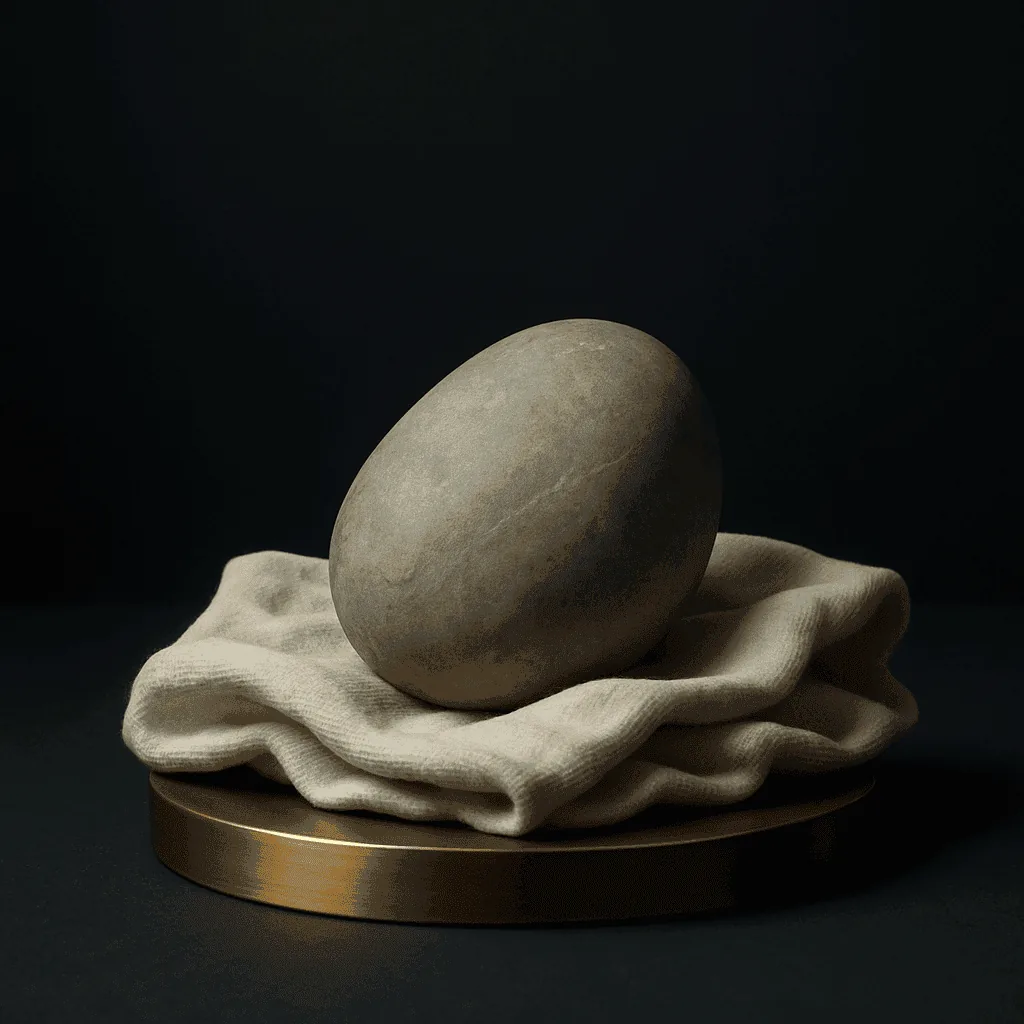
It is at the bottom of the drawer. Small. Tumbled. A little chipped on one side where it met something harder than itself. You have moved it three times. You have meant to give it away twice. It is still there. Pick it up now. Hold it to the light first. Look at the inclusions before the colour. You bought it at a fair, or someone pressed it into your palm at a hard time, or it was the cheapest one on the tray and that was the point. The story has gone soft at the edges. The stone has not.
Most collections start the wrong way around. The shelf comes first. Then the labelled trays. Then the loupe, the cloth, the small bowl for moonwater on the sill. The first stone — the one that started it — gets skipped. It does not match the others. It is too small. The polish is uneven. It is the kind of piece a serious collector would set aside, and so you have set it aside, and so it has sat in the dark of the drawer for years, unentered, unnamed, undated, still here.
The tension is that you know exactly which one I mean. You knew before the second paragraph. That alone is the answer to whether it matters.
A first stone is rarely the prettiest. It is almost never the rarest. It does not photograph well. Held up against the cabinet, it looks like what it is — a beginner's piece, tumbled smooth in a bulk barrel, sold for less than a cup of coffee. The hardness will tell you the rest, if you look. Quartz, most often. Rose, or smoky, or clear with a cloud in the middle. Sometimes amethyst gone pale at the tip. Sometimes a jasper the colour of old brick. It does not matter which. The cleave tells the truth and the truth is small.
What matters is that you did not give it away. You meant to. You had the bag open. You had a friend in mind. And the hand closed around it instead, and back into the drawer it went, and that has happened enough times now that it counts as a decision. The stone knows what it is. It is the one you came for, even if you did not know yet that you were coming.
So write its entry. However late. Open the journal to a fresh page and put it there before the rare pieces, before the geodes, before the labradorite that flashes blue under the lamp. Name the mineral if you can. Name the year if you remember. Name the place — the fair, the shop, the friend's kitchen table. If none of that survives, write unknown, and write it without apology. The provenance of a first stone is often only that it stayed.
Then note its condition. The chip. The uneven polish. The flat side where it sat in a bowl for a decade and lost a little of its shine. These are not flaws to be corrected. They are how you tell this one from every other tumbled quartz in the world. A loupe will show you a small fracture near the top that catches light at one angle and not another. That is the fingerprint. Write it down.
Set it on the sill tonight. Not for the moon, particularly — though the moon will tell us when, if you ask. Set it there because it has been in the dark long enough. Let it sit beside whatever else is on the sill. A waxing stone or a waning one, it does not mind. It answers to fingertips, not pockets. Keep it near the others. It learns.
There is a softer one underneath every serious collection, and this is it. The piece that would not be bought again, that would not be chosen now, that would not survive a careful curator's pass. It survives anyway. It has been waiting at the bottom of the drawer for the entry it should have had the day it arrived. Write it now. Late is the only honest time to write it, because late is when you understood what it was.
This one has been waiting. The shelf is already a little different for knowing. Already in motion.