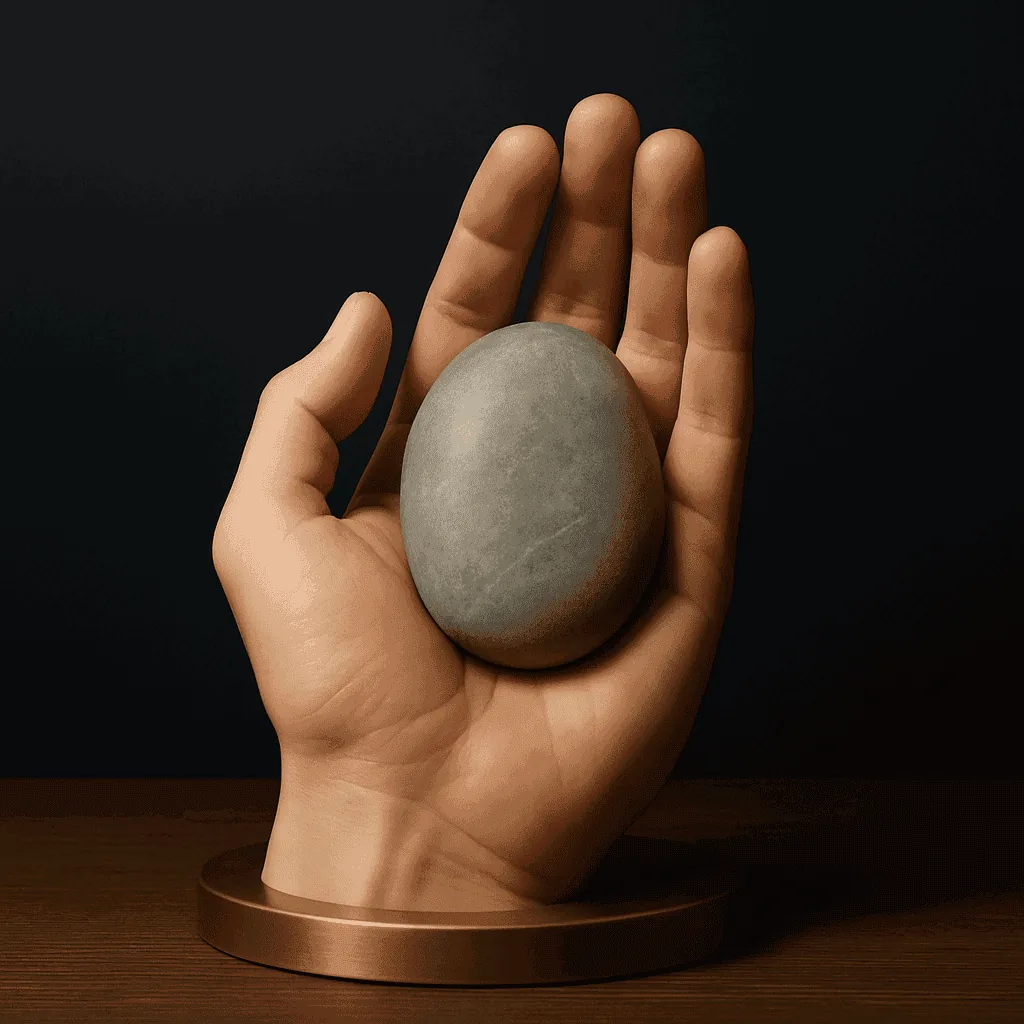
There is a stone on the second shelf you have been touching for weeks. You pick it up. You turn it once. You set it back down in the same spot, or close to it. The cloth underneath has a small clean square where the base used to sit, and the square no longer matches the base. You have not said anything about this out loud. The stone has not moved itself. But something in the small ritual of lifting and setting down has gone quiet, the way a conversation goes quiet between two people who used to have a lot to say.
Most writing about a collection assumes the collection only grows. One more piece on the sill. One more name in the journal. The shelf fills, and filling is the point. But anyone who has kept stones for long enough knows the truth is gentler and stranger than that. A collection breathes. Pieces come in. Pieces leave. The leaving is not a failure of keeping. It is part of how keeping works.
The stone tells you first, usually. Not in words. In the loupe. You bring it up to the light and the inclusions that used to hold you do not hold you. The cleave you used to trace with a fingertip feels like someone else's handwriting. The weight in the hand is the same weight it has always been. What has changed is the meeting between the stone and the person holding it. The stone knows what it is. You are the one who has moved.
This is the moment to name plainly. Fluorite that came home with you in a hard season may have done its work in that season. A river-tumbled jasper picked up on a trip belongs to the trip, and the trip is over. A piece given to you by someone you no longer speak to has been quietly waiting for permission to go. None of this diminishes the stone. The hardness is the same. The matrix is the same. The mineral is exactly the mineral it was the day you brought it in. Only the keeping has finished.
When a stone is ready to leave, there are old ways of letting it. The river it came from, if you know it, will take it back without comment. A garden bed will take it. The base of a tree that has been on your street longer than you have will take it. A friend whose hand opens the moment they see it will take it, and often that friend has been the answer from the start — you were holding the stone for them without knowing. The point is not the method. The point is that the stone moves on to its next keeping, and you let it.
There is a small grief in this, and it is allowed. A collector is not a warehouse. The pieces you choose, you choose with attention, and attention leaves a mark. To pass a stone on is to acknowledge that the mark is already made and does not require the stone to stay. The amethyst cluster that sat by the kettle for two winters did what it did. It does not need to sit there a third winter to have meant it.
Timing, if you want timing, belongs to the moon. A waning moon is the old companion of letting go. The dark of the month, the few nights when the sky gives nothing back, is older still. The moon will tell us when. Set the stone on the sill the night before. In the morning, wrap it in a cloth you do not need to keep. Carry it to wherever it is going. Do not make a ceremony of it unless ceremony is your way. The walk is enough. The opening of the hand is enough.
Afterwards, the shelf will look wrong for a day. The clean square on the cloth will be visible. The neighbours of the departed stone will sit a little oddly, the way a row of books sits oddly after one is pulled. Leave the gap. Do not rush a replacement into it. A collection that is breathing has gaps sometimes, and the gaps are part of the breathing. Within a week or two, the pieces nearby will rearrange themselves under your hand, and the shelf will settle again, slightly smaller, slightly truer.
So if there is a stone you have been picking up and setting down, hold it to the light first. Listen for whether the meeting is still a meeting. If it is not, the leaving is already in motion. You are only being asked to notice. Open the hand when the hand is ready. The collection will keep what is meant to be kept.