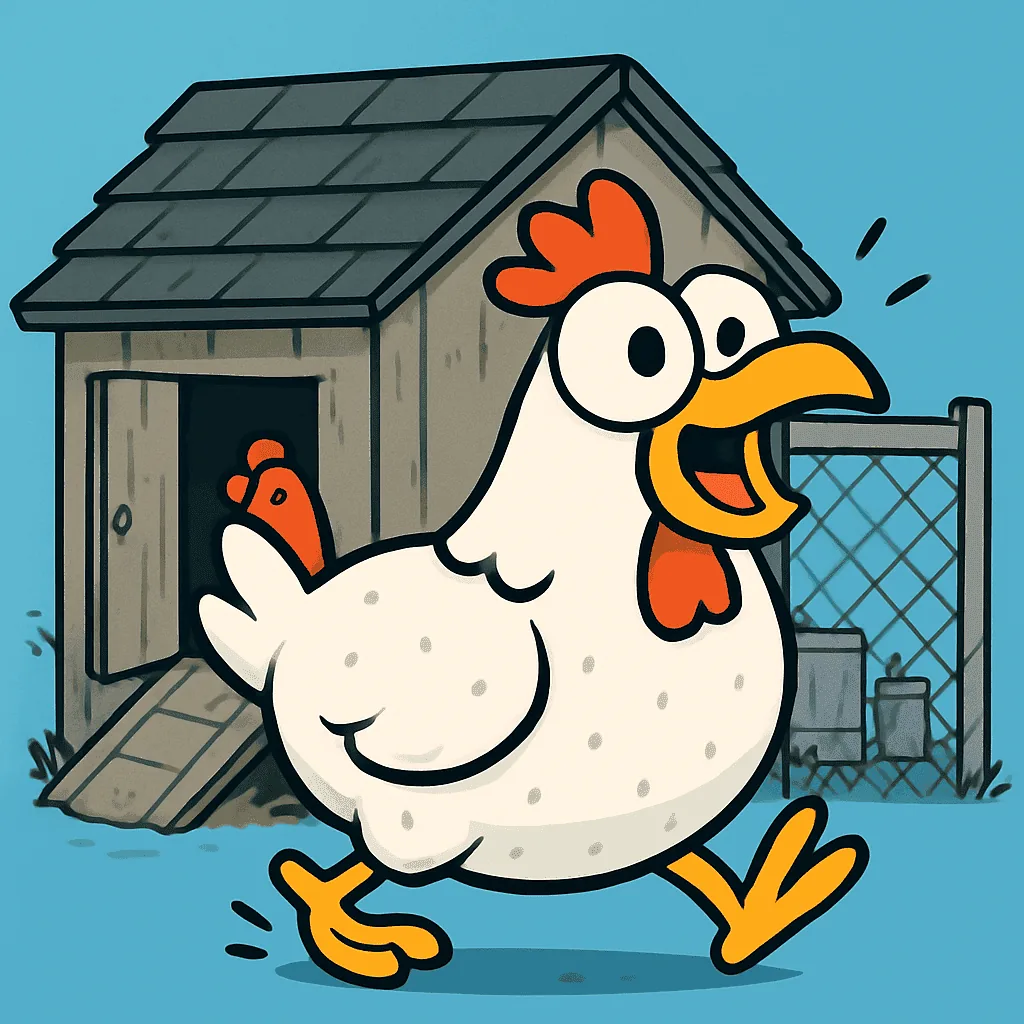
The mornings have that edge to them now. You can feel it on the back of your hand when you slide the bolt on the pop-hole, and there's a shine on the grass that wasn't there a fortnight ago. The girls are already down, doing their careful sideways look at the frost. Mabel is first out, as she always is. Henrietta is on the ramp still, thinking about it. And there you are, coffee cooling in your hand, standing in the run and noticing — really noticing — the coop for the first time since summer.
This is the walkthrough I like to do before the cold sets in properly. Not a chore list. Not a proper renovation. Just a slow look, the way you'd walk round a friend's garden and quietly notice the fence has gone a bit soft on one side. The trouble with autumn is that everything looks fine until it doesn't, and by then the wind's found its way in and someone's sitting fluffed up in the corner wondering why the roost feels colder than it did yesterday.
So. Coffee in hand. Let's have a proper look at her.
Start with the roof, because that's what she sleeps under. Stand inside the coop if you can, and look up. You want a bit of light coming through the vents at the top — that's ventilation, and it's a good thing, even in winter. What you don't want is light coming through anywhere near the perch. That's a draft, and a draft on a roosting hen is different from ventilation the way a shiver is different from a breath. Air needs to move above her. It shouldn't move across her.
Run your hand along the inside walls next. Anywhere the wood feels damp, or spongy, or soft under your thumbnail — mark it, mentally. Damp is the quiet enemy of a winter coop. It settles into bedding, it settles into combs, it settles into the little cracks where mites like to sit out the season. If you find a properly wet patch, that's worth another look tomorrow in daylight, and a decision about whether it's a leak or just condensation from a coop that's a bit tight on air.
Then the bedding. Push your hand right down to the floor, past the top layer. Cold, that's fine. Damp, that's not. Winter bedding wants to be deep and dry — deeper than you had it in August, dry the whole way through. If the bottom feels heavy, strip it out this weekend and start fresh. A dry hen handles a cold night. A damp hen does not.
Now the fittings. Every latch, every hinge, every bit of hardware cloth. Autumn is when foxes get bolder and the wind gets meaner, and both of them will find the one bolt you meant to replace in July. Give each latch a proper wiggle. If it moves when it shouldn't, sort it now, while your fingers still work in the cold. The pop-hole door especially — that's the one that has to close cleanly every dusk from here till spring.
Have a look at the water setup too, while you're in there. Winter water wants to be close and shallow, somewhere it won't freeze solid overnight, somewhere Henrietta can find it without walking through mud. And if you've got a dust bath tucked in a dry corner of the run, give it a top-up. They'll want it more, not less, as the ground gets cold and wet.
Last thing — and this is the part people skip — stand still for a minute and watch them. Not for anything in particular. Just watch. Who's coming down the ramp confident. Who's hanging back. Whose comb has that good bright colour and whose is looking a touch waxy in the morning light. Her comb tells you plenty, and autumn is when the telling starts to matter. You're not looking for trouble. You're just letting yourself get to know the flock the way they are now, going into the cold, so that when something shifts in November you'll notice on the first day and not the third.
That's the whole walk. Roof, walls, bedding, latches, water, and a minute of just standing. No rush — she's holding steady. The coop doesn't need to be perfect before the first frost. It needs to be dry, tight where it matters, breathing where it should, and known to you. The rest is small adjustments across the season, one hen at a time.
Pour a fresh coffee. We'll sit with her this morning.