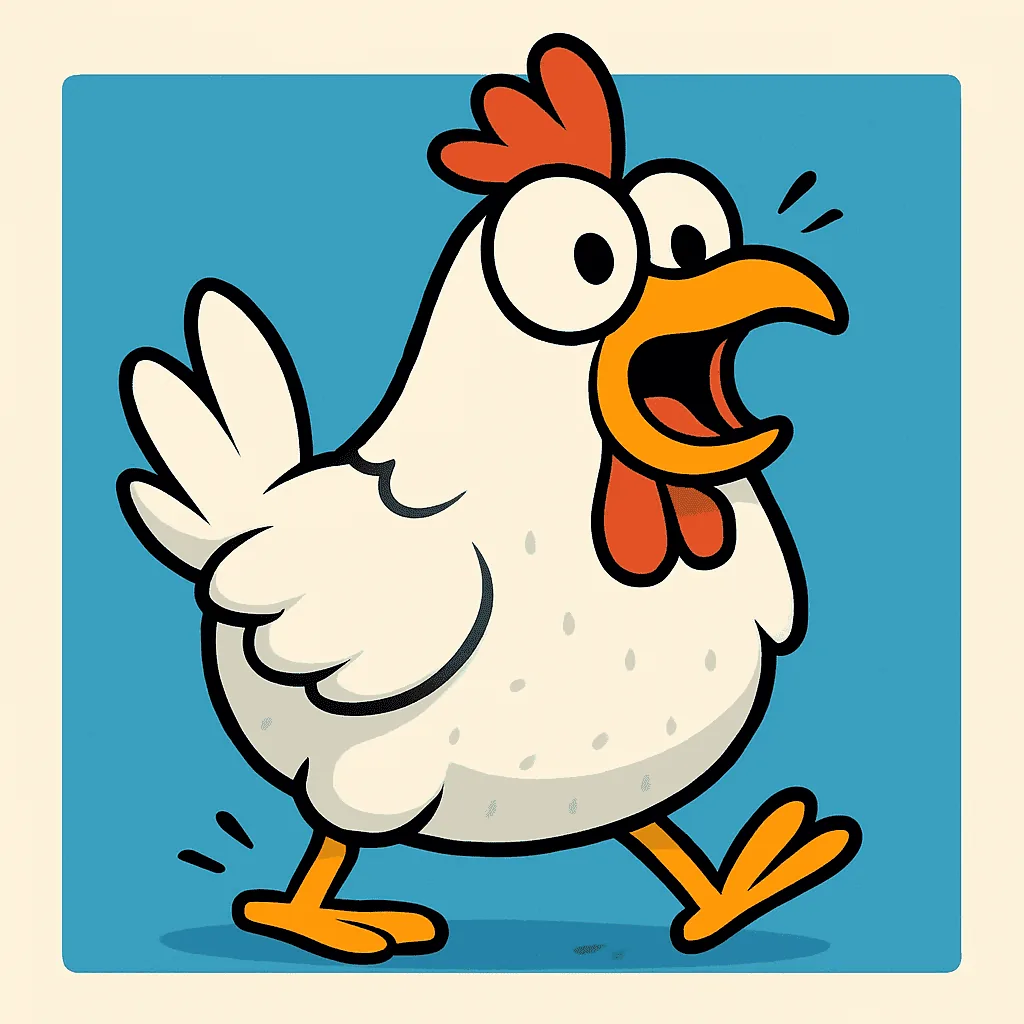
It's early afternoon and Marigold is standing by the water bowl with her beak parted. Not eating, not scratching, not fussing at the others. Her wings are held a little way out from her sides, like she's carrying two small tents she'd rather set down. She isn't cross with you. She isn't cross with anyone. She's cooking, quietly, in the feathers she can't take off.
Most of what you read about hot hens will hand you a list before it hands you a look. Misters and frozen this and that, electrolytes measured to the gram. There's a place for all of it, in time. But before any of that, there's the hen in front of you, and the way she's telling you where she is on the scale from warm to too warm. Her comb tells you plenty. Her wings tell you more. And the way she carries herself across the run tells you the rest.
So let's have a proper look at her. The first thing to notice is the wings. A comfortable hen keeps them tucked, neat against her body, feathers overlapping like tiles. A hot hen lifts them away — not flapping, just holding them out an inch or two, so the air can move under her arms, if we can call them arms. It looks a little theatrical, a little put-upon. That's the first sign, and it's earlier than the panting. Worth noting on a warm afternoon before anything else has started.
The next thing is her beak. Open, slightly, and her throat working in a small steady flutter. That's panting, and it's how she loses heat when the feathers won't let her sweat. A little of it on a hot day is normal — she's managing. A lot of it, mouth wide, tongue visible, chest going quickly, is her working hard at it. Sit with her a minute and count the rhythm. If it's slowing as she rests in the shade, she's finding her way back. If it isn't, she needs your help sooner.
Then the comb. On a well hen in the cool of the morning, it's a good firm red — the colour of a ripe strawberry, standing up on her head like it means it. In the heat, it can go a shade paler, a little duller, sometimes tipped with a waxy look at the points. That's blood moving away from the surface as she tries to cool the core of her. A pale comb on a panting hen with her wings out is the full picture. She's told you three times now. Time to move.
Moving, in this case, is small and quiet. Shade first — a proper patch of it, not a dappled bit under a thin bush. If the coop is cooler than the run, prop the pop-hole wide and let her choose. A tarp thrown over one end of the run, low enough to trap shadow, does more than you'd think on a bright day. Give her the quiet end of the run, away from the bossier girls, so she isn't spending energy holding her place in the pecking order while she's trying to cool down.
Then the water. Keep her water close and shallow — a second bowl within a few steps of where she's standing, in the shade, refreshed cool. Hens drink more when the water is near and clean and not warm from the sun. A shallow dish she can dip her wattles into is a small kindness on the worst afternoons; some hens will stand in it, and that's fine, that's them knowing. A handful of cold greens from the fridge — cucumber, a bit of watermelon rind — gives her something wet to eat when she doesn't fancy pellets. No warm mash today. Save that for the cold nights.
Watch her for the next hour, not the next minute. A hen who's found her shade and her water will settle — wings coming back in, beak closing, breathing quieter. That's her sorting herself out, and it's the outcome you're hoping for. If she stays open-beaked and wing-out in deep shade with cool water at her feet, if she goes wobbly on her legs, if her comb turns darker or bluish at the tips — see a vet on this one, then come back and tell me. Heat can tip from manageable to serious faster than the cold ever does, and there's no prize for waiting it out.
Most afternoons, it won't come to that. Most afternoons, Marigold will stand in her tent-wing pose for twenty minutes, drink twice, find the shade under the coop, and be back to scratching by tea. No rush — she's holding steady. We'll sit with her this morning, and the next warm one, and the one after that. She'll tell us what she needs.
Good girl. Back to the shade with you.