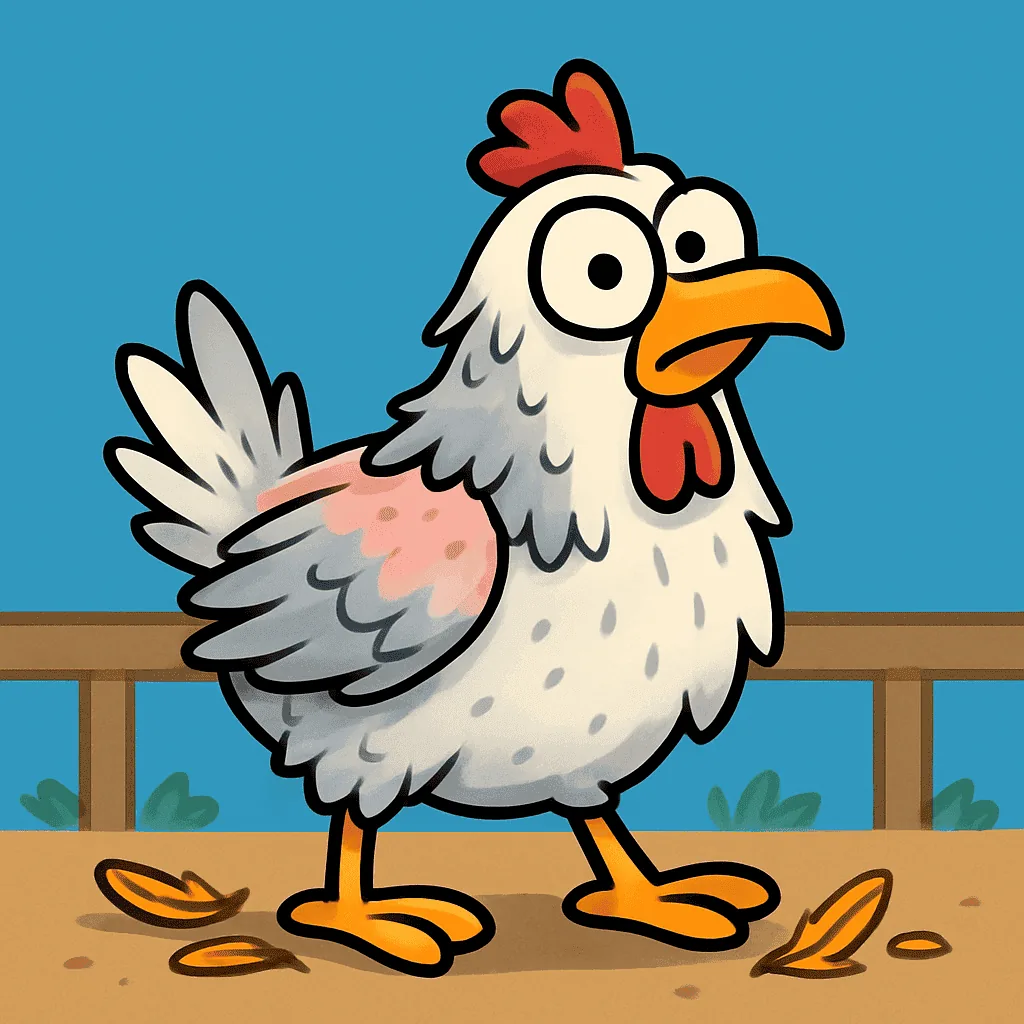
There's a drift of feathers along the fence line this morning, and a soft heap of them under the perch where she sleeps. Marigold is standing in the middle of it looking half-plucked and mildly affronted. Her tail is thin. There's a bald patch behind her neck you can see the pink of. She hasn't lost a fight. She hasn't been bullied off the roost. It's October, and her body has decided it's time.
The first molt you see always looks worse than it is. You come out with the morning scratch and the run looks like something happened in the night — feathers scattered like she came off badly against a fox. She's fine. She's just doing the thing hens have done every autumn since long before any of us started keeping them. But it's fair to stand at the gate for a minute and think, oh love, look at the state of you.
Here's what's actually going on. A feather is mostly protein — the same stuff she uses to make an egg, and a fair bit more of it. Growing a whole new coat is expensive. Her body can't really do both jobs at once, so laying tails off, sometimes stops altogether, and everything she'd have poured into the nest box goes into the pinfeathers coming up under her skin instead. Those little quills you can see when you part her feathers — pale, waxy, tender — those are new feathers pushing through. They have a blood supply while they're growing. That's why she doesn't want to be picked up right now. It genuinely hurts to be handled when she's in pin.
She'll look worse before she looks better. Some hens go tatty in patches over weeks and you barely notice. Others — and Marigold's one of these — drop feathers in great handfuls and stand about looking like they've been through a hedge. Neither is a problem. Her comb tells you plenty here: if it's still a good red and she's eating and drinking and pottering about, the molt is going as it should. If her comb goes pale and waxy and she's hunched in a corner, that's a different conversation and worth another look tomorrow.
The kindest thing you can do is feed her well and leave her be. Feathers are protein, so a bit more protein in the ration helps. A scratch of mealworms in the afternoon, a warm mash on the colder evenings — nothing fancy, nothing that upends what she's used to. Keep her water close and shallow. If you've got layer pellets down, that's grand; some keepers switch to a slightly higher-protein feed through the molting weeks and switch back when the new coat's in. One change at a time, mind. Hens don't love a reshuffle.
Give her the quiet end of the run if she wants it. A molting hen sometimes drops down the pecking order for a week or two — she's tender, she's tired, she's not herself. The others notice. If there's a bit of light pecking at the new pinfeathers, a second feeder in a separate corner usually sorts it. If it's more than light, separate her softly for a few days, somewhere she can still see the flock. She won't thank you for solitary confinement, but she'll thank you for a bit of space.
What you don't need to do is fuss. No baths. No creams on the bald patches. No picking her up to check the pinfeathers — she'll tell you off, and rightly. This isn't a wound to dress. It's a season she's passing through, and your job is mostly to notice, feed her decently, and let her get on with it. If she stops eating, if she's off her legs, if her comb goes the wrong colour — see a vet on that one, then come back and tell me. Molt itself doesn't do those things.
Give it four to eight weeks and you won't recognise her. The new feathers come in dense and glossy, and she'll look better dressed for winter than she did all summer. The laying picks up again when it's ready — sometimes not until the days lengthen, and that's alright too. She's built herself a new coat. That's the work of the autumn.
So if Marigold looks ragged this week, she's meant to. Warm mash tonight, I think. Quiet corner, shallow water, and a scratch of something good in the afternoon. No rush — she's holding steady. Roost first, questions later.