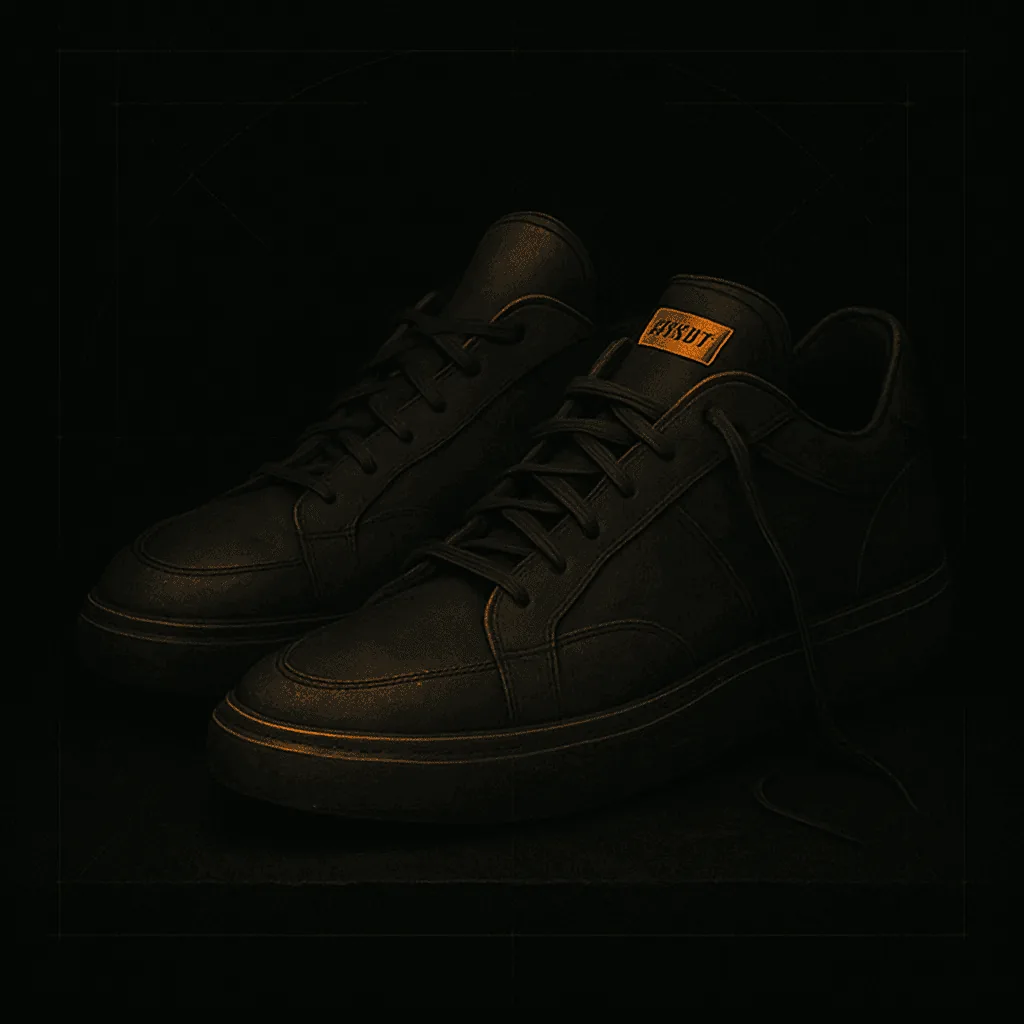
The box is on the desk. The lid is off. The pair inside looks right at a glance, and then it doesn't. The stitch along the toe box runs a millimeter high on one side. The tongue tag reads SAMPLE in small block letters, no size run, no country of origin, no barcode. The midsole has a slight cast to it that the production pair never had. Nothing loud. Nothing you'd catch on a phone screen. You have to hold it under a lamp and let the pair tell you what it is.
Most people meet a sample and think it's a fake. Fair reaction. The proportions read a little off, the materials feel slightly different from the retail pair they remember, and the tag doesn't match anything in the usual references. So the pair gets set aside, sold cheap, or worse, cleaned up and put into rotation. The archive loses one. What gets missed is that the pair isn't a bad version of the shoe. It's the shoe before it was the shoe. That's a different object entirely, and it lives by different rules.
A sample is the pair that existed while the design was still being argued about. Factory pulls a small run, sometimes a handful, sometimes fifty, so the design team can hold the thing in their hands and decide. The stitch that's off by a millimeter is off because the pattern hadn't been locked yet. The tongue tag reads SAMPLE because the pair was never meant to be sold, only inspected. The midsole cast is the compound the factory was testing before the final formula got signed off. Every one of these small wrongnesses is a decision that hadn't been made yet, frozen in a pair you're now holding.
Production pairs are consensus. Samples are the argument. That's the whole difference, and it's why the archive treats them differently. A production pair tells you what the brand released. A sample tells you what the brand almost released, or what it considered releasing, or what one designer wanted before someone else said no. The story is in the gap between the two. Hold a sample next to the retail pair and you can see the meeting where the toe box got shortened, the panel that got dropped, the color that got walked back a shade.
The tongue tag is the first thing to read. Sample tags are shorter, cleaner, often just the model code and the word SAMPLE, sometimes a factory stamp. No size run because the pair was made in a single size, usually a 9 for the design team to try on. No barcode because it was never going to be scanned at a register. If the tag has all the retail information but the pair still looks off, the pair isn't a sample. It's something else, and something else usually means trouble.
The stitch tells the truth after the tag. Production stitching is uniform because the machines were dialed in for a long run. Sample stitching wanders slightly, the operator was working from a fresh spec, sometimes by hand where the machine wasn't set up yet. The wander is small. A millimeter here, a skipped reinforcement there. That's not a flaw. That's the pair being made before the process for making it existed.
The sole unit dates the pair when nothing else will.
The midsole gets its own reading. Sample midsoles are often a test compound, denser or softer than the production pair, sometimes a slightly different shade of white because the pigment ratio hadn't been finalized. Yellowing on a sample doesn't follow the same curve as yellowing on the retail pair, which is one of the ways a well-kept sample gives itself away thirty years later. The leather aged the right way, but the foam aged its own way. Both are correct for what the pair is.
Why the archive cares. A sample is one of a small number that exist, and most of them got destroyed, worn out by employees, or lost. The pair on your desk survived because someone kept the box. That's rare, and the rareness is real, not manufactured. But the value in the archive isn't the scarcity. It's that the pair is a document. You're not holding a product. You're holding a step in a process that otherwise leaves no record.
One thing about this pair. It doesn't belong in the rotation. Samples wear differently, and once the sole compound gives, there's no replacing it. Keep this one on the shelf, not on your feet. Write the notes now, while the tongue tag is still legible and the box is still with the pair. The box matters here more than usual. Years from now, the box is what tells the next person what they're looking at.
Clean pair, sit with it. Worth pulling the box for.