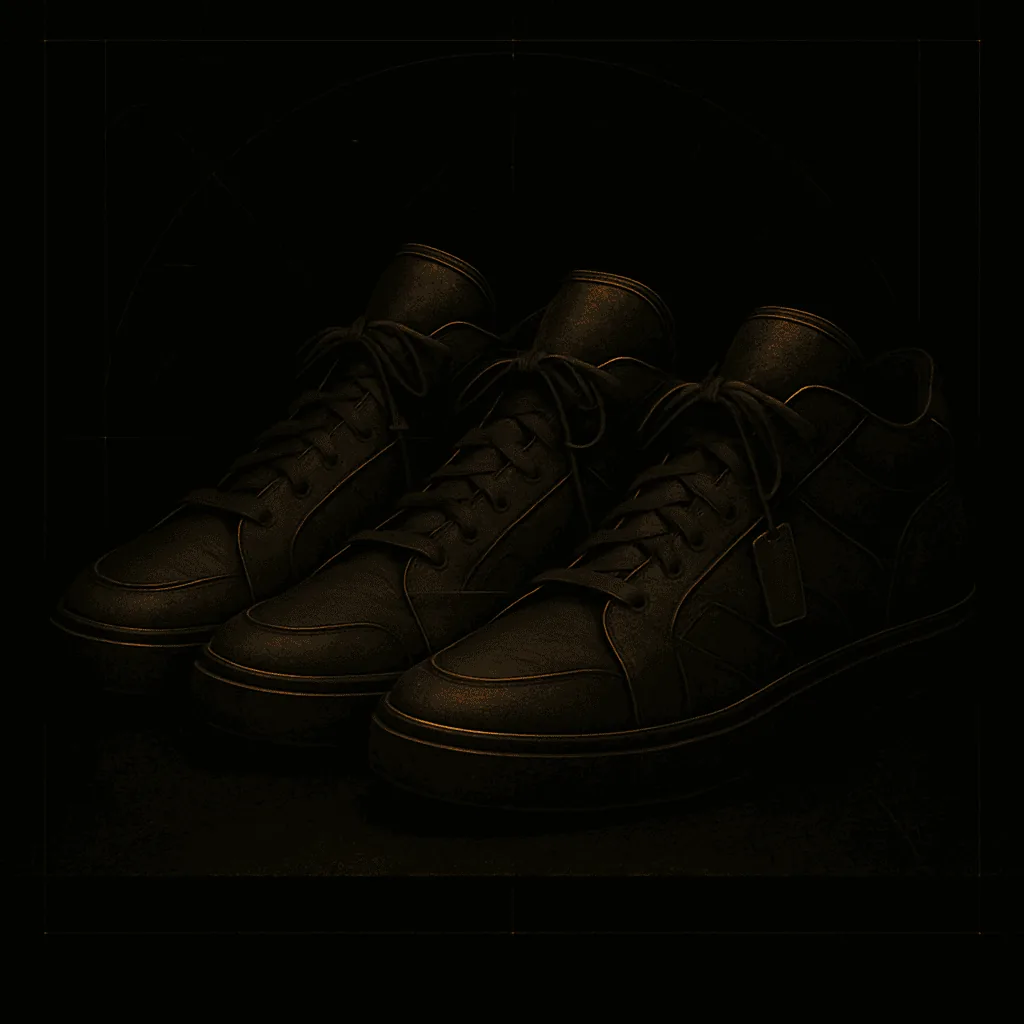
The box came in this morning, and the panel on the side is faded in that specific way, corner-sunned, warehouse-shelf sunned. Inside, the pair is fine. Better than fine. The suede on the toe box still has its nap, the stitch is tight, the sole unit hasn't yellowed past what the years allow. But it's the box I keep looking at. The little sticker on the end, the size run, the region code. Six weeks. That's how long this colorway sat on shelves before it was pulled and replaced. Most people who owned a pair never knew.
That colorway had a short run. You hear the phrase and it sounds like marketing, like something invented to make a resale price make sense. It isn't. Short runs are a real thing in the factory paperwork, and they happen for reasons that are usually boring. A licensing window closed. A pigment supplier changed. The materials didn't hold up on the sample the buyer approved, and the second production got cut. Sometimes the shoe just didn't sell in the first weeks and the account pulled the order. The archive doesn't care why. The archive cares that the pair in front of me exists in smaller numbers than the one next to it, and that fact has to be recorded before it gets lost.
One thing about this pair. It looks, at a glance, identical to the general release that came after it. Same silhouette, same midsole, same tongue tag from a distance. The difference is the leather. The first run used a hide that came out softer, took the dye deeper, aged toward a warmer brown. The second run, the one everyone has, went to a corrected-grain leather that stayed flatter. If you're holding one of the six-week pairs and you don't know, you might think yours is just a nice example that broke in well. It isn't. It's a different shoe with the same name.
This is the whole logic of the archive, so I want to sit with it. A silhouette isn't one object. It's a family of pairs made in overlapping windows, in different factories, with materials that shifted quarter by quarter. The catalog entry says one thing. The pair in your hand says something more specific. When a colorway pressed only a few thousand units, whether by design or by accident, the odds that anyone documented the small differences went down with the count. So the archive fills in. The tongue tag font. The exact weave of the woven label. The color of the thread on the heel tab. The paperboard weight of the box. None of it is trivia. All of it is the difference between a pair and the pair.
Scarcity here isn't the resale story. I don't care about the resale story. Scarcity is an inventory problem. If ten thousand pairs shipped and half went to one region and a quarter of those got worn into the ground and another quarter got stored in a garage that flooded in 2004, the number of clean, documentable examples left in the world is a number you can almost count. That's what the archive is trying to hold. Not the hype, the count. Not the price, the paperwork. When a short-run colorway shows up, the job is to write down what makes it that run and not the other one, so that ten years from now, when someone finds a pair in a closet, there's a page to check.
The leather aged the right way on this one. That's part of why I know what I'm looking at. Corrected-grain doesn't age like this. The creases fall differently. The color of the toe box has that soft break that only comes from a hide that had somewhere to go. Worth pulling the box for, worth writing the notes for, worth photographing the tongue tag straight-on and from the side. Ten thousand pairs, most of them lost or worn out or misfiled under the wrong reference number. This one made it here.
So if you have a pair and you've always thought there was something a little off about it, something a little different from the ones your friends had, the answer might not be memory playing tricks. It might be the run. The colorway sat on a shelf for six weeks and then it didn't, and the pair on your shelf now is one of the ones that got out. Read the tongue tag first. Then the heel. Then the box, if you still have it. The archive doesn't need the story. It needs the pair, documented, sitting quietly where it can be found again.