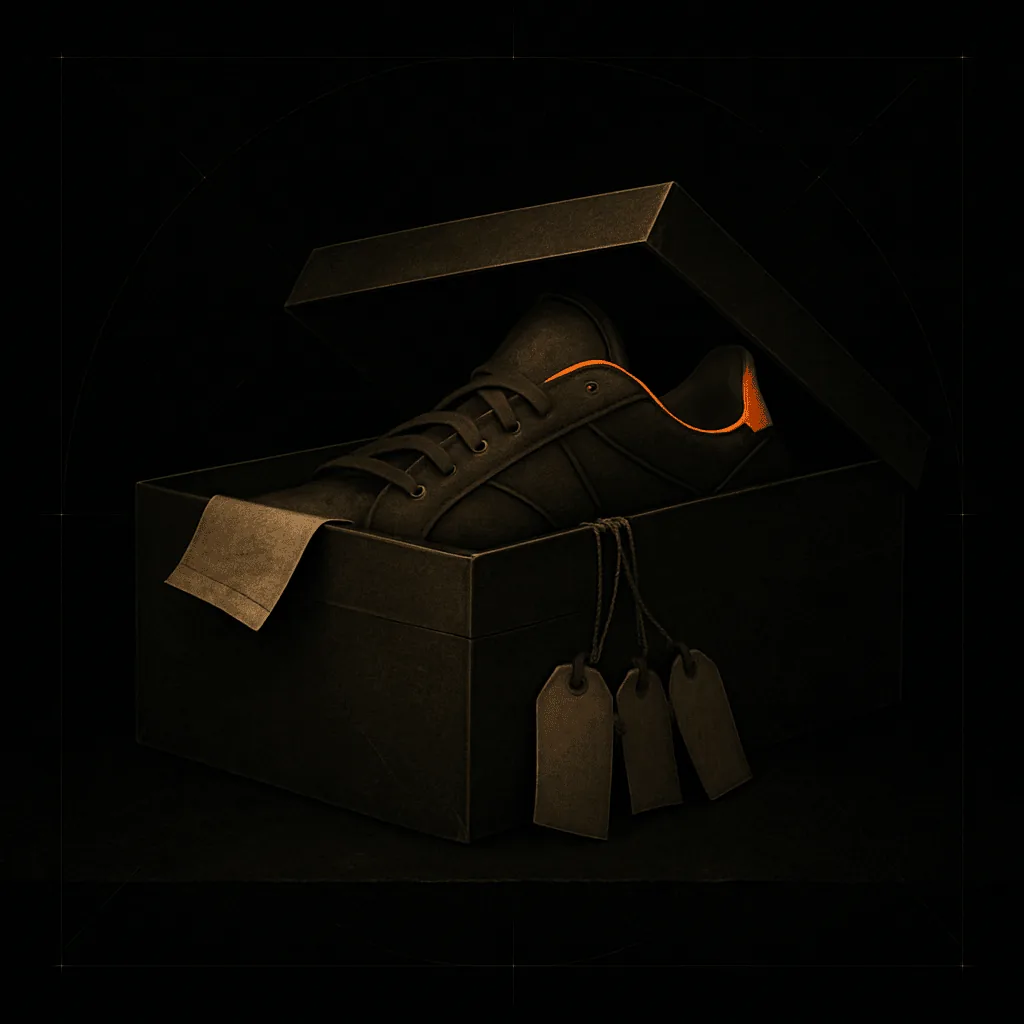
The box sits on the shelf and the sticker on the side lists a store you've never been to. A shop in Naka-Meguro, maybe, or a Berlin address off Torstrasse, or a Chicago corner that closed a decade ago. The pair inside looks like a pair you know. Same silhouette, same panel layout, same tongue. But the colorway is off by a shade, and the stitch on the heel counter runs a different direction, and you've been trying to figure out for a week why yours doesn't match what shows up when you search the model name.
Most of the time, the answer isn't a fake. The answer is that the pair only landed in three cities, and you happen to be holding one.
Before the resale apps, before the raffle links, distribution was the whole game. A brand would decide a pair belonged to a place. Sometimes it was a marketing choice, a tie-in with a shop that had built the culture in that neighborhood. Sometimes it was a regional exec pushing for something local. Sometimes the pair existed because a single buyer at a single store put in an order that nobody else matched. The pair got made, in small numbers, and it went to the shelves that had asked for it. Everywhere else, the model came in the standard colorway, and that was the pair the rest of the world knew.
So you'd have a silhouette with a global release, and inside that release, three or four pairs that only lived in specific cities. Tokyo got a version with a different suede on the toe box. Berlin got one with a translated hit on the tongue tag. A Chicago shop got a hundred pairs in a colorway that was never listed anywhere. The pair existed. The pair was official. The pair just didn't leave.
One thing about this kind of drop. The scarcity was quiet. There was no countdown, no announcement outside the region, no secondary listing telling you what you'd missed. If you didn't live there or know someone who did, you never heard about it. You'd see the pair years later on a shelf at a shop that traveled to buy, or in the background of a photo, and you'd have to work backwards from the details to figure out what you were looking at.
The details are where the pair identifies itself. The sole unit will match the era. The stitch pattern will match the factory. But the specific combination of suede and leather, the paint on the midsole, the font on the size tag inside the tongue, those are the tells. That colorway had a short run, and the run was regional, and the regional runs used materials the standard release didn't. The leather aged the right way because it was a different lot. You read the pair and it tells you where it lived before you owned it.
What this means for the archive is that a pair's story isn't finished when you name the silhouette. Two pairs of the same model, released the same year, can have completely different lives. One went to a global rollout and sat on shelves in fifty countries. The other went to a single shop in Osaka and sold out in a weekend to people who walked in off the street. Both are the same model on paper. Neither is the same pair on the shelf.
The old regional drops are also the ones that get faked the least well, because the fakers work from the reference photos of the mainline release. They don't know the Tokyo version had a different tongue tag. They don't know the Berlin pair used a nubuck instead of a suede on one panel. So the pair you're holding, if it's real, will read cleanly to anyone who knows the specific run. And if it's not real, the shape will be right and the materials won't be. That's the giveaway on the regionals almost every time.
Worth pulling the box for, when you find one. The box itself usually carries a sticker or a stamp that ties the pair to its city. The receipt, if it survived, ties it to the shop. Those pieces are the paperwork of a pair that was never meant to travel. Once you have them, the pair is placed, and placed pairs are the ones the archive is really for.
The pair on your shelf came from somewhere. The city it landed in shaped how many were made, who got them, and what the pair became after. That's older than the apps. That's older than the drops calendar. That's just how the shoes moved before we started tracking every pair from a phone. Clean pair, sit with it. The story is in the box.