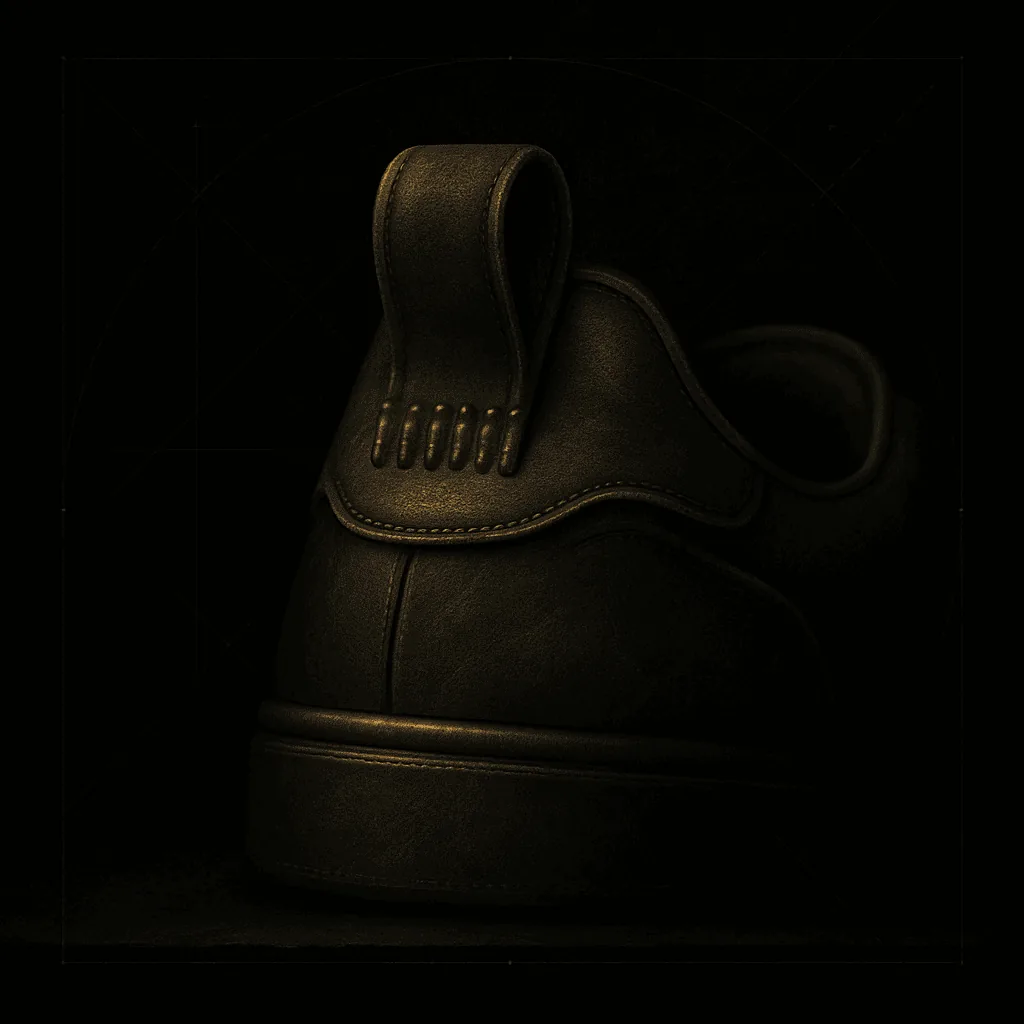
Pull the pair out. Turn it so the heel faces you, under a decent lamp, not the ceiling light. Look at the little tab of leather at the top of the heel counter, the one your finger hooks into when you slip the pair on. Count the stitches across the top edge. Eight. Then set it back down and count again, slower. Still eight. That's the pair I'm thinking of. That's the run I'm thinking of.
Most people never look at the heel tab. They look at the toe box, the panel colors, the tongue logo, the sole. All fair places to look. But the heel tab is where the factory left its handwriting, and the handwriting is smaller than the signature. It gets forged less because nobody's checking. The stitch count on that tab, the density along the top edge, the angle the thread enters the leather, these are the details that separate the pair you think you have from the pair you actually have.
Here is the thing about the pair in front of you. Eight stitches on the heel tab reads as the earlier run. The '05 reissue went to ten. Same silhouette, same colorway, same box graphic on a shelf photo. Different factory, different spec sheet, different pair. If you paid for the earlier one and you're holding a ten-stitch tab, that's a conversation. If you paid for the reissue and you're holding an eight-stitch tab, that's a different conversation, and a better one.
The count is only the start. Once you're looking at the tab, look at how tight the stitches sit against each other. Density is a factory signature. Some lines ran with a heavier machine setting and the thread bites deeper into the leather, leaving a slight pucker along the top edge. Others ran looser, cleaner, the thread almost flush. Neither is wrong. They're just different runs, from different months, from different rooms with different hands on the machine. The leather aged the right way tells you the pair is honest. The stitch spacing tells you which honest pair it is.
While the pair is in your hand, read the tongue tag next. Not for the logo, for the print. The font weight shifts between runs. The country line moves. Sometimes the tag is sewn on with a slightly different thread color than the rest of the pair, which is a tell in itself, and sometimes it isn't, which is also a tell. Then the midsole. The midsole tells the truth about age in a way the upper never will, because the foam knows how long it's been sitting. But the stitch count on the heel tab is faster, and you can do it in the shop, or at the table, or in the back of a car with a phone light. It doesn't require you to know the foam. It requires you to count to eight.
One thing about this pair, and about the practice in general. You are not looking for fakes. You are reading the pair. Most of the pairs you'll count stitches on are real, and the count will confirm what the box already said, and you'll set the pair back down and move on. That's the point. You do it enough times that the count becomes a glance. You pick up a pair, your eye goes to the heel tab, and you know before you've counted. The shape of that toe box, I know it. The stitch on the heel tab, same thing. It stops being work and becomes how you see.
A few pairs will surprise you. That's the archive doing its job. You'll pull a pair you've owned for a decade off the shelf, look at the tab under a better lamp than you've ever used on it, and realize the count is not what you assumed. Maybe you have the earlier run and never knew. Maybe you have the reissue and told people otherwise for years. Either way, now you know, and now the notes in the box get updated, and the pair sits on the shelf as what it actually is instead of what you thought.
That's the whole practice. Not paranoia, not gatekeeping, not calling pairs out. Just a lamp, a heel tab, and the patience to count before you talk. The pair will tell you what it is if you let it. Eight stitches, ten stitches, the thread pulled tight or sitting loose, the tongue tag print a shade heavier than last year's. All of it is on the shoe. All of it was on the shoe the whole time.
Set the pair down. Write the count in the notes. Worth pulling the box for.