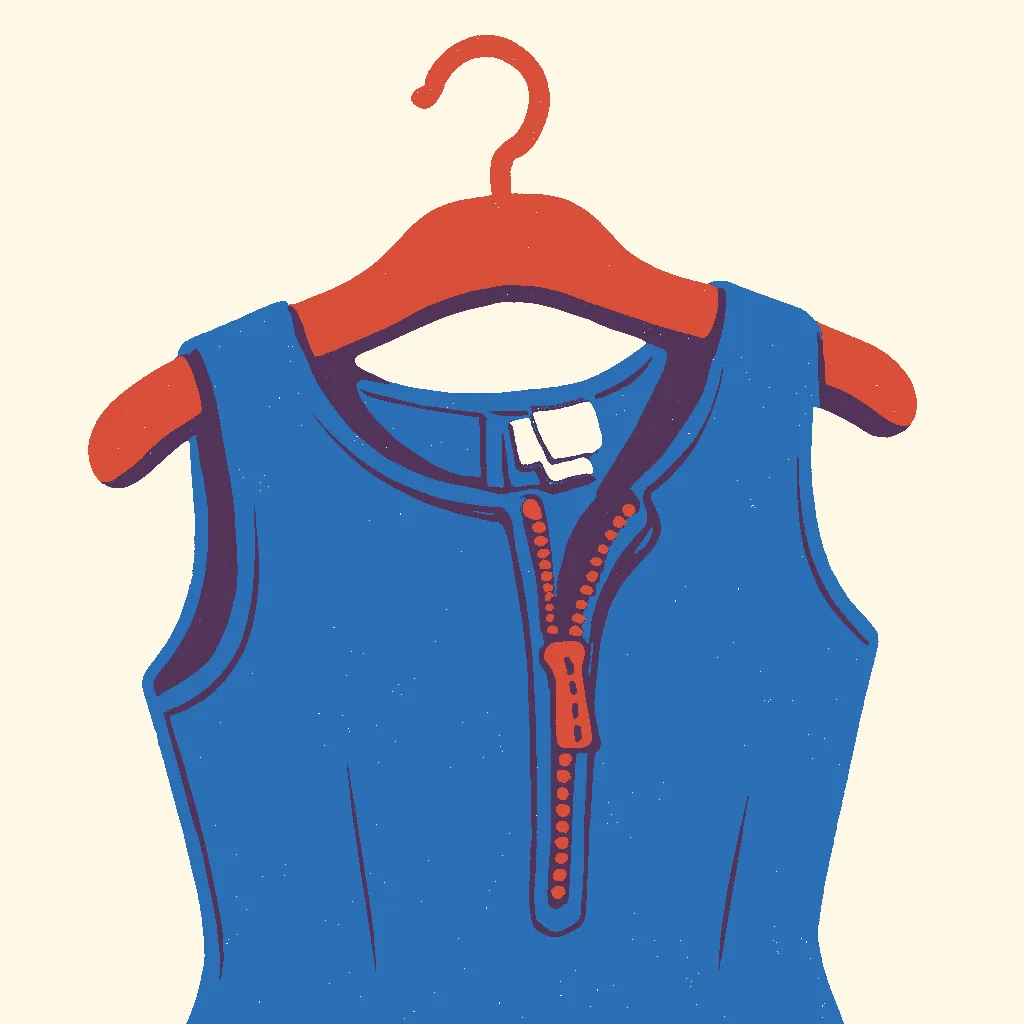
That dress on the rack — good bones, questionable smell, no date anywhere. Before the fabric gets a vote, find the zipper. Metal teeth point earlier, nylon coil points later — the coil stuff was everywhere by the late 1960s, and it moved in fast. A metal zipper isn't proof on its own, since zippers get replaced and reproductions get made, but it's the first knock on the door. Heavy pull or flimsy one — what's it feel like?
Where the zipper sits matters too. A metal zip tucked into the side seam leans mid-century or earlier — dressmakers favored the side for years before the long back zipper became the default. Soft tell, not a hard one, treat it like a hunch and keep reading the garment.
Now the labels — flip the collar, check the inside seams. A small union tag reading ILGWU means a ladies' garment shop made the piece, and the label's design changed era by era, which is a gift. One version worth memorizing: a label carrying the letters AFL-CIO came after those two merged in the mid-1950s. Collectors keep whole charts of the label styles, I just keep the rough shapes in my head. Which version is yours wearing?
Care instructions are the sharpest line in the sand. The FTC didn't require care labels on garments until 1971 — so a tag that says machine wash cold puts the piece in the seventies or later, no argument. A care tag means 1971 or after, that's the rule. No care tag, and the odds tilt older.
Silence talks too. Older garments skip things we take for granted — no fiber content, no size tag, sometimes nothing sewn in but a dressmaker's name. A beautifully finished dress with no tags at all could be home-sewn, could be old enough that nobody had to declare the fabric. While the collar's flipped, look at the seams themselves; hand-finished hems and generous seam allowances belong to an era when clothes were built to be altered.
Could be nothing, could be a payday — but a metal zipper, a union label, and no care tag in the same dress is three witnesses telling one story.
So the order of operations: zipper, placement, labels, tags, seams. Each one narrows the decade; together they name it. The fabric and the cut get their say afterward — they're the personality, the hardware is the birth certificate. What decade is that rack hiding?