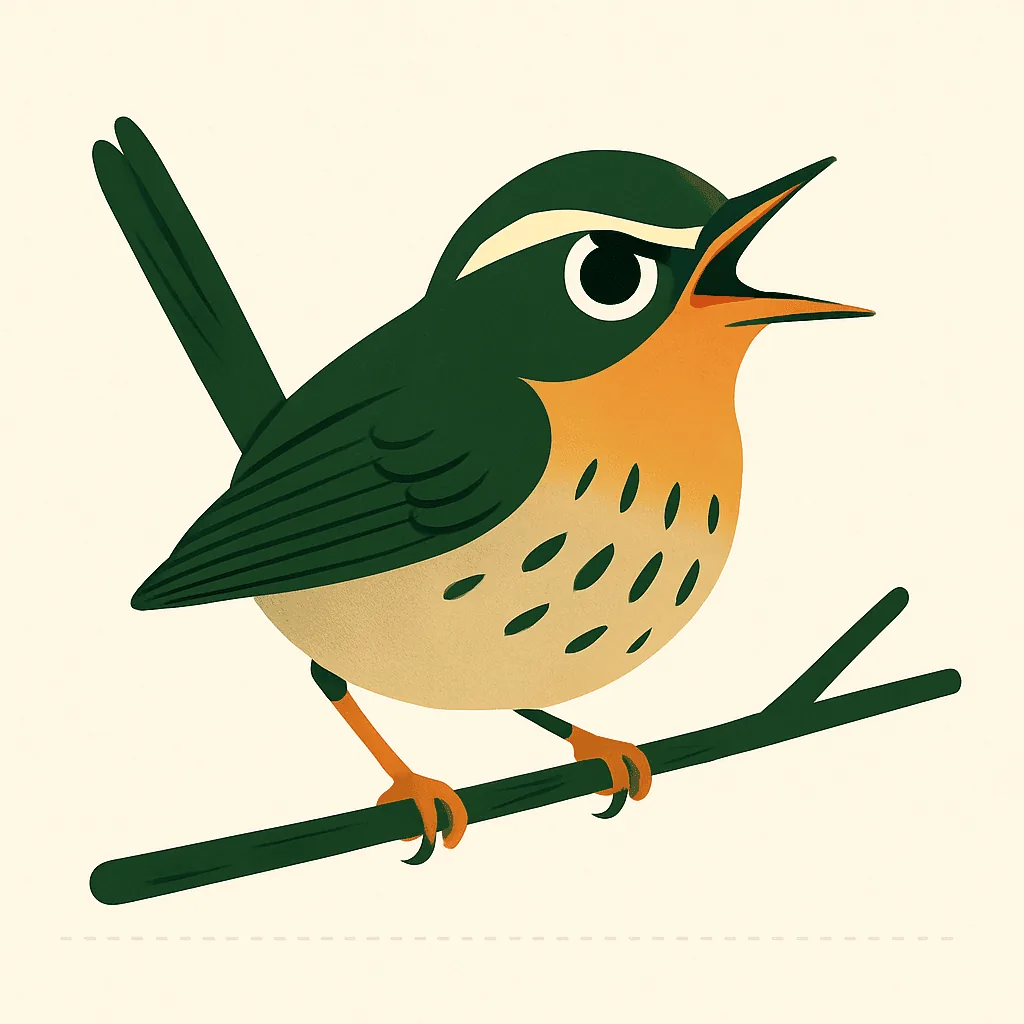
A sharp little tick from the hedge. Then another. Then a whole run of them, close together, like a pebble tapped against a pot. You step outside with your coffee and the tapping stops for a beat, then starts again from a little deeper in the shrubs. Nothing is flying. Nothing is showing. But something is very much talking, and it has opinions about you being on the patio.
That sound isn't a song. Most of what you hear at the feeder isn't. Song is the long, patterned thing a male puts up at dawn to claim a patch of hedge. The rest of the day, birds are mostly chatting, checking in, warning each other, begging from a parent, arguing over the suet. We tend to file all of it under bird noise and move on. But if you slow down for a minute, the little ticks and scolds turn out to be the most useful sounds in the yard. They tell you who is there before you ever see a feather.
Start with the contact chip. This is the quiet one, the housekeeping call. A cardinal pair moving through the yew will trade a soft, metallic chip back and forth as they hop, one to the other, keeping tabs. Song sparrows do it low in the brush pile, a dry little tsip every few seconds. Juncos, in winter, keep up a light smacking chip as the flock feeds on the ground, so nobody drifts off alone. It's the sound of, I'm here, are you there, good. If you learn one call this month, learn this one. It's how you find the bird before it finds you.
Then there's the scold. This is the pebble-on-a-pot noise from the hedge. Sharper, louder, faster, and it doesn't stop. Wrens are famous for it, a rattling, indignant chatter that goes on and on. Chickadees have their own version, and here's the neat part, they add more dee notes when the threat is worse. Two or three dees for a person walking by. A dozen for a small owl tucked in the cedar. If the chickadees are really going, look up, and look carefully. They usually know something you don't. Robins do a hard, ringing tut tut tut when a cat crosses the lawn. Blue jays do the whole neighborhood a favor and simply yell.
Begging is the third one, and once you hear it you cannot unhear it. It's a wheezy, insistent, slightly pitiful sound, always coming from something that looks almost the size of the adult next to it. Fledgling starlings do it worst, following a parent across the grass with their beaks open, buzzing like a dying toy. Young cardinals do a softer, higher version from inside a shrub, and the parent shuttles back and forth with a sunflower seed like a waiter on a bad night. If you hear that wheeze in June, look low. The baby is usually on a fence or a low branch, not hidden nearly as well as it thinks.
The trick, once you have the three shapes in your ear, is to notice which one is happening. A yard full of contact chips is a calm yard. Birds are feeding, moving, keeping their little threads of connection. A yard that suddenly goes to scolds is a yard with news. Follow the sound. Nine times out of ten it's a neighborhood cat, or a jay being dramatic. The tenth time it's a Cooper's hawk on a low branch, and you get to see something you'd have missed if you'd stayed inside. A yard full of begging in early summer means you have breeders, which means your feeder mattered through the spring. That's worth knowing.
You don't have to memorize a call library to get good at this. Just start asking, when you hear a sound, which of the three it is. Housekeeping, warning, or begging. The species will come later, and it comes faster than you'd think, because each bird's chip has a texture, a cardinal's metallic tick sounds nothing like a song sparrow's dry one once you've heard them both a few times. Tell me where you saw it, and what it was saying while you watched. That's usually enough to name it.
So the next time the hedge is ticking at you and nothing is showing, don't go looking with your eyes first. Stand still. Listen for a second call, and a third. Notice whether the sound is calm or annoyed or hungry. The bird will tell you what it is doing before it tells you what it is. Worth another look.