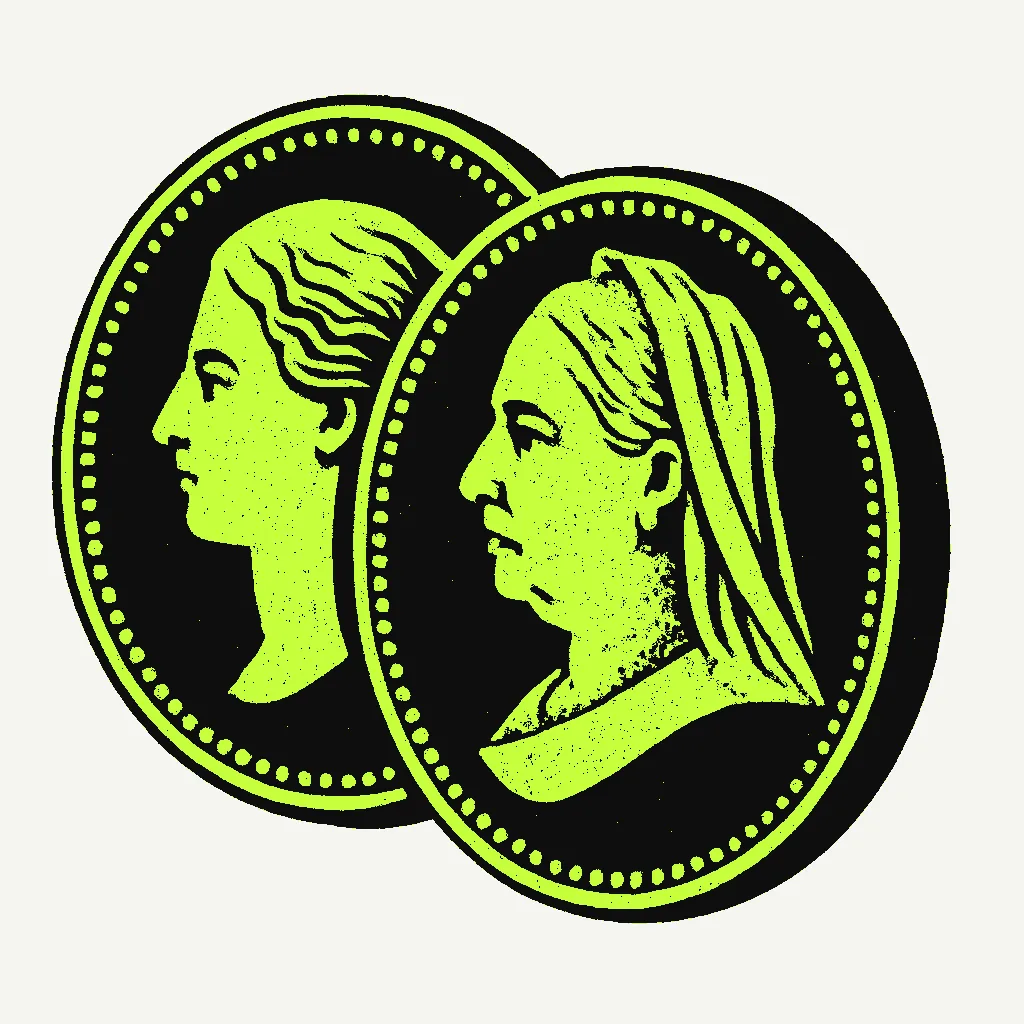
A British penny comes across the felt with the date worn flat. Happens more than you'd think. Copper is soft, the reverse takes the beating, and a hundred and fifty years of pocket change grinds the numerals down to a smudge. The customer sets it down and asks what it is. The date is the last place I look.
The face comes first. Turn the coin so the portrait is up, and before anything else, notice which way the monarch is looking. Left, or right. That single detail cuts the possibilities in half. Then look at the face itself, not the legend around it, the face. Young or old. Bearded or clean. Crowned or bare. Each portrait belongs to a decade, and the decade is often enough.
Most people go straight for the numbers. Fair instinct, wrong order. The numbers are the smallest, softest, most-worn part of a copper penny, and on a coin that spent forty years in a till, the date is the first thing to go. The portrait sits higher in the field, protected by the curve of the cheek and the crown. The portrait outlasts the date. So the portrait is what you read.
Take Victoria. She reigned sixty-three years, and her penny reigned with her, and the Royal Mint did not use one portrait the whole way through. She faces left, always left, but the woman on the coin ages. Early on she is the young head, a girl really, hair drawn back, a small fillet, the face soft and unlined. That is the 1840s and 1850s, the bun penny not yet arrived. Then comes the bun head, hair coiled at the back, still left-facing, still recognizably her but grown into the crown. That portrait carries the reverse of the century, roughly the 1860s into the 1890s, a long span, and the wear pattern will narrow it further. Late in her reign, the veiled head, the old head, the widow's portrait. Draped, dignified, unmistakable. That face is the 1890s to 1901. Three portraits, one monarch, three decades sorted before I have looked at a single digit.
Edward VII takes over and the direction flips. He faces right. That is the rule that runs through the whole of the British series from here on, each monarch faces the opposite way to the one before, and it is the fastest sorting tool a copper penny gives you. Edward right, bearded, bare-headed, a short reign, 1902 to 1910, the portrait is calm and full-faced. If the penny is right-facing and the man is bearded and bare, you are in the Edwardian decade before you have squinted at anything.
George V faces left. Younger looking than Edward, cleaner jawline, still bare-headed. His penny runs from 1911 to 1936, and inside that quarter century the portrait itself shifts, the modified effigy later on, subtler features, a smaller head in the field. That change is the tell for the 1920s onward. Look at the rim before the field, look at the field before the date, and the small effigy will announce itself.
Then George VI, right-facing again, no beard, and the reverse changes too around this period, Britannia sitting a little differently, the tone of the copper often browner because the bronze recipe shifted. His pennies are 1937 to 1952, and by now you have narrowed a coin to a fifteen year window without touching the numerals.
Elizabeth II, left-facing, and the young Machin-era portrait is a coin most people have handled without noticing. Her pennies run to 1970 in the old money, and the portraits themselves went through revisions. The direction alone puts you in the second half of the twentieth century.
So the sequence, if it helps, is this. Victoria left, three ages. Edward right, bearded. George V left, bare. George VI right, bare. Elizabeth left, young. Left, right, left, right, left. Alternating. Once you have that rhythm in your hand you can date a worn penny in a second, before the loupe comes out, before the date is even a question.
The date, when it survives, confirms what the face already told you. When it doesn't survive, the face is all you have, and the face is usually enough. The strike tells the story, and on a British penny the strike starts at the portrait. Read the monarch first. The decade will follow. The value, if there is one, comes after that, and quietly.