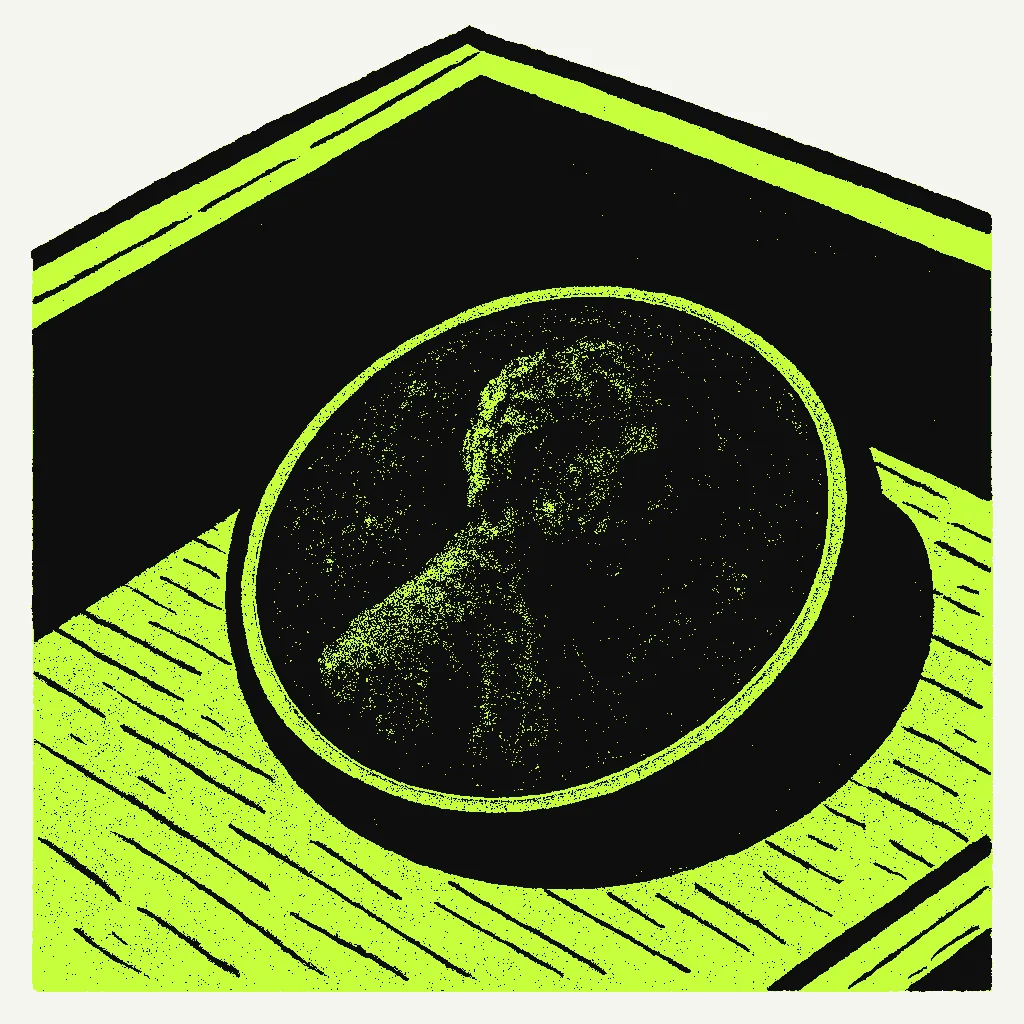
The penny in the drawer is the color of tobacco and old leather. Not brown exactly, not red anymore, something in between that only shows up under a warm bulb. The edge is a little darker than the field. The high points on Lincoln's cheek and the wheat ears have gone a shade lighter from a thumb or two, decades apart. Nobody polished it. Nobody wrapped it. It sat somewhere, in a drawer or a coffee can or the bottom of a purse, and it did what copper does when you leave it alone. A hundred years, give or take.
Most people who bring me a coin like this ask the same thing. Is it worth more if I clean it up. They mean well. The coin looks tired to them, and they want to help it. I understand the impulse. But the color on that penny is not dirt. It is the coin's biography, written in oxide and skin oil and whatever air it happened to be breathing in 1958. Wipe it off and you have not restored anything. You have erased a hundred years of the coin being itself, and left behind a scratched pink surface that fools nobody and sells for less.
Copper starts out the color of a new roof before the roof goes green. That is what mint red is, and it is what the coin looked like the day it left Philadelphia or Denver or San Francisco. Bright, almost orange in some light, with a shine that has nothing to do with polish. That color lasts about as long as the coin stays in a sealed roll or a tight cabinet. Let a little air at it, and the surface begins to trade electrons with the oxygen. Slowly. The way a good stew goes from bright to deep on the back of the stove.
The first stop is red-brown. The reds pull back into the recesses of the design, into the letters and the folds of the coat, and the fields start to go the color of a walnut shell. This is where most old wheat cents live, and it is a color a collector will pay for, because it means the coin was handled with some respect but not shut away in a vault. Circulated, but circulated well. The wear pattern is honest. You can read the date without tilting the coin, and Lincoln still has most of his face.
After red-brown comes chocolate, which is what the drawer penny is. Chocolate is deep, even, and quiet. It does not shout. In the right light there is still a whisper of red down in the low places, around the rim, tucked behind the wheat ears on the reverse. That whisper is the tell. It says the toning happened slowly, over years, with the coin sitting flat and getting the same air on both sides. A coin that went chocolate in a month, from being cooked or dipped or wiped with something it should not have been wiped with, looks different. It looks flat. The color is on top of the coin instead of in it. I can spot that across the counter.
Beyond chocolate there is a darker range, almost black in places, sometimes with green or blue creeping into the low points if the coin spent time somewhere damp. That is where you have to be careful, because active corrosion is a different animal from patina. Patina protects the copper underneath. Corrosion eats it. The difference is whether the surface is stable and even, or crusty and pitting. A loupe tells you in about four seconds. Most old cents are stable. Some are not, and those get stored dry and left alone, not scrubbed.
The reason to leave all of this alone is simple. The market for old copper has been around longer than most of us, and it settled on its answer a long time ago. An original coin with honest toning, even a plain one, is worth more than the same coin dipped bright. A book will tell you the same thing. A dealer will tell you the same thing. The coin itself will tell you the same thing, if you set the cleaned one next to the untouched one on a piece of felt and look at them for a minute. One has a hundred years in it. The other has an afternoon.
So the penny in the drawer stays in the drawer, or better, goes into a flip. Not a coin envelope with sulfur in the paper, not a plastic sleeve made for baseball cards, a proper flip. The toning did you a favor. The strike tells the story, and the color tells you how long the story has been running. Chocolate, with a little red in the low places. Leave it.