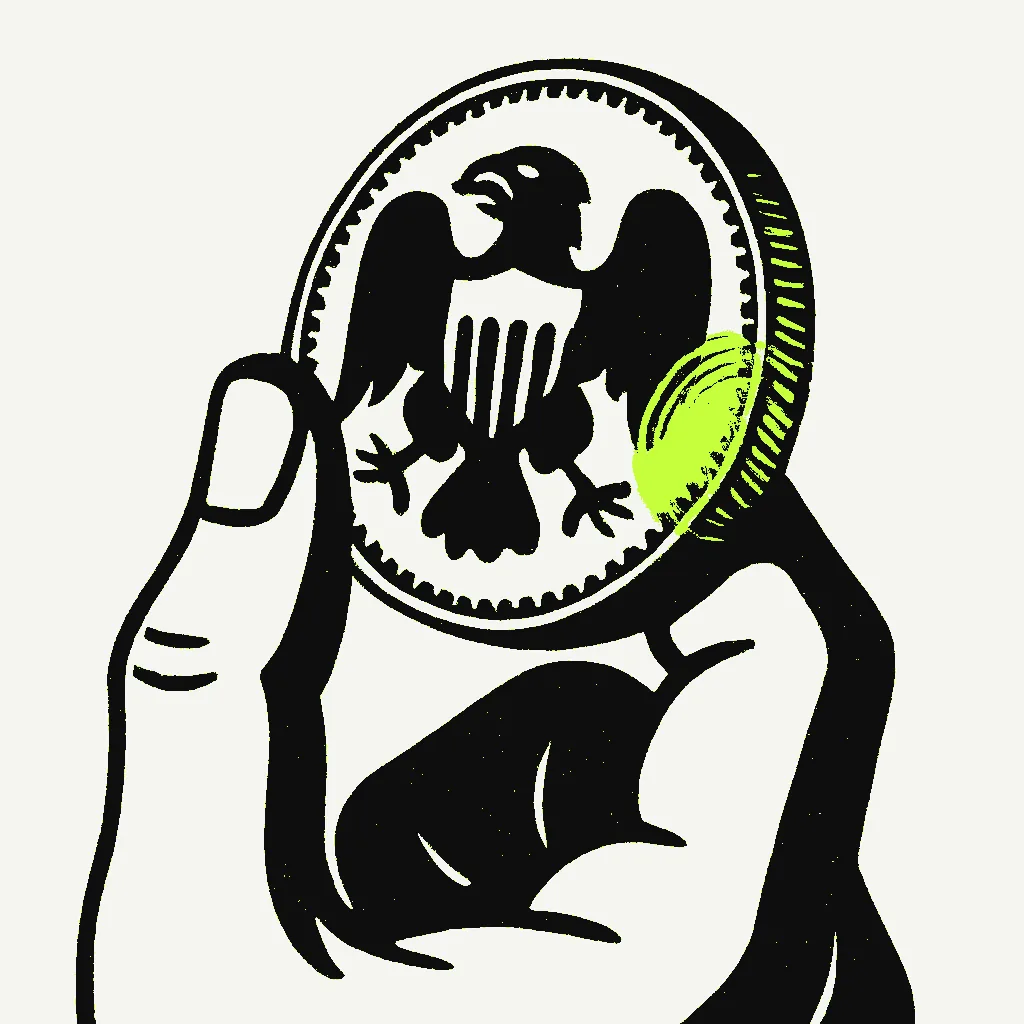
A 1948 Franklin comes across the felt. The customer sets it down proud, thumb square on Ben's cheek, forefinger flat on the bell. He's been holding it that way, off and on, for forty years. I can see where. There's a faint oval of haze on the obverse, right where the thumb has lived, and the silver underneath has gone a soft, tired grey that no cloth is going to touch. The coin is still a Franklin. It's just a Franklin with a thumbprint now, and the thumbprint is going to outlast both of us.
Most people who come in have never been told how to pick up a coin. Why would they. A coin is money, and money gets handled. You pull it out of a pocket, you hand it to a cashier, you drop it in a jar. Nobody stops you at the grocery store to say, hold that quarter by the edge. So the habit that protects silver for a lifetime is a habit nobody grew up with, and by the time the coin gets to the counter, the damage that was going to happen has usually already happened.
Here is what the oils on a thumbprint actually do. They sit on the surface. For a day, for a week, you can still wipe most of them off, gently, with the right cloth, and the coin looks the way it looked before. But silver is soft, and skin oil is acid enough, patient enough, to start etching. Give it a few weeks. Give it a month in a warm drawer. What was a smudge becomes a ghost, and the ghost is in the metal now, not on top of it. You are not going to clean it out. If you try, and I mean this plainly, you will halve the coin's value in the time it takes to wipe. The toning that would have come naturally, slow and even across the field, now has to route around your fingerprint. It never quite does.
The grip a dealer uses is not fancy. Thumb on one edge, forefinger on the other, the coin held on its rim like a tiny wheel. That's it. The face of the coin never touches skin. The reverse never touches skin. Only the rim, which is the part designed to take contact, the part that was already touching a hundred other coins in a mint bag before it ever met a person. Hold it over the felt, not over the floor, and hold it low, because a dropped Morgan on a hardwood is a story you tell for years and never with a smile. If you need to see the reverse, you don't flip it in your fingers. You set it down, you turn the flip, or you use two hands and change the grip on the rim. The face stays clean.
Loupe work is the same discipline. Let me get the loupe on that, I'll say, and the coin comes up between thumb and finger on the edge, tilted to the light. The mint mark's the tell on half the coins worth knowing, and the mint mark lives right where a careless thumb wants to sit. A 1916 Mercury dime with a D under the fasces on the reverse is a different coin from the same dime without one, and the difference is the price of a used car. You do not want your thumbprint sitting on top of that D while you decide.
Gloves are a whole conversation, and a shorter one than people expect. Cotton gloves slip. A slipped coin is a dropped coin, and a dropped coin picks up a rim ding that the loupe will find in ten seconds. Nitrile is better if your hands sweat, but for most people, at most times, clean dry hands and the edge grip are enough. Wash first if you've been eating. That's the whole ritual.
The reason to learn this on the pocket change is that the pocket change is where the habit gets built. You are not going to remember the grip for the first time when a 1909-S VDB comes out of grandpa's cigar box. You are going to reach for it the way you reach for everything, and forty years of thumbprints will decide what you find. Practice on the wheat cent. Practice on the quarter that came back in change this morning. By the time something honest shows up, the hands already know.
Every coin that crosses the felt has been carried by somebody. Some of them carried well, some of them carried hard. Your job, once a coin is yours, is to be the person who carried it well. Hold it by the rim. Set it in a flip. Let the next thirty years of toning happen on their own. The story's better than the print.