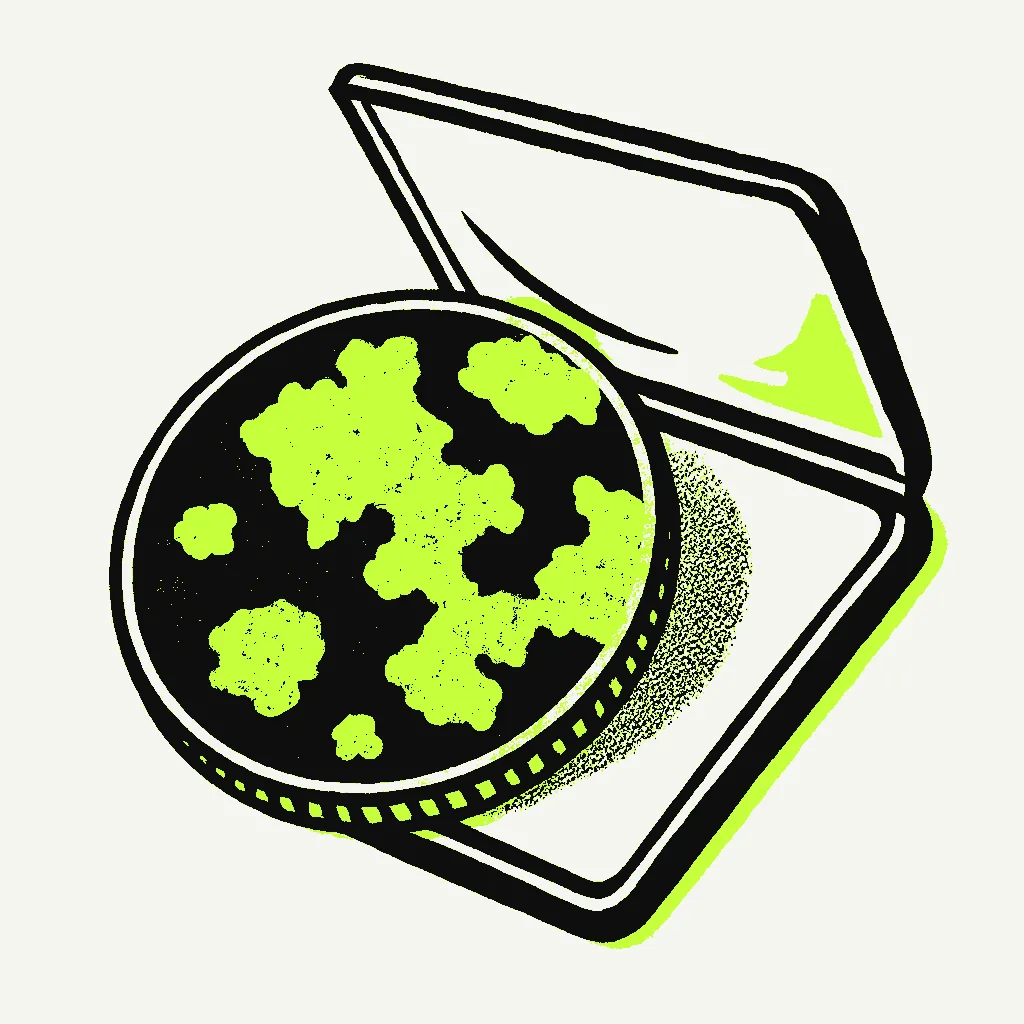
The green film on the reverse wasn't there last year. Same coin, same drawer, same corner of the desk. A 1946 Walker, honest silver, the kind of piece a father hands to a son and the son puts somewhere safe. Safe was a soft plastic flip from a show, twenty years old, still holding its shape. The obverse looks the way it always looked. Turn it over and there's a haze along Liberty's skirt, faintly green, faintly slick. The coin didn't change. The thing around it did.
Most coins that come across the counter with damage weren't damaged by pockets. Pockets wear a coin down, and honest wear is honest. The damage that surprises people is the damage that happened in storage, quietly, while the coin was sitting still. A flip that felt fine at the show, a folder from the drug store, a plastic tube that came free with a roll. The owner did the responsible thing. They put the coin away. And the thing they put it in went to work on it.
The culprit, most of the time, is PVC. Polyvinyl chloride. The soft, bendy plastic that made cheap flips comfortable to handle for a generation. PVC needs a softener to stay flexible, and the softener doesn't stay put. It migrates. It settles on the coin. On copper it goes green, on silver it goes hazy and slick, and if it sits long enough it etches the surface underneath. A dip won't undo the etching. The coin is marked from then on.
So the flip did the damage, not the drawer. Which brings us to what storage is actually for. Storage isn't a shelf. Storage is a decision about what you're protecting the coin from, and different holders protect against different things. A Mylar flip, the stiff kind that cracks if you fold it, is inert. It holds the coin, it lets you write on the paper insert, and it doesn't off-gas anything into the surface. It doesn't cushion against a drop, and the sharp corners can scratch if you slide the coin in wrong. It protects against chemistry, not clumsiness.
A capsule, the hard round kind that snaps shut, protects against clumsiness. Drop it on the floor and the coin stays put. Air still moves through the seam on most of them, so a capsule in a humid basement will tone over the years, sometimes for the better, sometimes not. Toning is its own conversation. Some of it does you a favor, some of it hides what was there. A capsule slows the air, it doesn't stop it.
An album page, the kind with the sliding plastic strips, is the trickiest of the three. The good ones use inert film. The old ones, the ones from the seventies and eighties still floating around estate sales, often don't. Pull a slide across a proof surface and you'll see hairlines the next time you look. Store a copper cent behind a softener-heavy slide and you get the green film. Albums are wonderful for showing a set and terrible for keeping a coin in original condition. Know which one you're doing.
A good rule, the one worth remembering, is that if a plastic bends easily and feels soft to the touch, it has softener in it, and softener eventually finds the coin. Stiff and clear and slightly brittle is what you want. If it feels like a sandwich bag, it goes in the trash, not around a coin.
The other thing storage does, the part people forget, is keep the coin findable. A jar is not storage. A jar is a holding pen. Coins in a jar rub against each other every time the jar moves, and the rubbing puts marks on the high points, the exact places a grader looks first. If you have a jar, the jar is fine for the coins you already decided are spenders. The keepers come out of the jar and go into something that holds them still.
So the 1946 Walker gets a new home. The old flip goes in the bin, not back in the drawer with something else in it. The coin gets a careful wipe with a soft cloth, no solvent, no dip, just the loose residue off. Then a Mylar flip, or a capsule if it's going to travel. The green haze that's already there stays. That's the record of what happened, and trying to erase it would take more of the coin with it than the haze did.
Good storage doesn't make a coin worth more. It keeps a coin from becoming worth less. That's the whole job. The strike tells the story, and the holder decides whether the story stays legible. Check your flips this week. The ones that bend, replace. The rest, leave alone.