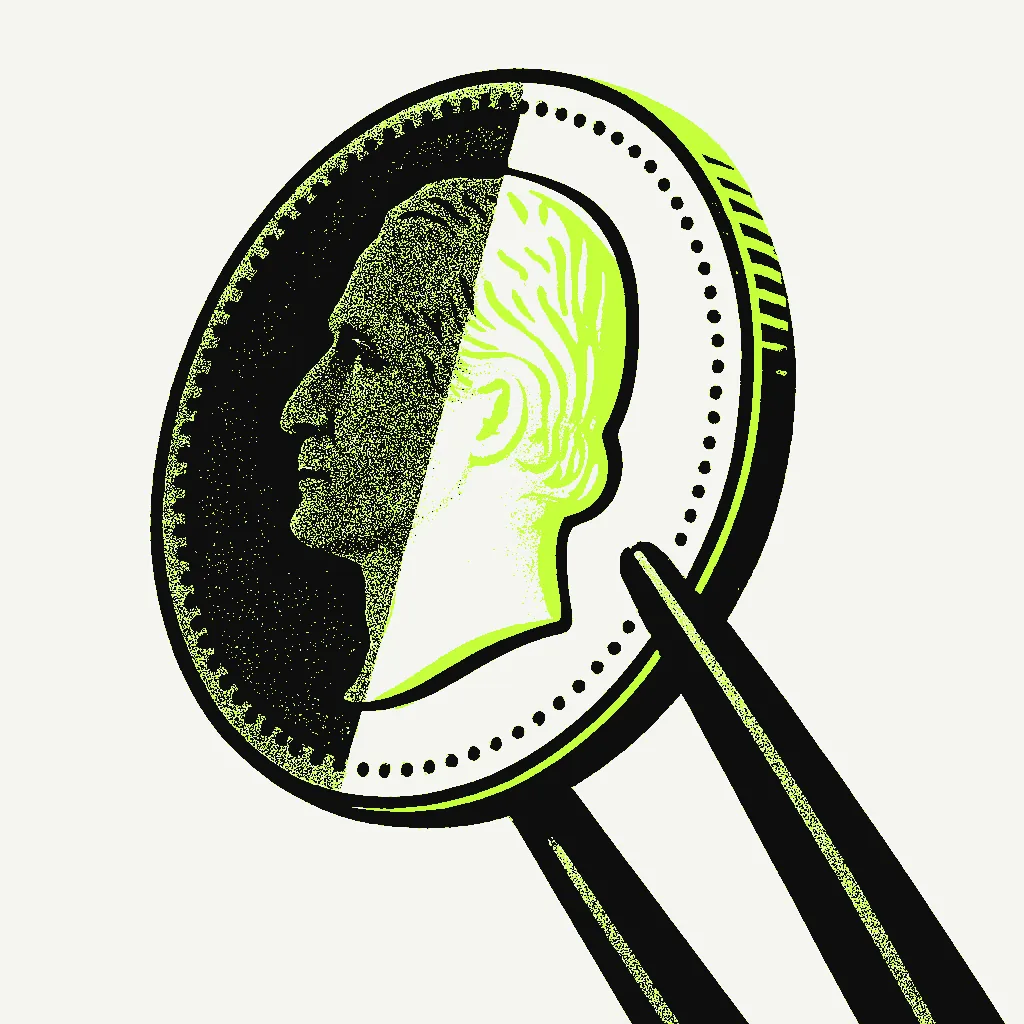
A man came in last Tuesday with a Morgan dollar in a small ziplock bag. The coin was bright. Not old-silver bright, not the soft grey of a coin that has sat in a drawer since Eisenhower was president. Bright the way a spoon is bright after you scrub it. He set it on the felt and he was proud of it. He had spent a Sunday afternoon on it, he said, with a jewelry cloth and some dip he found at the hardware store. He wanted to know what it was worth.
I got the loupe on it. I did not want to be the one to say it.
Here is the thing about a coin that has been cleaned. The dealer sees it before you have finished pulling it out of the flip. It is not a subtle read. Silver that has been dipped goes a particular kind of white, flat and even, no depth to it, no life in the field. Copper that has been rubbed shows fine parallel lines under the loupe, thousands of them, running whichever way the cloth ran. A coin that has been polished loses the frost on the high points of the design, and the design starts to look like it is floating on the surface instead of struck into it. None of this hides. All of it drops the price the moment it is seen.
The Morgan he brought in was a common date in what would have been very good original condition. Grey, honest, the toning it had earned sitting somewhere quiet for a hundred and forty years. In that state, a fair retail number. After the Sunday afternoon with the dip, it is a coin I can sell to somebody who wants a shiny round object to hand a grandchild, and that is a different market and a different number. Roughly a third of what it was. Sometimes less. The coin did nothing wrong. The coin got scrubbed.
People clean coins because they think a buyer wants to see the design. They think dirt is hiding the value, and if they lift the dirt the value comes up with it. It is the opposite. What a serious buyer wants to see is a hundred years of undisturbed surface. The tiny irregularities, the soft toning, the way the light catches the field at an angle, these are the evidence that the coin is what it says it is and has been left alone. Strip that off and you have stripped off the provenance of the metal itself. You have taken a document and run it through the wash.
There is a phrase for this at the counter. Clean it and you halve it. That is being generous. On a good coin it is worse than halving. On a common coin it does not matter much because the coin was never going to bring a premium anyway, and that is where most of the bad advice comes from, somebody cleaned a wheat cent, nothing happened, so they cleaned a Standing Liberty quarter and something happened.
So what do you do when a coin arrives dirty. A relative passed, the jar came down from the attic, the coins are grimy and you cannot even read the dates. The answer is smaller than people want it to be. You leave them alone. If a coin has loose dirt on it, actual dirt, you can rinse it in distilled water and let it dry on a soft cloth, no rubbing, no wiping. That is the whole procedure. You do not use vinegar. You do not use ketchup, and yes, people ask. You do not use a pencil eraser on the date. You do not use the silver polish that lives under the kitchen sink. You do not use the dip. The dip is what made the Morgan on Tuesday worth a third of what it was.
If you cannot read the date, bring the coin under a lamp, tilt it, catch the light across the surface at a low angle. The date will usually come up. If it does not, that is information too, and a worn coin is still a coin, and a dealer would rather see the wear than see somebody's attempt to lift it.
The man on Tuesday took it well, mostly. He asked if there was any way to undo it. There is not. Silver does not grow back the skin you took off it. He put the Morgan in his pocket, which was the second small thing he did to it that afternoon, and he left. I told him to bring the rest of the jar in before he touches any of them. I hope he does.
The strike tells the story. So does the surface. Leave the surface be.