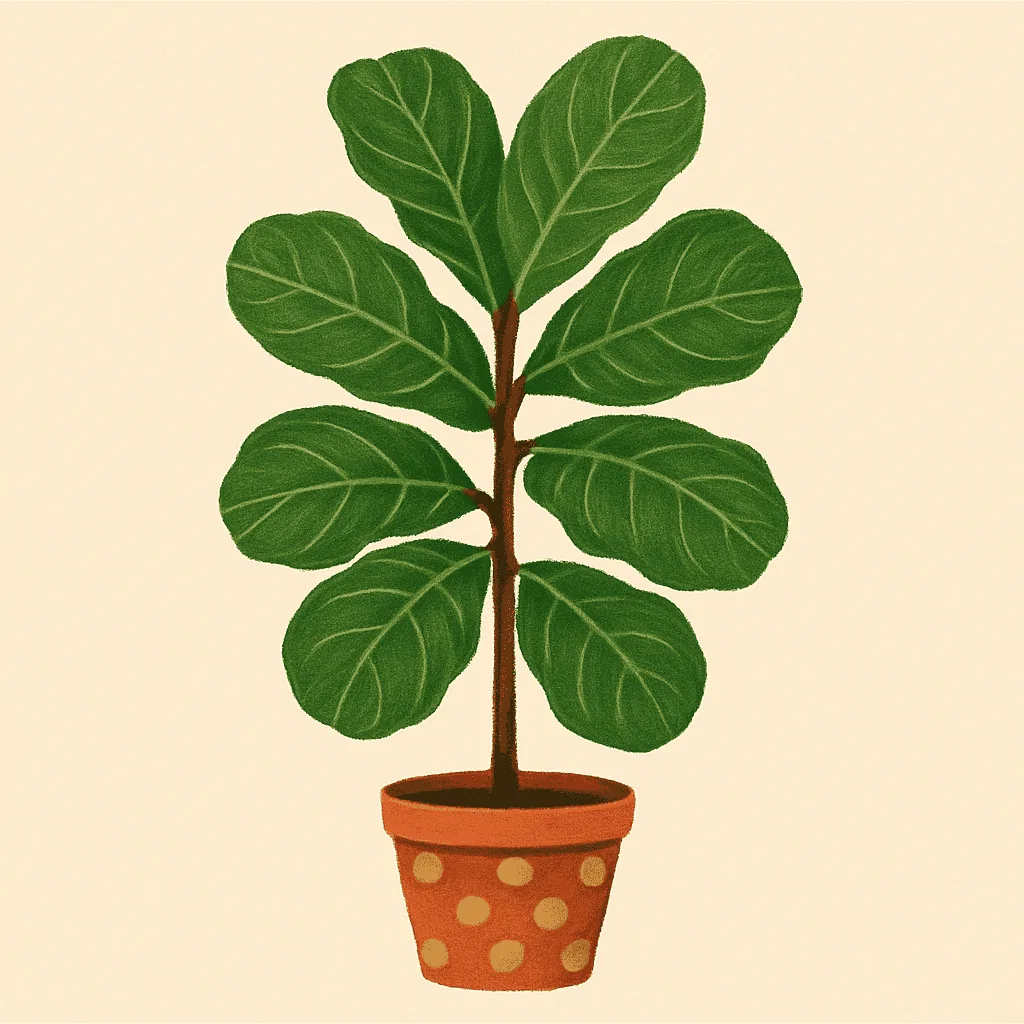
The fiddle-leaf fig you brought home last month is dropping a leaf. A big one, low on the trunk, yellowing at the edge before it lets go. You moved her once to catch better light. Then once more, because the first spot felt off. Then you turned the pot to face you. Now there is a leaf on the floor, and the worry that always comes with a big leaf on the floor.
Most of what you will read about fiddle-leaf figs treats them as fragile. Difficult. A plant that punishes you for small mistakes. That framing is not quite right. The fiddle is not punishing anyone. She is reorganizing. A fiddle that drops leaves after a move is not sick — she is rebuilding the map of where her light comes from, and that work costs her a leaf or two.
The single biggest thing to know about this plant is that she does not want to be moved. Not across the room. Not to the other window because the light looked nicer there in the afternoon. Not closer to the couch for the photograph. Pick the brightest spot in the room — an east or south-facing window, three or four feet back from the glass — and put her there. Then leave her.
A quarter-turn of the pot, once a week, is enough. That keeps her growth even without confusing her about where the light lives. Anything more than that and you are asking a plant with very large, very expensive leaves to redo work she already did.
The second thing is water. Fiddles are often watered on a schedule because their soil looks dry on top long before the plant is actually thirsty. The top inch can lie. With a fiddle, wait for the top two inches to be dry. Push a finger down. If there is any cool dampness at the second knuckle, wait one more day.
When it is time, water slowly and deeply. Pour until the water runs through the drainage at the bottom. Then stop, and do not water again until the top two inches are dry once more. This might be every week in summer. It might be every two or three weeks in winter. The plant is teaching you the schedule. Not the calendar.
Notice before you act.
The third thing is the leaves themselves. A fiddle's leaves are broad and flat and they collect dust the way a shelf collects dust. On a pothos you might never see it. On a fiddle you can see it from across the room, and the dust quietly dims the light the plant is trying to drink. Every few weeks, wipe each leaf with a damp cloth. Support the leaf from underneath with your other hand so you are not pulling at the stem. It takes ten minutes. The plant looks like a different plant afterward, and she is — she is suddenly receiving the light she was paying rent for.
These three things — a chosen spot, slow deep water on the dry side, a clean leaf — are most of what a fiddle needs. The rest is patience. New growth on a fiddle is slow and unhurried, often a single tight green spear at the top of the trunk that takes weeks to unfurl. Watch the newest leaf. If it is opening, even slowly, the plant is fine. If she is holding the leaves she already has, the plant is fine. A quiet week with a fiddle is a good week.
The leaf on the floor is not a verdict. It is the cost of the moves she has already made, and she is done paying it now. Put her in the spot you mean to keep her. Three or four feet back from the brightest window. Turn the pot a quarter-turn this Sunday, and the Sunday after that. Check the top two inches with your finger before you reach for the watering can. Wipe a leaf when you walk past with a damp cloth in your hand.
And then, mostly, let her be. Plants keep their own clock. The fiddle's clock is slower than yours, and that is not a flaw in the plant. It is the whole point of keeping one. We'll watch for the new leaf together. One day at a time.