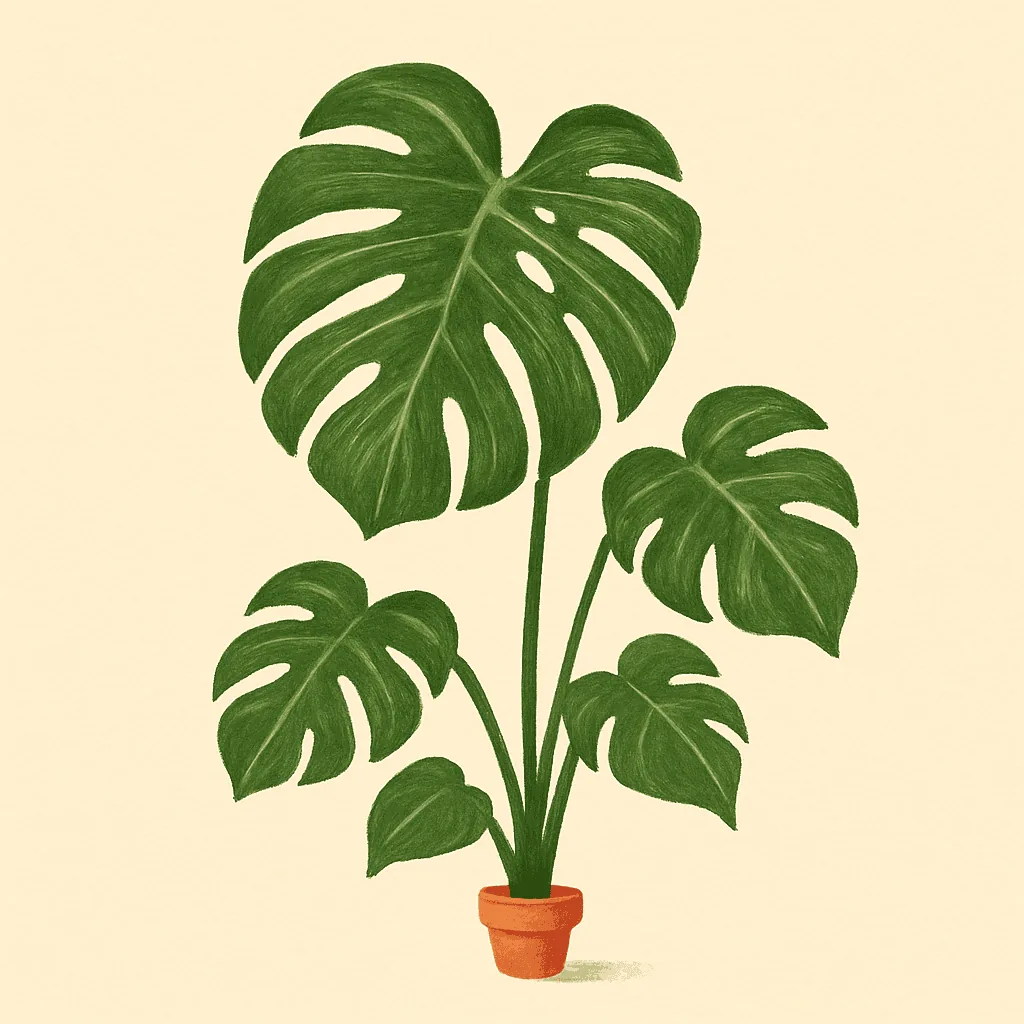
The new leaf comes up rolled tight, a pale green cigar leaning out from the stem. You notice it on a Tuesday. By Friday it has unfurled, and it is solid. No splits. No holes. Just a wide, glossy heart, slightly crumpled at the edges where it pressed against itself in the bud. You had hoped for the leaf in the photographs. This is not that leaf. It is still beautiful. It is just not finished.
This is the quiet disappointment most monstera keepers carry in the first year. The plant in the magazine has splits like fingers and holes like portals. The plant on the shelf has leaves shaped like a child's drawing of a heart. You wonder what you are doing wrong. Usually, nothing. The fenestrations are not a report card. They are a sign of maturity, of light, of time. A young monstera pushes solid leaves first. It earns its perforations later.
So the first thing is to stop reading the leaf as a grade. Read it as a page in a notebook the plant is keeping. The early entries are solid hearts. That is the chapter you are in.
Light is the long answer. A few feet back from a south or east window is the spot most monsteras want. Bright, but filtered. The kind of light where you could read a book without squinting. Pressed against the glass on a south side, the prettiest leaves bleach pale and crisp at the edges. Tucked into a shaded corner across the room, the new leaves come up smaller and stay solid for longer. You are not looking for blasting sun. You are looking for steady brightness, the kind that lasts most of the day. Closer to the window, not the glass.
Water is the short answer. Slip a finger into the top inch of the mix. If it is dry, give it a slow drink until water runs from the drainage holes, then stop. If it is still cool and faintly damp, wait. The chunky aroid mix most growers use, bark and perlite with a little coco and peat, holds moisture evenly for about a week between drinks. Sometimes longer in winter. Monsteras are forgiving on the dry side. They are less forgiving when the roots sit wet. The top inch will tell you.
There is one move that changes everything, and it is the move most people skip. Give it something to climb. In the wild, this plant is a climber, hauling itself up trees, pushing aerial roots into the bark. The leaves it makes once it has a trunk to lean on are nothing like the leaves it makes sprawling across the forest floor. A moss pole works. A slab of cork bark works. A sturdy stake wrapped in sphagnum works. Tie the main stem gently to the support with soft twine, loose loops, and let the aerial roots find their way in. Within a few leaves, you will see the difference. Bigger blades. Deeper splits. The plant remembering what it is.
Wipe the leaves. Every few weeks, a soft damp cloth, one leaf at a time. Dust mutes the gloss, and the gloss is half of why this plant photographs the way it does. It is also the easiest care task to enjoy. Five minutes, no decisions, just attention.
A few things to expect, so they do not startle you. The oldest leaf at the base will yellow eventually. Some leaves are meant to go. A new leaf may emerge smaller than the last if the light shifted or the season turned. The next one usually catches up. Aerial roots will appear along the stem and reach into the air looking for something to grip. They are not a problem. They are the plant asking for the pole.
The leaf you are waiting for is two or three leaves away.
So here is the shape of it. Bright indirect light, a few feet back from the window. Slow water when the top inch is dry. A pole to climb, when you are ready. A damp cloth, now and then, for the gloss. And patience for the fenestrations, which arrive when the plant decides, not when you do.
The rolled cigar on the stem this week will open into another solid heart, most likely. The one after that, maybe a small notch on one side. Then a split. Then, one quiet morning months from now, a hole. Plants keep their own clock. We'll watch for it.