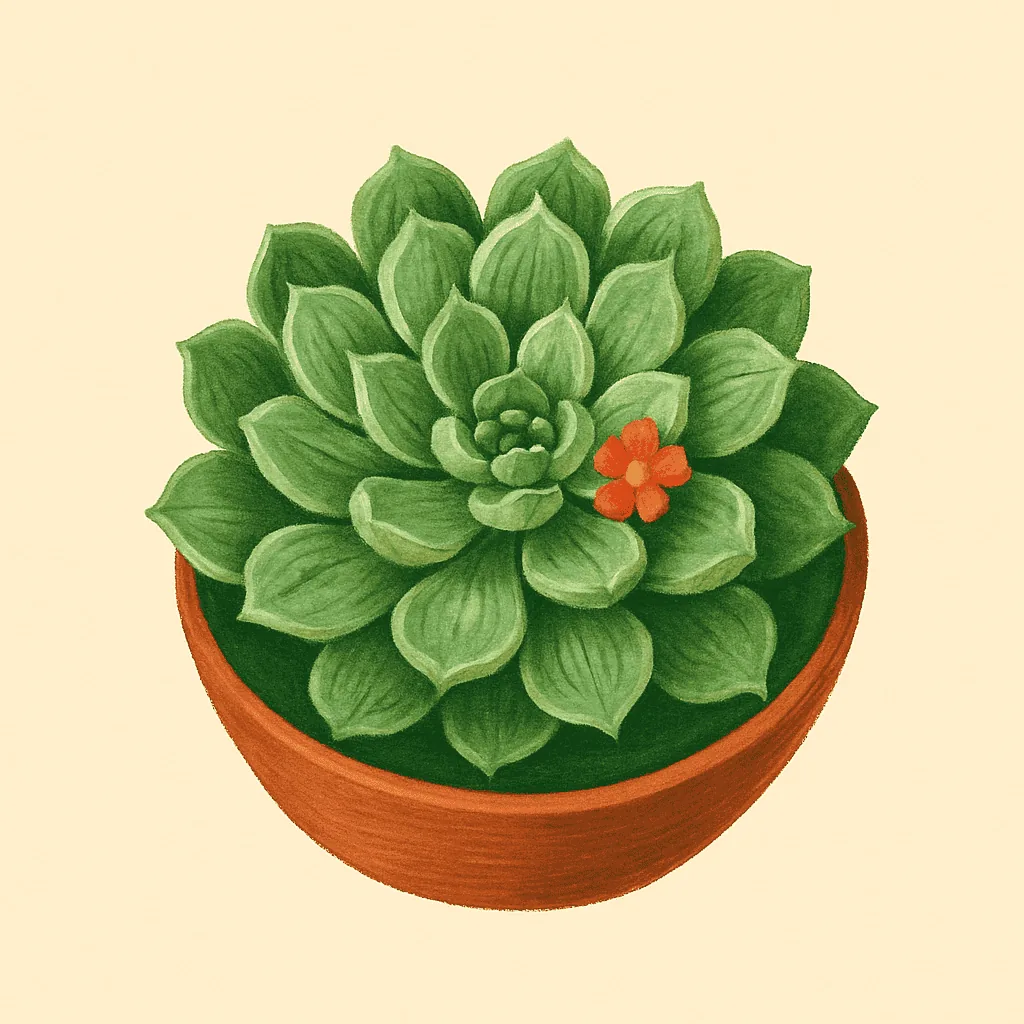
On the windowsill this morning, the echeveria is doing the thing it always does in good light. The rosette sits low and tight, leaves overlapping like a small pale flower carved out of wax. There is a soft bloom on the surface, the powdery finish that gives these plants their sleepy color. Pale green at the center, a flush of pink at the leaf tips where last night's cool air reached them. Nothing is asking for anything. The plant is just sitting there, being itself.
Most echeverias I have known did not stay that way indoors. They started compact, the way they always do in the shop, and within a few months the rosette began to flatten. The leaves spaced out. A stem appeared where there had been no stem. The pretty profile dissolved into something looser, taller, reaching. For a long time I thought I was watering wrong. I was not. I was lighting wrong, and that is a harder thing to fix.
Echeveria is the succulent most people picture when they hear the word. A tight rosette. Plump leaves. The dusty bloom on the surface that softens every color underneath it. Done well, the rosette stays small and the colors deepen as the nights cool and the days stay bright. The plant is built for a lot of sun and a little water, and the shape it holds is a record of how much of each it has been getting.
The light part is the part most apartments cannot quite meet. Echeveria wants more than a bright room. It wants a south-facing window, or a sunny porch, or a grow-light close enough to matter. Without that, it stretches. The center of the rosette lifts. The leaves spread apart along an elongating stem, searching for what is not there. This is not the plant misbehaving. This is the plant telling you, very honestly, where the light is and where it is not.
If your echeveria has started to stretch, the old growth will not tighten back up. That part is already written. But the new growth can come in compact again, if you move the plant closer to the window — closer, not against the glass — or add a small grow-light overhead. Watch the newest leaves. They are the ones that will tell you whether the light is enough now.
Water is the easier half. Deeply but rarely. Let the soil dry all the way through, top to bottom, then give it a real soak, then let it dry again. The top inch will tell you when to start checking, but with echeveria the bottom inch matters more. A pot that stays damp under a plant that wants to be dry is the quiet way these rosettes are lost. Slow water, steady light. The rest is patience.
A small handling note, because it is the kind of thing nobody mentions until it is too late. That powdery bloom on the leaves is not dust. It is part of the plant, a fine waxy coating the leaves grow themselves, and it does not come back once it is rubbed off. Handle the plant by the rim of the pot when you move it. Not by the leaves. Not by the rosette. The bloom is half of why the colors look the way they do, and a fingerprint on a leaf stays a fingerprint on a leaf.
Some leaves are meant to go.
The oldest leaves at the base of the rosette will dry up and shrivel over time. This is the plant doing its housekeeping, not a sign of trouble. You can pull them away gently once they are papery, or leave them. Either is fine. What you are watching for is the center, where new leaves emerge tight and small and slowly push outward as they grow. A compact center is a happy echeveria. A center that is lifting on a visible stem is a plant asking for more light.
In winter, expect very little. The plant slows down, the watering stretches even longer between drinks, and the colors often deepen. A cool windowsill with bright sun is closer to the conditions echeveria evolved in than any heated living room. If you can give it a chilly bright spot for a few months, the spring rosette will thank you in color.
So the echeveria sits on the sill. The light is honest today, and the soil is dry, and there is nothing to do. Set the watering can down. Notice the bloom, the tips, the small new leaf at the center. Plants keep their own clock. We'll watch for it.