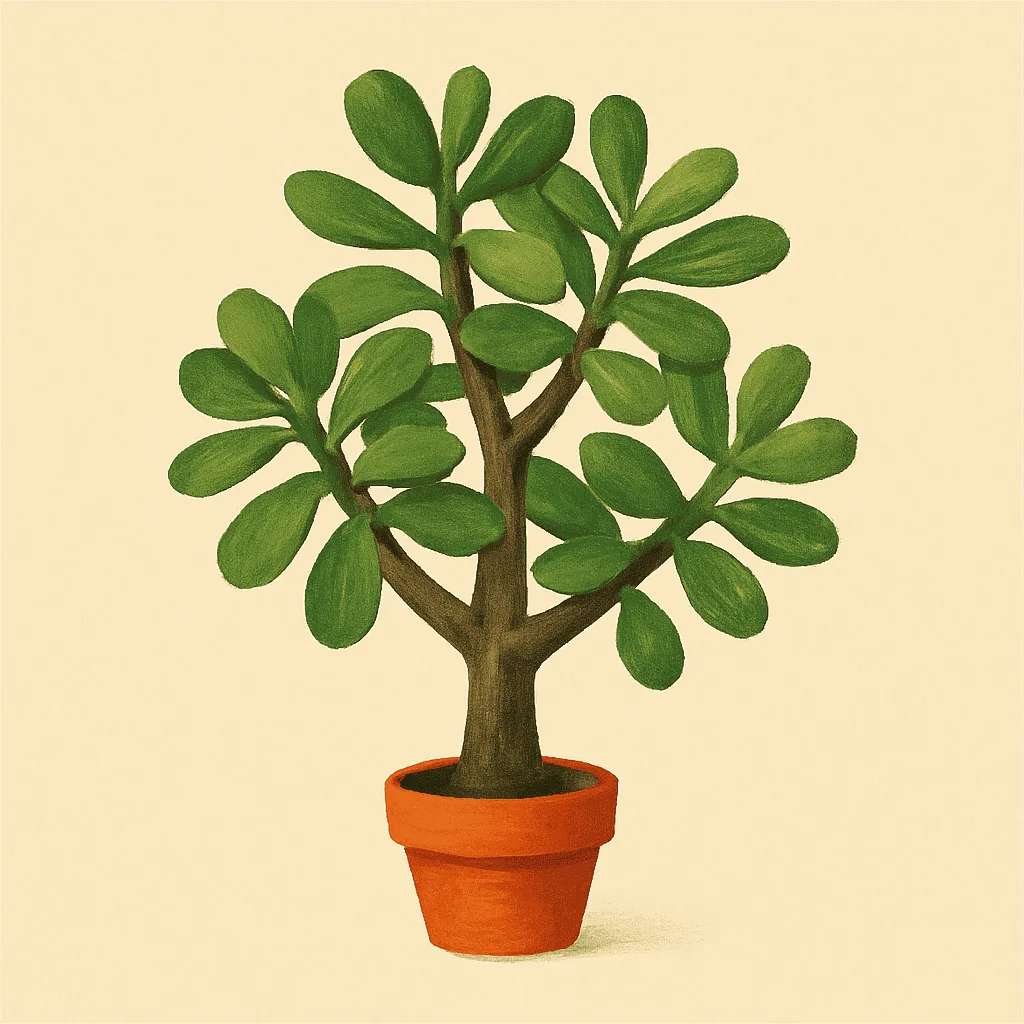
The jade on the south sill has not changed since Tuesday. Or has it. The newest leaf at the tip of the right-hand branch is a shade lighter than the others, almost waxen, and the edge has a faint red blush that wasn't there last month. The trunk where it forks is thicker than a pencil now. Six months ago it was thinner than that. The plant is doing something. It is just doing it on its own clock.
Most articles about jade plants will tell you what to do this week. Water on this day. Fertilize on that day. The trouble is that the jade does not read articles. It reads light, and it reads the soil, and it reads the season. A jade kept on a schedule rarely looks like the jades you see in old photographs — those branching, trunk-thick specimens that someone's grandmother grew on a porch for forty years. Those plants were not on a schedule. They were on a windowsill, and someone walked past them, and noticed.
The first thing to notice with a jade is the light. Of all the plants you might keep indoors, this one wants the brightest spot you have. Not filtered, not gentle. Bright. The leaves themselves will tell you. In strong light, the edges color up — a thin red rim, sometimes a faint blush across the whole leaf. In a dim corner, the plant stretches. The space between leaves grows long. The compact, branchy shape that makes a mature jade look like a tiny tree goes soft. Light is the long answer. A jade in a dim hallway is not dying. It is simply becoming a different, lankier plant than it would be by a window.
The second thing to notice is the soil. Jades hold water in their leaves — that is what those plump pads are for. So the soil does not need to stay damp between drinks. It needs to dry out. All the way. The top inch will tell you, but with a jade, you can go further. Lift the pot. A jade that needs water feels noticeably lighter than one that doesn't. When you do water, water deeply, until it runs through, and then leave it alone for a long time. In winter, when growth slows, even longer.
This is where most jade plants get into trouble. Not from forgetting. From kindness. A small drink every few days, the way you might water a fern, will rot the roots of a jade within a season. The leaves will start to look soft and translucent at the base, and by the time you notice, the trunk underneath is already going.
Patience reads like neglect, until it doesn't.
The third thing to notice is how forgiving the plant is once you let it lead. A leaf will snap off cleanly with a touch — sometimes when you brush past, sometimes when you move the pot. Set that leaf on top of dry soil and walk away. In a few weeks, a tiny root will appear. In a few months, a pup. You do not have to do anything to it. The leaf is already a plant. It just hasn't grown the rest of itself yet.
The same forgiveness extends to pruning. If a branch grows long and ungainly, or leans hard toward the window, you can cut it cleanly with a sharp blade. New growth fills in within a season, usually splitting into two where you cut one. Over years, this is how the sculptural shape happens. Not from a plan. From small cuts, made when something looked off, made by someone who was paying attention.
The oldest jades — the ones friends ask about — were never optimized. They were kept by someone who walked past them most days and did almost nothing. A deep drink when the leaves looked thirsty. A turn toward the light when one side reached. A snapped-off leaf set aside, half-forgotten, that became another small plant on another sill.
So your jade may not change much this week. The newest leaf may take a month to reach its full size. The trunk may take a year to thicken in a way you can measure. That is the plant. Slow water, steady light. A small turn now and then. Roots first, then leaves. The jade is keeping its own clock, and it is a long one. We'll watch for it.