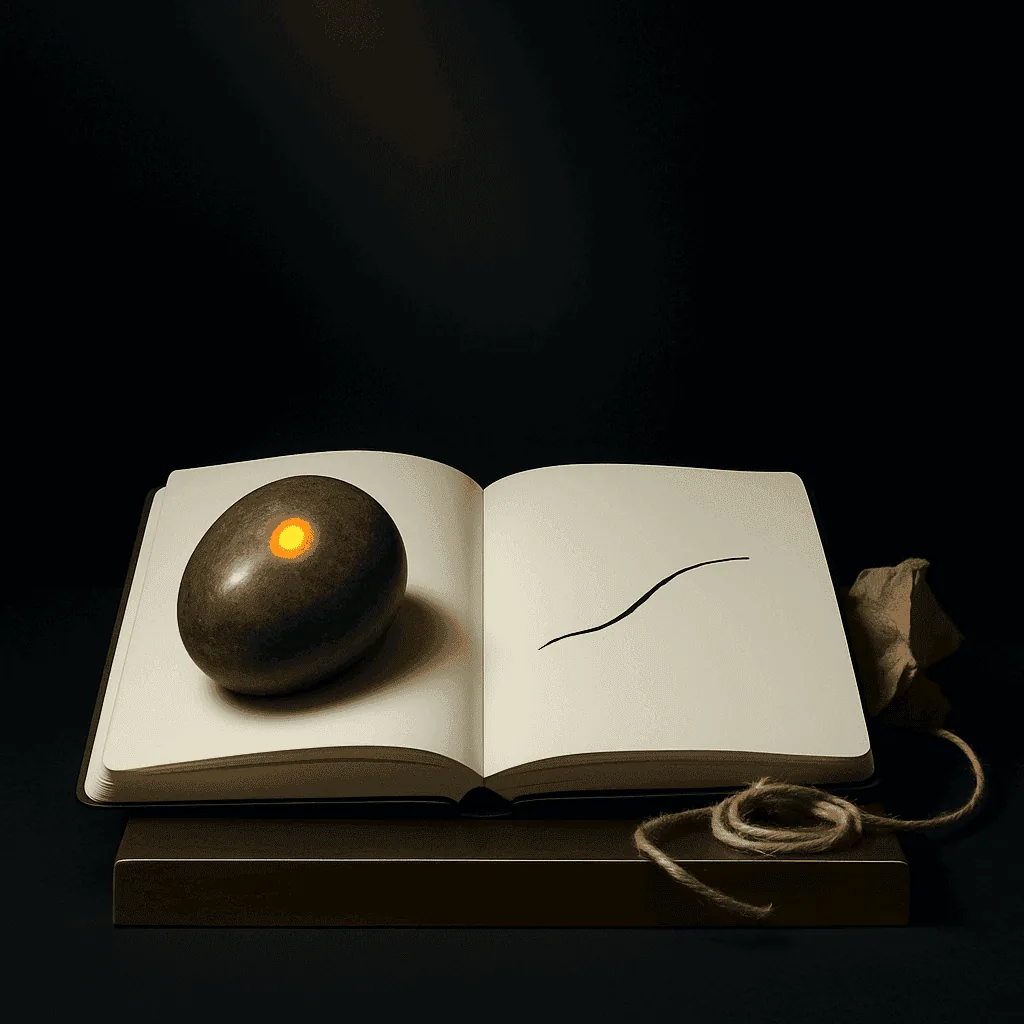
The parcel is on the kitchen table. The paper is still warm from the bag. You have peeled back the tissue and the stone is sitting in the lamplight, smaller than you expected, heavier than you thought. It is past ten. You are tired. You tell yourself you will write it up tomorrow. By morning, half of what you know right now will be gone. The shop it came from. The weight in the hand. The exact reason you said yes to this one and not the one beside it.
This is the hour the journal exists for. Not the hour of careful study under the loupe — that comes later, in daylight, with the cool side turned up. Tonight is for the things only tonight knows. The light it travelled in. The first impression. The small private reason. These are the facts that disappear fastest, and they are the ones every later entry will lean on. A stone without an arrival night is a stone you are always meeting for the first time.
Start with the name, if you have it. Write it the way the seller wrote it, even if you suspect they are wrong. Rose quartz, Madagascar. Fluorite, green, India. Identification can be argued with later. The label it arrived under is part of its history. Underneath, leave a line blank. That line is where the corrected name will go, the night you sit with it under the loupe and the cleave tells the truth.
Then the origin. Where the stone came from, and where you came across it. The booth at the show. The shop on the corner. The friend who pressed it into your palm. Mineral provenance and human provenance — write both. You will want both later, and you will not remember either.
Weight in the hand. Not on a scale. The scale comes later if you want it. Tonight, write what it feels like. Heavier than it looks. Lighter than it should be. Dense in the centre. The hand knows things the gram does not, and the hand forgets fast.
The light it came home in. This is the line most collectors skip and most regret skipping. Was it lamplight at the show. Was it the grey of a rainy afternoon. Was it the yellow of the kitchen at dusk. Stones look like different stones under different light, and the light of the first meeting is the light you will keep comparing back to. Name it now, in one short line. Warm bulb, kitchen table, near midnight. That is enough.
What drew you to this one. Write it before you talk yourself out of it. Not the reason that sounds good. The actual reason. The inclusion that caught. The chip on the corner. The colour you have been looking for without knowing. The way it sat in the tray with the others and would not let you put it back. One sentence. The honest one. This is the line you will read in two years and remember the whole evening from.
The moon phase tonight. One word, sometimes two. Waxing crescent. Dark. Full, just past. You do not need to explain it. The moon will tell us when, later, what this stone wants. Tonight you are only marking the sky it arrived under.
And then stop. Resist the pull to write what it means. Resist the pull to write what it is for. Those entries belong to other nights — the night you carry it in your pocket for the first time, the night you set it on the sill, the night you find it has moved itself closer to its neighbour on the shelf. Tonight is intake. Tonight is the spine. Everything else hangs from these six lines.
The first entry is short. The later entries are long because of it.
Close the journal. Set the stone somewhere it can rest until morning — not the windowsill yet, not the bowl with the others yet. Somewhere quiet, on a cloth, on its own. It has travelled. It is in a new room. Let it be in the new room for a night before you ask anything of it.
This one has been waiting. You will meet it properly tomorrow, under daylight, with the loupe. Tonight you only had to catch the things that were about to slip. Six lines. The name on the label. The origin. The weight in the hand. The light. What drew you. The moon. Already in motion.