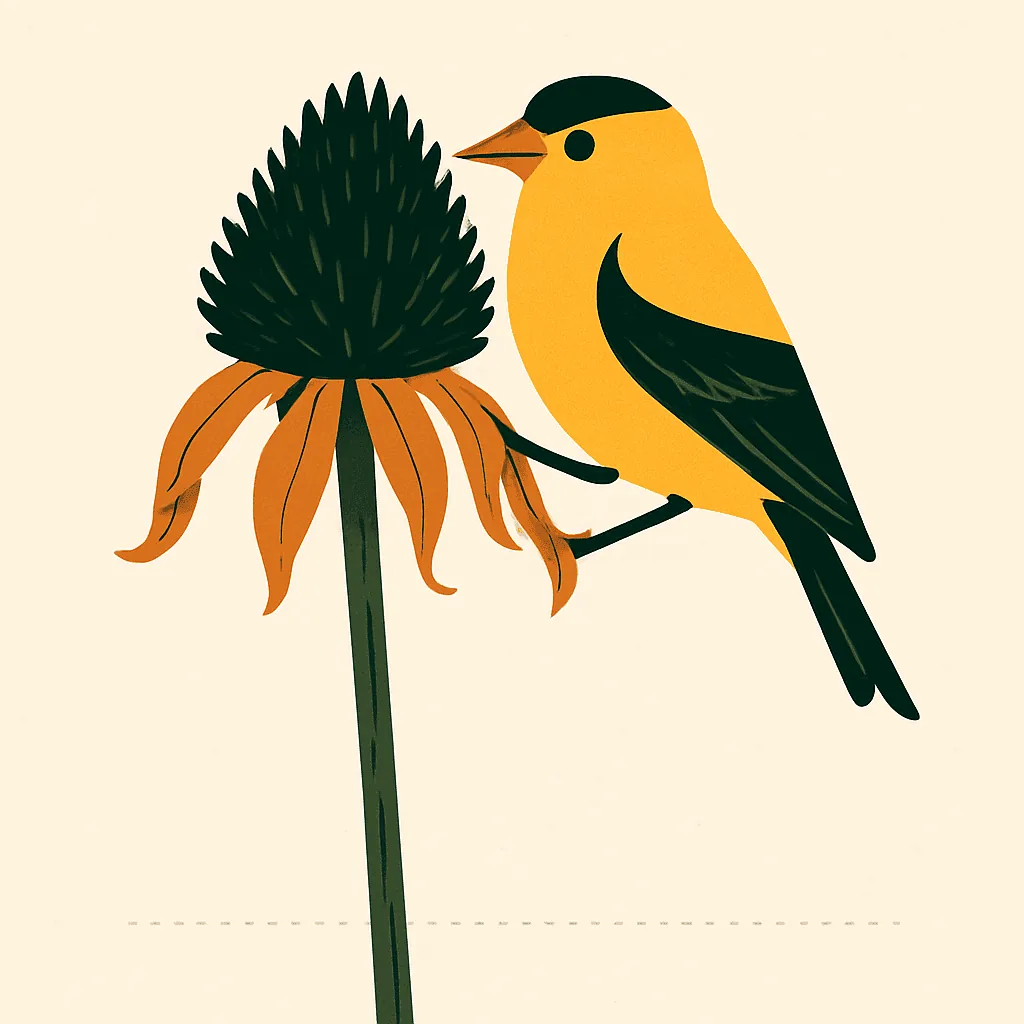
Late November, the coneflower is a rusted brown skeleton by the fence. It looks finished. Then a goldfinch drops onto the stem, sideways, and starts working the seed head like a puzzle she has solved before. She has. That plant you meant to cut back in October is a pantry, and she has been on the route since the frost.
Most yard advice treats winter as the season to tidy. Cut the stalks, bag the leaves, put the beds to sleep. It looks neat from the sidewalk. But the birds you spent all summer coaxing to the feeder do not eat sunflower seed alone. They eat what the yard grew, and what the yard grew is standing right there, going to seed, hosting the insects that overwinter in the hollow stems. Tidy is quiet. Left standing is loud.
Here is the shift, and it is a small one. A feeder is a supplement. A native plant is the meal. The coneflower from November on is a finch pantry, and it costs you nothing but the choice not to cut it. The goldenrod that looked weedy in August is holding gall flies in its stems, and the downy woodpecker knows exactly which stalk. The serviceberry you planted three years ago fruits in June, right when the catbirds and the waxwings arrive looking for something soft. The oak in the corner, if you have one, is hosting more caterpillars than any other tree on your block, and every chickadee nesting nearby is quietly counting on that.
Three or four plants per region, that is really all it takes. Not a meadow, not a rewild, just three or four that pay back in birds. In the east, think coneflower, serviceberry, oak, and goldenrod. In the west, salvia and manzanita and native currants pull their weight the same way. In the middle, little bluestem and sunflower and dogwood. The specifics shift with the map, but the shape does not. Something that seeds in fall. Something that fruits in summer. Something that hosts insects. Something that holds structure through winter.
The part that surprises people is how much of the feeding is insects, not seeds. A chickadee raising a brood needs somewhere near six thousand caterpillars to fledge that nest. Six thousand. No feeder holds that. The oak holds that, the native cherry holds that, the willow by the drainage ditch holds that. When you plant native, you are not decorating, you are stocking a nursery. The seed heads in November are the visible part. The insects the plant hosted in July are the part you did not see, and they are what put the wren in the yard in the first place.
So the coneflower stands. The goldenrod stands. The little brown mess in the corner that you were going to clean up in March, that stands too, at least until the nights stop dropping below freezing. The stems are full of pupating things, and the birds working the beds in early spring are not confused about why they are there. They know. They have been visiting yards like this one for longer than any of us have kept books.
This is not landscaping advice. It is closer to noticing what was already working. The yard is a small ecology whether you planted it that way or not, and the birds are voting with their wings about which yards are worth the trip. A feeder gets them curious. A native plant gets them to stay, and to bring the next generation, and to teach the juveniles the route. Oh, look who came to the feeder, yes, but look also at what is in bloom, or in seed, or standing dry in the corner. That is the reason she came.
If you are starting, start with one. Pick the plant that fits the region and the light you have, and put it where you can see it from the window. Next fall, do not cut it. Watch what shows up. A junco working the base in January will tell you more about the plant than any tag from the nursery ever could. Then, if the yard has room, add the next one. A shrub that fruits when the coneflower is only leaves. A tree that hosts when the shrub is bare. The book fills in slowly, plant by plant, visitor by visitor.
The feeder stays. Top it up through the cold snap, the chickadees are counting. But the real pantry is the one you already have, or the one you plant this spring, standing quietly through every season, feeding birds you have not met yet. Worth another look.