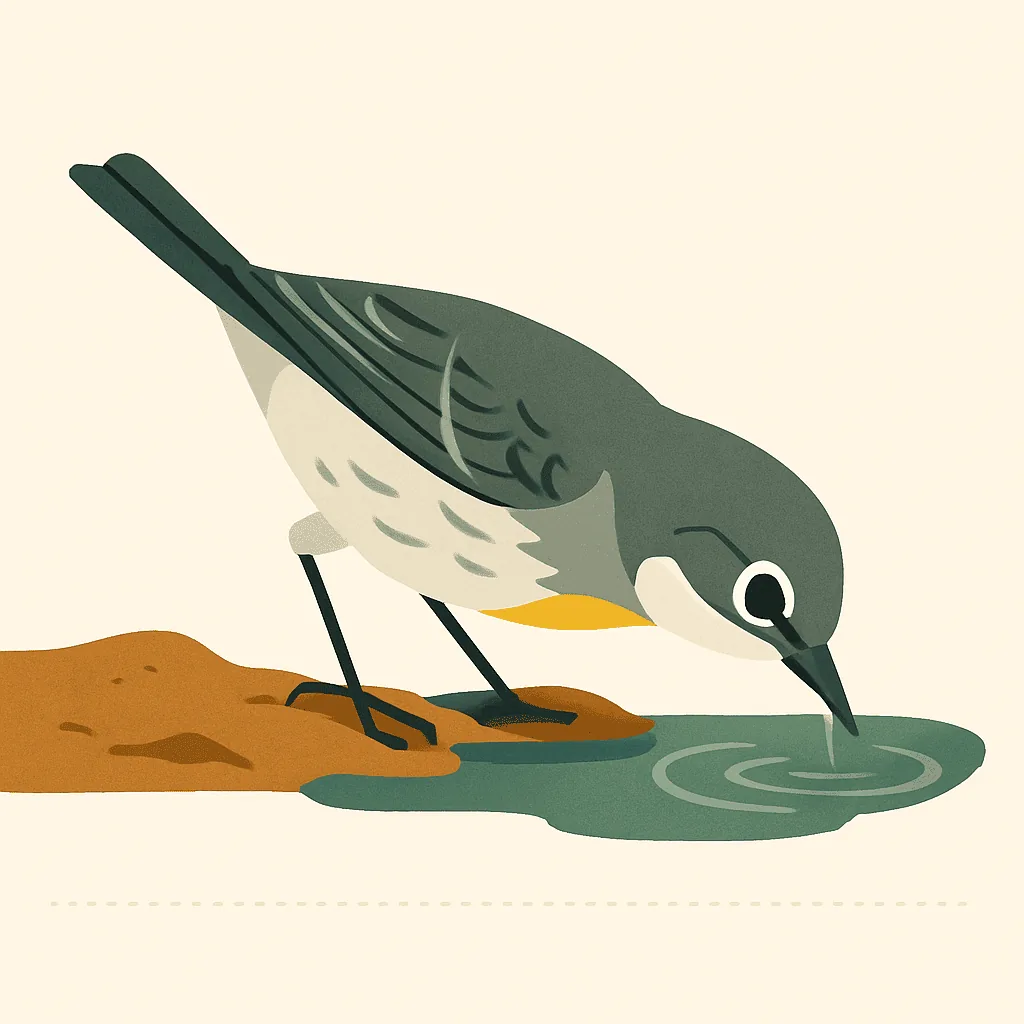
A yellow warbler, on the flat stone by the downspout. Not the feeder, the stone. She dips, shakes, dips again, and the whole ritual takes maybe eleven seconds before she's back in the maple. If you had been watching the sunflower tube, you would have missed her entirely. She was never coming to the tube. She was coming to the wet spot where the gutter drips.
Most of us stock the feeder first. Black oil sunflower, maybe a suet cage, thistle if the goldfinches are around. And it works, for the birds that eat seed. But there's a whole guild of visitors, warblers, vireos, tanagers, catbirds, thrushes, that will never once touch your tube. They pass through your yard on migration, they nest three houses over, they raise young in your neighbor's oak. And they are thirsty. Every bird in your yard is thirsty. Almost none of them are hungry for what you're offering.
Which is the quiet secret of backyard birding. The feeder brings a slice. Water brings the rest of the neighborhood.
Start with the dish itself. Shallow, wider than you'd think, and rough on the bottom so a small bird can grip. Two inches at the deepest point is plenty. A saucer from a large flowerpot works. A garbage can lid, upside down, works. The pricey glazed bath at the garden center works too, but the birds don't care about ceramic. They care about being able to stand in it without swimming. If the bottom is slick, drop in a few flat river stones. Give the feet something to hold.
Placement is where most of us go wrong. The instinct is to put the bath out in the open, centered on the lawn, visible from the kitchen. Birds hate that. Out in the open they are exposed to hawks from above and cats from below, and they will not linger. Tuck the water near cover, three or four feet from a shrub or a low branch, close enough that a startled bird can be in the leaves in one hop. Not under the shrub, they need a clear approach, but next to it. Think of it as a porch with an easy back door.
And then, the thing that changes everything. Motion.
Still water is fine. Moving water is a magnet. A dripper, which is just a length of tubing on a slow valve dropping water into the dish one bead at a time, will bring in birds that have ignored your yard for years. The sound carries. A warbler on the wing, cutting through the canopy on her way somewhere else, will hear the plink of water on water from a surprising distance and drop down to check. I've watched it happen. She banks, she lands on a twig above the bath, she sits for a full minute considering the situation, and then she comes down.
The dripper does more than the bath, really. The bath is the destination, but the drip is the invitation. If you can only add one thing to your yard this season, add the drip. A five-gallon bucket on a shelf, a length of aquarium tubing, a small clamp to slow the flow to about one drop per second. That's the whole rig. You can spend more, and there are lovely little solar bubblers if you'd rather, but the bucket-and-tubing setup is what old-timers have used for decades and it works.
One more thing. Keep it clean. Water that sits gets a film, and a film gets a smell, and a smell keeps birds away long before it bothers you. Tip it, scrub it with a stiff brush, refill it. Twice a week in summer, once a week the rest of the year. No soap, just the brush and fresh water. If algae is a stubborn problem, move the dish an hour earlier out of direct sun.
In winter, if you're in a place that freezes, a small heated birdbath is the single most valuable thing you can offer. Every open water source for a mile is locked in ice, and yours isn't. The list of visitors on a February morning at an unfrozen bath is longer than the list at any feeder I've ever kept. Robins that were supposed to be south. A hermit thrush, once, standing on the rim like she owned the yard.
So, before the next bag of seed, think about the dish. Think about the drip. Set it near a shrub, keep it shallow, let it move. Then watch for a week and see who comes that never came before. That warbler on the stone by the downspout. She was always in the neighborhood. She was just waiting for somebody to put out water. Worth another look.